

After nearly sixty years in the professional maritime sector, I am continually amazed by the advances made in vessel operations, design, equipment, and technology. The maritime industry has evolved tremendously during that time. Yet in some areas, progress remains surprisingly limited.
In my experience, one of the greatest obstacles to improvement is not technology, regulation, or even cost. It is resistance to change—the familiar mindset of, “This is the way we have always done it.” That philosophy may be comfortable, but comfort is not the same as safety.
I learned that lesson early in my involvement with formal safety management. As far back as 1995, the tanker company I worked for was International Safety Management (ISM) compliant, certified under ISO 9001 and ISO 14001, and operating under the oversight of the American Bureau of Shipping and Det Norske Veritas classification societies.
I can still picture the shelves in my office bowing under the weight of three-ring binders filled with policies, procedures, checklists, manuals, and supporting documentation. At the time, managing those requirements could feel overwhelming, particularly when they had to be balanced against the daily responsibility of running a ship and ensuring, among many other things, that oil did not go over the side.
At first glance, a formal safety management system can appear cumbersome. There is documentation to maintain, procedures to follow, deficiencies to report, audits to complete, drills to conduct, equipment to inspect, and records to retain. But after years of working within that framework, I came to understand that the real value of safety management is not found in the binders themselves. It is found in the discipline behind them.
The ISM Code and the principles of safety management remained a significant part of my maritime career, and they have been difficult—in a good way—to shake off. What initially seemed burdensome eventually became foundational to the way I viewed shipboard operations. Today, those same principles remain central to the work I perform as a marine consultant. That experience is one reason I believe safety management systems deserve serious consideration within the small passenger vessel industry.
“The goal of an SMS is to provide safe working practices for ship operation; continuously assess and identify risks to the vessel, personnel and the environment; and establish appropriate safeguards to those risks. Regardless of the size of the company, an SMS ensures standardized and unambiguous procedures for each crewmember during both routine and emergency operations—an SMS accounts for a vessel’s characteristics, operations, and nature of service.”1
A safety management system, or SMS, is a documented framework of policies, procedures, and instructions intended to support safe operations, environmental protection, and the reduction of human error. It provides a structure for risk management, emergency response, equipment maintenance, and routine vessel operations. The system is based on the principles of the International Safety Management Code.
For small passenger vessel operators, however, the value of an SMS should not be reduced to the question of whether the ISM Code itself is mandatory. The ISM Code establishes international safety-management standards, but small domestic passenger vessels are not required simply by virtue of being small passenger vessels to comply with that international code. An SMS can nevertheless support compliance with applicable federal, state, and local requirements while creating safer working conditions for passengers and crew. That distinction matters.
“Flagship is a safety management system (SMS) based program created by the Passenger Vessel Association (PVA) specifically for their members. A safety management system is a structured and documented system enabling both shoreside and vessel personnel to effectively manage safety through a proactive system of continual improvement. Flagship Program requirements and Flagship SMS requirements meet the objectives and functional requirements of Title 33 US Code of Federal Regulations (CFR) Part 96.”2
The question should not only be, “Do I have to do this?” A better question is, “Would this make my operation safer?”
PVA worked diligently to fashion an SMS program that is scalable to any size company/fleet. To get a feel for the how the Flagship SMS Program can benefit your company, request assistance for a Flagship gap analysis audit for your vessel(s) and shoreside operation. You might be surprised as to what you operation is good at and what policies/procedures may require refining.
For a passenger vessel operator, safety management is ultimately about preventing small problems from developing into major casualties. Human mistakes, equipment failures, poor communication, unclear responsibilities, missed maintenance, and inadequate emergency preparation do not always begin as catastrophic events. Many begin as small deficiencies or overlooked hazards.
A structured SMS provides a way to recognize and address those weaknesses before the situation demands a reactive response. The system should also be specific to the vessel and the company operating it. An SMS is not intended to be a generic manual created simply to satisfy an auditor or occupy space on an office shelf. It should function as a safety guide built around the vessel, its operation, its crew, and the hazards associated with the work being performed.
An SMS is not intended to be a generic manual created simply to satisfy an auditor or occupy space on an office shelf. It should function as a safety guide built around the vessel, its operation, its crew, and the hazards associated with the work being performed.
More importantly, it should be a living document.
Everyone has a role in making that system work, from company leadership and managers to captains and newly hired crew members. Company leadership establishes policies intended to protect people, property, and the waters in which the vessel operates. Captains and crews put those policies into practice aboard the vessel. The designated person ashore, or DPA, provides an essential connection between those working aboard the vessel and senior company management, helping to ensure that crews have access to the support and resources they need.
This relationship between ship and shore reflects one of the most important principles contained in the ISM philosophy: good safety management requires commitment from the top.
“The cornerstone of good safety management is commitment from the top. In matters of safety and pollution prevention it is the commitment, competence, attitudes, and motivation of individuals at all levels that determines the end result.”3
The quote above may seem repetitive over the last several years, however, successful implantation and proven advances in safety attitude is evident when you look at the number of PVA members that have put this SMS to good use. Policies alone do not create a safe company. The commitment, competence, attitude, and motivation of people throughout the organization determine whether those policies have any practical value.
The familiar core elements of an ISM-based system reinforce that point. A company must establish its safety and environmental protection policy and clearly define responsibilities and authority. The role of the DPA must provide a meaningful link between shipboard personnel and company leadership. The master’s responsibility and authority must be understood.
“The company should ensure that the safety management system operating on board the ship contains a clear statement emphasizing the master’s authority. The company should establish in the safety management system that the master has the overriding authority and the responsibility to make decisions with respect to safety and pollution prevention and to request the company’s assistance as may be necessary.”4
Crew members must also have appropriate resources and preparation. Shipboard operations must be supported by procedures and plans. Emergency preparedness must be established before an emergency happens. Accidents, hazardous occurrences, and failures to follow established requirements must be reported and analyzed. The vessel and its equipment must be maintained. Documentation must be controlled, and the company must periodically verify, review, and evaluate whether its system is actually working. When those elements function together, safety becomes a process rather than a slogan.
Risk assessment is at the heart of that process.
A functioning SMS examines work performed aboard the vessel, identifies hazards associated with that work, and determines how those hazards can be controlled before an accident occurs. That sounds simple, but it represents an important change in thinking.
As an alternative to waiting for someone to get hurt before asking what went wrong, risk assessment asks what could go wrong before the work begins.
Instead of waiting for an equipment failure before examining maintenance practices, the system establishes inspection and maintenance expectations in advance.
Rather than improvising during an emergency, the company develops procedures, assigns responsibilities, trains the crew, and practices the response.
An effective SMS should address both ordinary work and extraordinary events. The source material identifies operations and scenarios including fueling, maintenance, fires, abandoning ship, groundings, adverse weather, and a person falling overboard.
These examples demonstrate why safety management cannot be limited to an emergency response manual. Routine operations deserve just as much attention because many serious incidents begin during activities that crews perform every day. Familiarity can create its own risk.
When a task has been performed successfully hundreds of times, it becomes easy to assume that it will go correctly the next time. That is precisely where the “we have always done it this way” mentality becomes dangerous. Past success does not eliminate present or future hazards.
A strong safety culture continually asks whether there is a better or safer way to perform the work. This is where reporting becomes particularly important.
Near misses and hazardous conditions should not be dismissed because they did not result in an injury, pollution event, or damaged equipment. They are opportunities to learn before a more serious event occurs. An SMS relies on reporting unsafe conditions and near misses, along with internal and external audits to identify weaknesses within the operation.
Once those weaknesses are identified, the company should examine what happened and update its policies or procedures so that the situation is less likely to be repeated.
That cycle—identify, report, analyze, correct, and improve—is what makes the SMS a living system. It also requires an environment in which crewmembers understand their roles and responsibilities. During normal operations, clear responsibilities promote consistency. During emergencies, they become even more important. Shipboard personnel should understand what is expected of them and how they are supposed to respond when conditions change rapidly.
An emergency is a poor time to decide who is responsible for doing what. The system should have already answered that question.
After decades in this industry, I believe that may be one of the most practical benefits of safety management. It replaces assumptions with expectations. It replaces informal knowledge with procedures that can be passed on to the next crewmember and at the same time, it connects the vessel to management ashore. It gives the company a structured means to recognize weaknesses and implement corrective actions.
Most importantly, it challenges complacency.
A successful SMS replaces the “we’ve always done it this way” mentality, with a proactive approach designed to prevent problems before a reactive response becomes necessary.
That does not mean every procedure must be complicated or every small passenger vessel needs shelves full of three-ring binders like the ones I remember from the tanker industry. For instance, when doing a routine walk-through of your vessel, change the predictable route and take the path least taken. You may be surprised what you might find!
The objective is not paperwork for paperwork’s sake. The objective is a system that people understand, use, review, and improve upon. This is where the PVA SMS scalable program is tailored for your company and crew size.
Technology will continue to advance. Vessels will become more capable. Equipment will improve. Navigation, communications, machinery, and monitoring systems will continue to evolve. But none of those advances eliminate the human element from maritime operations.
People still make decisions. People maintain equipment. People respond to emergencies. People identify hazards—or fail to identify them. And company leadership still determines whether safety is treated as an operational priority or merely a written policy.
The final purpose of the system therefore remains remarkably straightforward. When something goes wrong, priorities of the response should be—preserve the vessel, protect the crew, protect the passengers, and protect the environment.
After nearly sixty years in the maritime industry, I have seen many things change. That principle has not.
1 NTSB – Safety Management Systems for Passenger Vessels
2 PVA website – Members Resources
3 ISM Code Preamble
4 ISM Code 2018 – Part A – Master’s responsibility and authority
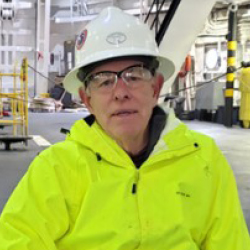
Consultant/Compliance/Expert Witness, Marine Safety Consultants
Capt. Gifford started his career in the late sixties, advancing to master unlimited in 1992. He has been an adjunct professor at Massachusetts Maritime Academy for over 20 years. Gifford came ashore in 2003 and was the port captain for The Steamship Authority for 15 years. After retiring he has been employed by Marine Safety Consultants. He has been affiliated with the PVA for well over 20 years and a four-term president of the Boston Marine Society.