
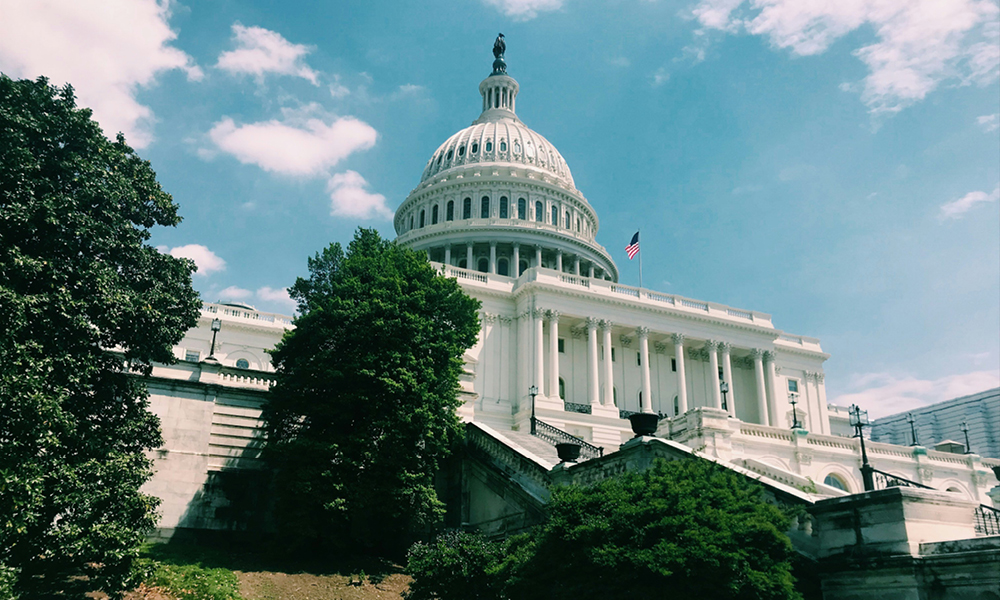
As the second session of the 119th Congress gets underway, the House and Senate closed out 2025 with a series of actions that will shape the operating, regulatory, and economic environment for passenger vessel operators. Over the past several weeks, lawmakers finalized a new U.S. Coast Guard authorization as part of the annual defense bill, reintroduced bipartisan legislation aimed at curbing excessive credit card swipe fees, and launched a new bipartisan Congressional Ferry Caucus to elevate attention to ferry issues on Capitol Hill. Taken together, these developments and others reflect a busy and consequential period for maritime policy and one that intersects directly with PVA’s legislative priorities.
Coast Guard Authorization Is Enacted
Late last year, Congress completed work on the National Defense Authorization Act (NDAA) for Fiscal Year 2026, which includes the Coast Guard Authorization Act of 2025 as a separate division. Signed into law in December, the NDAA serves as the primary vehicle for authorizing funding levels and policy direction for the U.S. military and, by extension, the U.S. Coast Guard.
Although Coast Guard authorization bills are often viewed through a defense or homeland security lens, they carry important implications for passenger vessel operators. The Coast Guard authorization bill authorizes appropriations through FY 2027 and advances a broad set of measures aimed at strengthening the service’s missions.
The authorization is a result of strong bipartisan support and was refined through bicameral negotiations before being folded into the NDAA. While the legislation is wide-ranging, several sections are particularly relevant to the PVA vessel members, including:
- A prohibition on the removal of aids to navigation (AtoN) in several Coast Guard sectors until an extensive study is preformed and reported
- The addition of felony level penalties for the operation of a vessel “in a grossly negligent manner that endangers the life, limb, or property of a person”
- A study of commercial amphibious vessels
- Safety requirements applicable to overnight passenger vessels carrying 250 people or more or operating internationally
For PVA members, the importance of sustained Coast Guard funding cannot be overstated. While the Coast Guard’s mission and focus is evolving, PVA will continue to press the Coast Guard to fulfill their missions that apply most directly to our members.
Renewed Focus On Credit Card Swipe Fees
Another notable development over the past month has been the reintroduction of the Credit Card Competition Act, a bipartisan effort aimed at addressing the exorbitant swipe fees charged by credit card companies. Sponsored in the Senate by Roger Marshall (Kan.) and Dick Durbin (Ill.), and in the House by Lance Gooden (Texas) and Zoe Lofgren (Calif.), the legislation seeks to inject competition into a system too long dominated by two major card networks.
For passenger vessel operators, credit card swipe fees have become a significant and growing cost of doing business. From ticket sales and reservations to onboard food, beverage, and retail purchases—electronic payments are now the norm. Swipe fees paid to credit card processors are assessed as a percentage of each transaction and rise as ticket prices increase to keep pace with inflation, labor costs, fuel prices, and regulatory compliance. These fees quietly erode profit margins year after year.
The legislation would apply only to the nation’s largest banks, those with assets of $100 billion or more, and would require that they offer at least two unaffiliated payment networks on their credit cards. By giving merchants a routing choice, the bill aims to introduce competition without eliminating rewards programs or consumer protection.
Swipe fees paid to credit card processors are assessed as a percentage of each transaction …. These fees quietly erode profit margins year after year.
While similar proposals have surfaced in prior Congresses, the bill’s reintroduction comes with renewed momentum, including high-profile interest from the White House and continued bipartisan support. For PVA, this legislation remains an important economic issue. Excessive swipe fees function as a hidden tax on passenger travel, increasing costs for operators and passengers alike and limiting the ability of businesses to reinvest in vessels, safety, crews, and customer experience.
A New Voice For Ferries On Capitol Hill
The past month also saw the formal launch of the bipartisan Congressional Ferry Caucus. The caucus was founded by U.S. Representatives Emily Randall (Wash.), Nick Begich (Alaska), John Garamendi (Calif.), and Nicole Malliotakis (N.Y.), reflecting the geographic diversity of ferry-dependent regions.
The Ferry Caucus “aims to promote the benefits of and advocate for the long-term federal investment in public ferry systems, including marine, shoreside, and workforce needs.” The caucus seeks to elevate ferry transportation within congressional discussions that have historically focused on highways, rail, and aviation. Ferry systems play a critical role in communities across the country—from dense urban transit networks to rural and island routes—supporting commuting, tourism, commerce, and emergency response.
Looking Ahead
Taken together, these developments point to a dynamic federal policy environment entering 2026. Congress has demonstrated strong support for the Coast Guard, renewed interest in addressing economic pressures on Main Street businesses, and growing recognition of the importance of ferry systems nationwide. PVA will continue to engage on each of these fronts, advocating for fair economic policies, practical regulation, and sustained investment in maritime safety and passenger vessel operations.
As always, we will keep members informed as these issues evolve and as opportunities arise to advance the interests of the passenger vessel industry in Washington. One such opportunity will be when PVA members gather in Washington, D.C. for our annual Capitol Hill Lobby Day. Dates to be determined soon.

Richard Patch is the Legislative Director of the Passenger Vessel Association.