
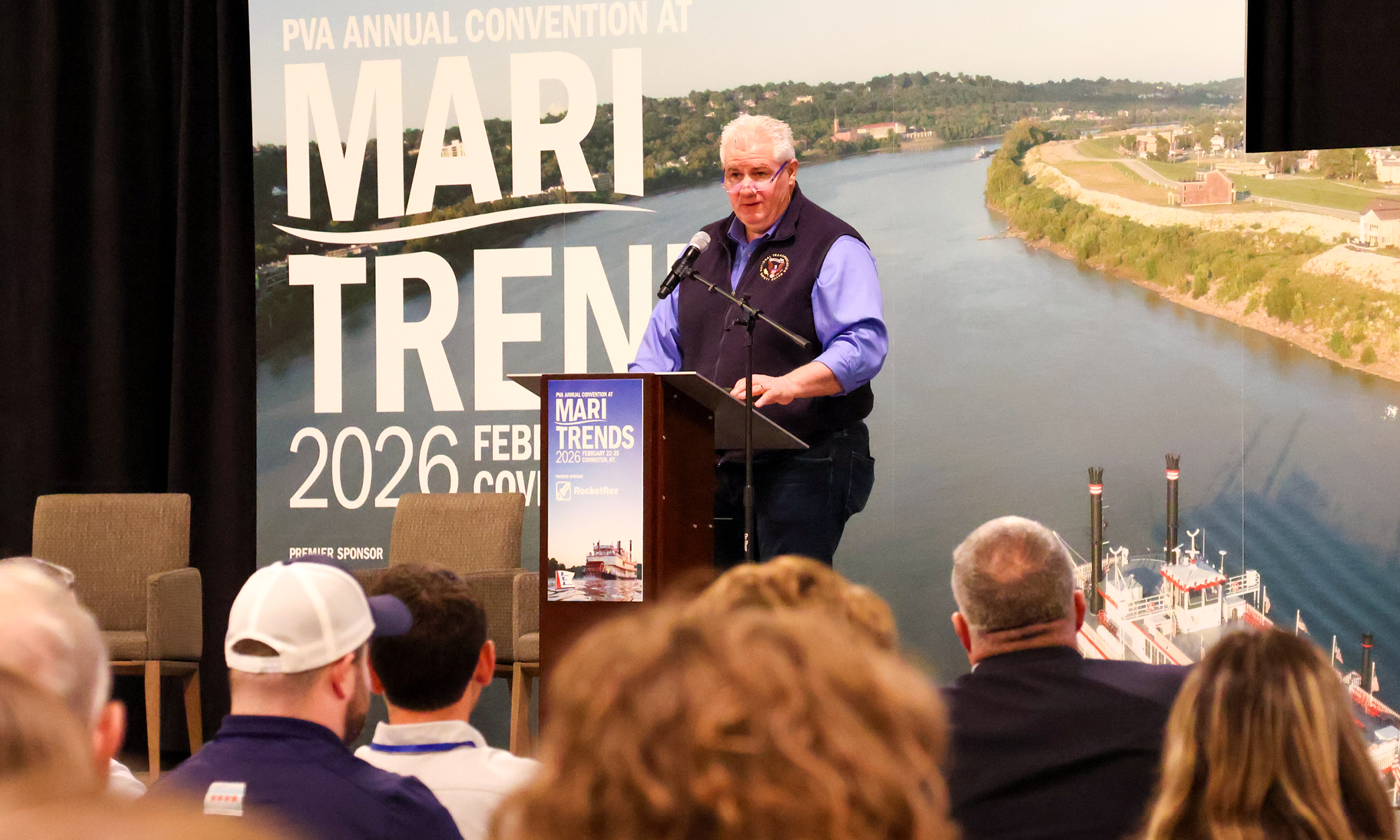
Determine the probable cause of transportation accidents and formulate safety recommendations to improve transportation safety. That’s the mission statement of the National Transportation Safety Board (NTSB), an independent federal accident investigation agency established in 1967. While the sight of a team in blue jackets with bright yellow letters may cause unease, their skilled investigators bring not only their expertise but their compassion to each job as they look to make the nation safer. Former NTSB Board Member Todd Inman joined PVA in Covington to share insights and advice from his career.
With a resume including State Farm Insurance agent, chair of the Greater Owensboro Chamber of Commerce, and chief of staff of U.S. Department of Transportation, Inman has never lost sight of being a kid from a small Kentucky town that he described as having 3,000 people, two stoplights, and a Dairy Queen. In his career, he’s worked with businesses large and small during their most challenging times.
He brought a little levity to the start of the session, saying “We’re from the government, we’re here to help…You’re supposed to laugh at that.” Despite the light tone, he was serious that he and his team are there to help. While he expressed hope that audience members would never find themselves in a situation needing the NTSB, he offered advice to make it an advantageous opportunity should it arises.
Their team is made of expert investigators, with a dedicated maritime division of more than 20 people. Many in the division maintain captain’s licenses and have extensive operational experience.
As an independent, fact driven organization, the NTSB has no regulatory authority. It is this independence that enables them to give an unbiased perspective. “We’re not there to fine you, and we’re not there to regulate you,” Inman explained. “We’re there to determine probable cause and recommendations.” Their team is made of expert investigators, with a dedicated maritime division of more than 20 people. Many in the division maintain captain’s licenses and have extensive operational experience. Several staff spent 10-15 years in the industry before joining the NTSB, bringing to the group years of firsthand experience and knowledge.
The NTSB employs the party process and will ask those involved, such as a vessel operator or owner, to be a party to the investigation. With a little over 430 people at the organization and over 1,000 investigations a year, they can’t do it alone. The party process is fully transparent, and those involved learn everything the NTSB team learns, sit in the room with investigators discussing the information, and can review all factual reports. Parties are also allowed to bring in their own experts. The process not only supports the investigation, but the individuals involved. “If you see safety issues, you can actually address them immediately,” Inman explained. With their extensive experience, NTSB members can also help parties manage what is likely to happen and to better understand timing of when things may occur.
NTSB investigations and reports aim to make transportation safer. Inman acknowledged that it’s not possible to make any mode of transportation 100 percent safe. For example, he explained that there are approximately 40,000 fatalities on roadways each year and that this number could possibly be brought down to 1,000—if the national speed limit were dropped to five miles per hour. It’s not a feasible solution. In maritime, to make the waterways completely safe, vessels would never leave the dock and would never have passengers on board. However, the goal is not to put companies out of business. “We’re trying to find a way for them to flourish in business, but do it in a safer, better method,” Inman said.
In recent years, Inman stated that some of the most effective tools they’ve found are safety management systems (SMS) and crisis plans. He shared the famous quote of former boxer Mike Tyson who said, “Everyone has a plan until they get punched in the mouth.” Inman applied this reasoning to an SMS and a crisis plan. They are never finished or complete and must be continuously developed. As risk and technology evolve, an SMS and an operation must also evolve.
He credited PVA with its development of the SMS guide and crisis communication plan Flagship. While an SMS is not required of all operators, Inman urged attendees to start looking into it from a voluntarily as it will save lives. He discouraged approaching it as simply a checklist. “You can be a better organization,” he explained. “It enhances incident response and it matures over time. Meaning the earlier that you start, the stronger it becomes.”
“You can be a better organization,” he explained. “It [an SMS] enhances incident response and it matures over time. Meaning the earlier that you start, the stronger it becomes.”
Inman mentioned a MariTrends education session that he sat in on that morning. The session focused on fire prevention including working with local land-based firefighters to build relationships and share knowledge long before a crisis arises. He said he was thrilled to hear this, and mentioned an apropos book titled, “Dig Your Well Before You’re Thirsty” by Harvey Mackay. A business book, it focuses on building and maintain strong networks with a goal of helping others and creating mutual value.
Inman encouraged attendees to apply that mindset not only to connecting with local fire departments, but to getting to know NTSB marine investigators as well. He explained, “It’s much easier to meet someone today. Then, whenever an accident occurs, to say, ‘It’s good to see you again. I hate that it’s under these circumstances,’ rather than, ‘Who are you and what role did you play in this accident?’” For PVA members unsure of whom to contact, Inman suggested reaching out to the NTSB in general and they would help make the connection with the appropriate person or team.
Inman stressed the importance of spokesperson guidance and company culture. In the event of an incident, he told attendees that it’s fine to say you’re sorry.
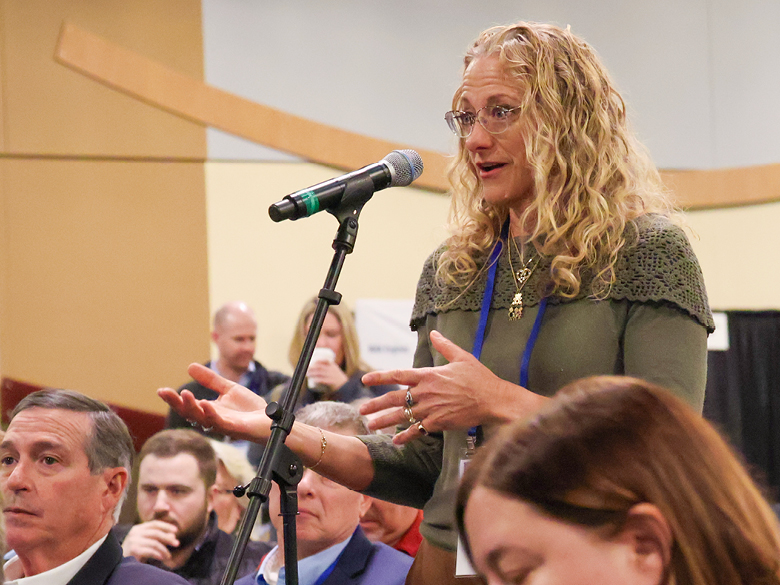
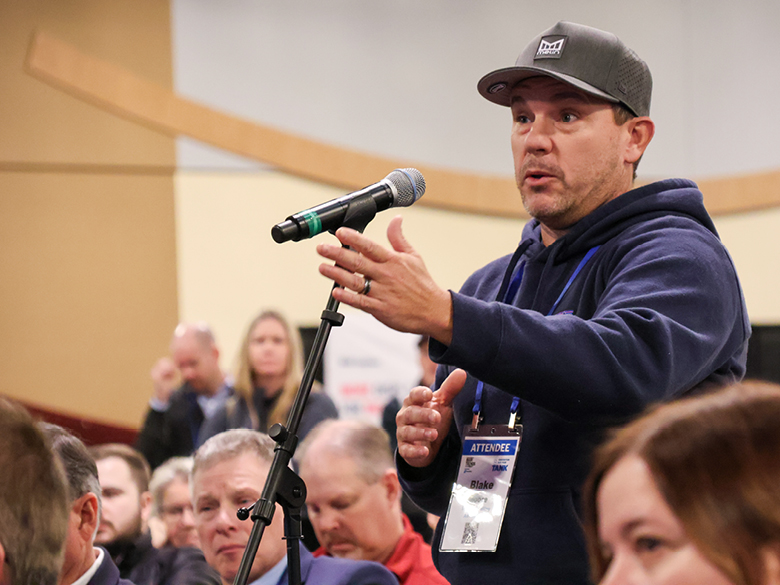
During the Q&A session, an audience member noted the struggle his operations has had trying to make a connection with their local fire department. Despite repeated attempts, they’ve had no success and asked for advice. An approach Inman said they’ve taken is to remind fire departments of the unique situation of fighting a fire on a boat and that it is in their best interests to work with operators before an emergency occurs to protect the lives of the firefighters. He extended his earlier offer to try and help the operator make the connection in question.
In addition to building relationships with the NTSB and fire departments and implementing an SMS, Inman stressed the importance of spokesperson guidance and company culture. In the event of an incident, he told attendees that it’s fine to say you’re sorry. He shared a quote from poet and civil rights activist Maya Angelou, “I’ve learned that people will forget what you said, people will forget what you did, but people will never forget how you made them feel.” Having worked closely with the families of victims, he underscored the importance of expressing empathy and understanding for the gravity of what they’re going through. Empathy may be the most important trait one can display when dealing with an accident. It doesn’t mean saying you’re sorry that you caused the accident but expressing sorrow that this has happened to them. “Tell them that you care,” Inman said. “That will probably make the biggest difference that you can do in the initial days and months of the investigation.”
“Tell them that you care,” Inman said. “That will probably make the biggest difference that you can do in the initial days and months of the investigation.”
When an attendee asked about this point during the Q&A, Inman acknowledged that some may advise that silence is a better option. However, silence can speak volumes. He pointed out that the operator is part of the community where they do business and will remain so. It is meaningful not only to the families involved, but to the community at large when an operator stands up and expresses empathy for what has occurred.
Culture within an organization matters greatly. “When culture and policy clash, culture always wins,” Inman said. The best policy or manual is ineffective if the people in the company don’t believe in it and carry it through. Culture comes from the top and it’s important to let people know they can say no or share an opinion, but they can’t stop all progress.
Inman took time to recognize good Samaritan mariners whom he referred to as the unsung heroes of transportation disasters. After 9/11, after the plane crash commonly known as the “miracle on the Hudson,” after the Sandy Ground ferry fire, passenger vessels were among the first responders. “Safety is not just compliance,” Inman said. “It’s preparation, it’s partnership. It’s culture. It’s stepping forward when others step back.” These actions must be applauded.
“Safety is not just compliance,” Inman said. “It’s preparation, it’s partnership. It’s culture. It’s stepping forward when others step back.”
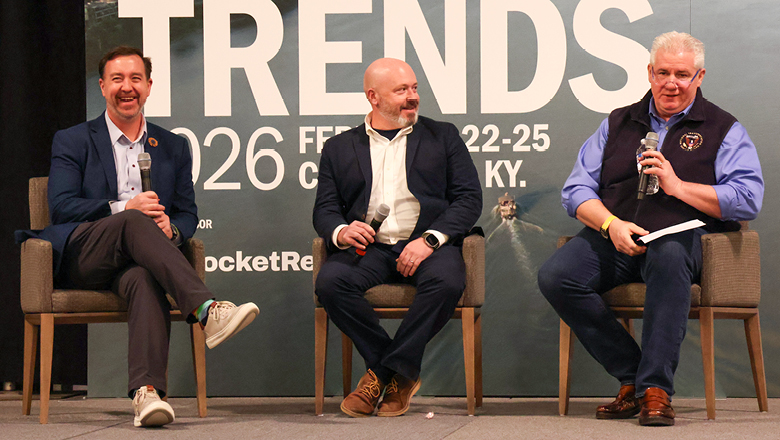
He invited Captain Nate Handy and Chad Barth from City Cruises to join him on stage and talk about their operation’s role in the response to the midair crash at Ronald Regan Washington National Airport in January 2025. A dinner cruise had just returned to the dock about a half hour before the crash. The captain noticed a heavy police response from the neighboring harbor police facility and within minutes, two firemen and a police officer let themselves in through the operation’s gate with a fob previously given to them by City Cruises. The captain on duty called Handy to inform him that they were dropping line and heading to the scene of the crash to assist first responders.
There were some operational considerations that night. The vessel was one of the smaller ones in the fleet but was used as it was already in service. It had just returned from a cruise and disembarked guests, so the water tank hadn’t been replenished, the sewage hadn’t been pumped, and it hadn’t been refueled. As such, the boat could only remain on scene for 24 to 36 hours. Maintaining compliance with their COI and the 12-hour watch standing was also top of mind. The police department helped by running shuttles for the crew.
City Cruises was able to support the NTSB, DC Fire and EMS, Metropolitan Police, the divers, and all the agencies and teams that responded to the crash. They stayed on the scene for six days, offering food, shelter, and warmth in frigid temperatures.
For Handy and Barth, the lessons learned were how important it is to develop and maintain strong relationships with local agencies such as the fire and police departments. The teams were on a first name basis, and the officers knew which boat had just been out. There was no need to spend time on introductions or trying to figure out which boat was in service. “It couldn’t have gone more smoothly and quickly,” Handy say.
Their company culture enabled the crew to do the right thing without first checking with management. The crew had no question about what they should do. They could act, calling Handy to inform him instead of having to call to request permission.
Above all, the operation was adaptable. In such scenarios, it may not be clear what’s needed or for how long. The operation remained nimble and offered any assistance they could without knowing what to expect.
Inman has been involved in countless investigations through the course of his career. He has been on the scene of accidents and worked with families in the aftermath. It isn’t easy and he reminded attendees that if they or their crews are ever involved in an incident, even in the role of a responder, to let their teams know that it’s okay to not be okay. “Lean on your support network. Make sure you check on your people,” he advised.
As the session closed, Inman reminded the audience that the goal is to work together. When an incident does occur, both parties are working for the same purpose; to discover what happened and to prevent it from happening again. “From tragedy we draw knowledge to improve the safety for us all.”
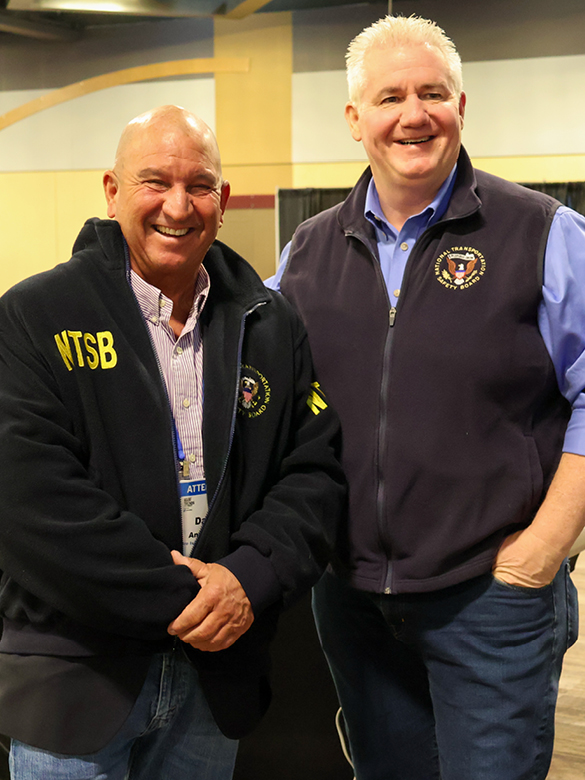
Todd Inman spoke with Chad Barth and Captain Nate Handy, Holly Lewis with Fiesta Cruises and Blake Moore with Theralani Sailing Adventures asked questions during the Q&A; Dave Anderson with Fire Island Ferries tried on Inman’s NTSB jacket.