
While 2025 was a busy year for vessel deliveries and launches in the passenger vessel industry, the next few years look to be just as packed with a long list of vessels in the works or scheduled to launch. Fleets from the Florida Keys to Alaska will soon be expanding with the arrival of new boats. Some PVA members are working on projects renovating or reimagining ships that already exist, one including a steam engine from 1915. Others have been working with cutting-edge technology on vessels sure to be the first of their kind.
Vessel: American Anthem, American Encore, American Grace, American Mariner, American Maverick, American Navigator, American Ranger, plus two yet unnamed
Operator: American Cruise Lines
Builder: Chesapeake Shipbuilding
Type: Overnight cruise ship
American Cruise Lines continues its steady pace of expanding its fleet with nine new vessels planned for completion through 2028. These include five new vessels in their American Riverboats line and four of their Patriot Class ships, part of their ongoing Project Blue series. These additions will bring the size of the fleet to 30 ships.
The Patriot Class ships feature capacity for 130 guests, five decks, suites with private balconies, multiple guest lounges, bow terrace and observation area, a fitness center, a grand dining room and casual café, as well as elevator access to all decks. Joining this line are American Maverick and American Ranger, launching in 2026, and American Mariner and American Navigator, launching in 2027. All four will sail East Coast itineraries that the company offers.
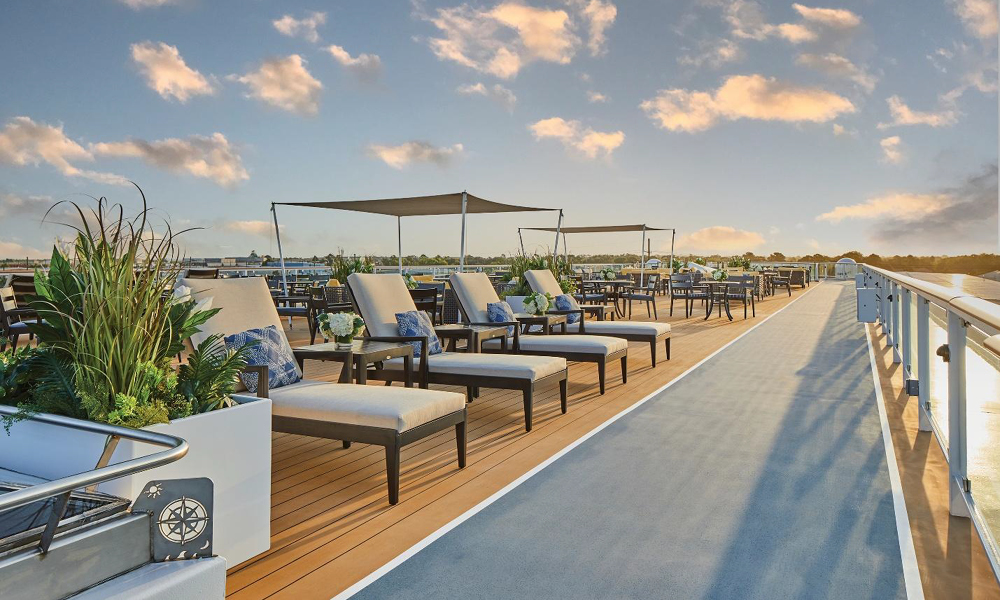
The new cruise ships in the American Riverboat series include American Encore launching in 2026, followed by sister ships, American Anthem in 2027, and American Grace in 2028. Two more presently unnamed ships will follow in 2028. These vessels have a larger capacity of 180 passengers, offering all guests private balcony accommodations. The five decks feature multiple dining options, a fitness center, a top deck lounge with an outdoor walking track, among other amenities.
Vessel: Watts Up
Operator: Angel Island-Tiburon Ferry Co.
Naval Architect: EV Maritime
Type: Passenger ferry
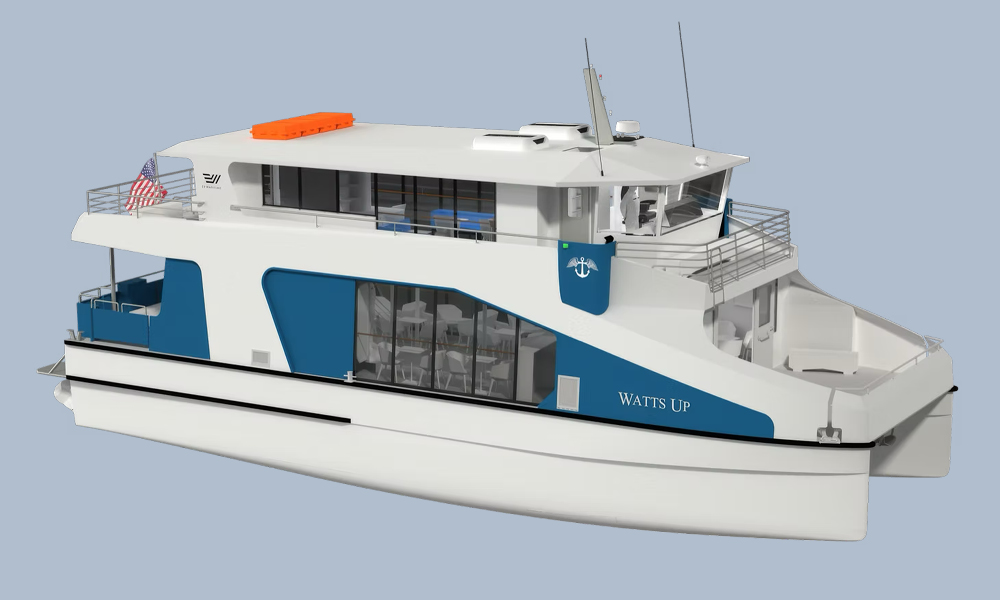
In 2024, California’s Angel Island-Tiburon Ferry Co. contracted fellow PVA member EV Maritime to design a new plug-in hybrid vessel for their fleet. That year, through the town of Tiburon, the company was awarded a $24 million grant from California Air Resources Board (CARB). The grant will be used toward converting the fleet of three ferries to all-electric vessels, as well as developing the necessary supporting infrastructure. The company secured further grants bringing the total to $31 million.
The new 64′ vessel, tentatively named Watts Up, is estimated to cost $12 million and replaces the ferry company’s vessel Tamalpais. Angel Island-Tiburon Ferry Co. has contracted with another PVA member, ZeroMar, to convert its other two vessels—the 400-passenger main vessel, Angel Island, and 98-passenger water taxi, Bonita—to 100 percent electric power. The converted vessels are expected to be finished in 2026, and the new build is scheduled for 2027.
Vessel: Battery Steele
Operator: Casco Bay Lines
Naval Architect: Elliott Bay Design Group
Builder: Senesco Marine LLC
Type: Passenger and vehicle ferry
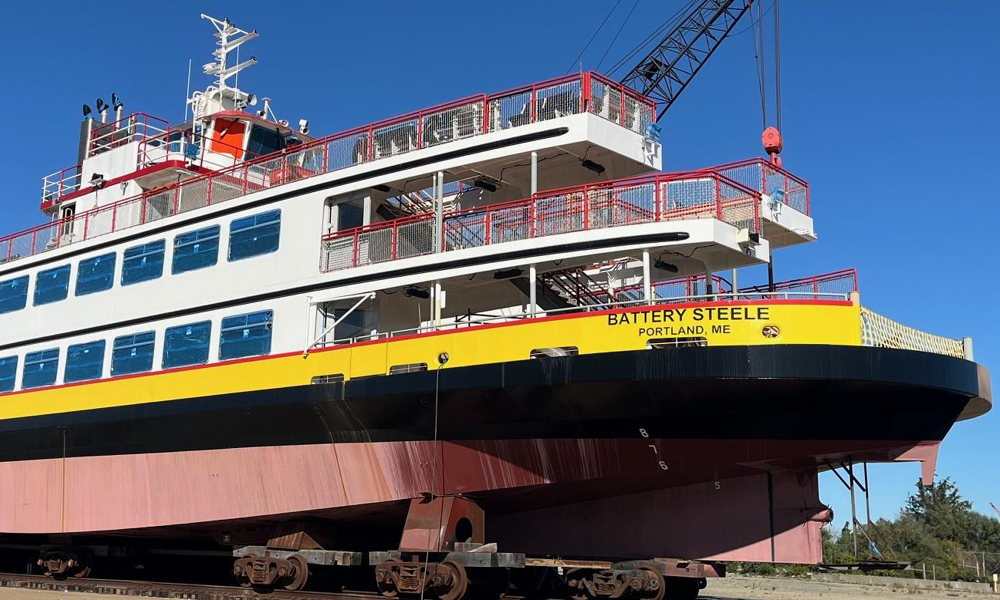
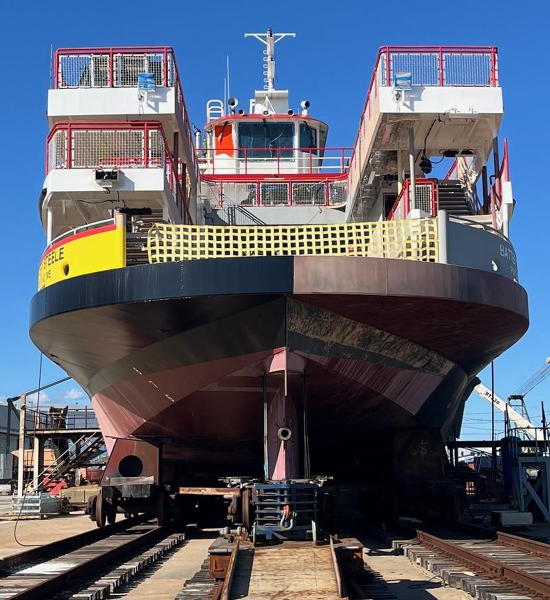
Looking to spring of 2026, a new passenger and vehicle ferry is expected to arrive in Maine to join the Casco Bay Lines fleet, replacing an existing diesel-powered vessel. Construction on the hybrid-electric vessel continues at Senesco Marine LLC. By mid-September, all the engine room equipment was in place and secured on their foundations. This included two generators, three transformers, the main boiler for the heating systems, and a variety of smaller units.
The ferry, Battery Steele, will have capacity for 15 vehicles and 599 passengers spread across three decks, including a sun deck with unobstructed views. The double-ended configuration eliminates the need to turn the vessel around, reducing the required speed and energy consumption for the ferry even though it is larger than the vessel it is replacing. The vessel will charge using a shoreside charging system while docked in Portland and will operate in battery-powered mode whenever possible. The hybrid propulsion system in the new vessel is expected to eliminate up to 800 metric tons of CO2 emissions annually.
Once the vessel arrives in Maine, there will be some commissioning work associated with getting the vessel and the charger in sync and crew training and familiarization is planned to start in late spring.
Vessel: Avalon Jet Express
Operator: Catalina Express
Naval Architect: Incat Crowther
Builder: Marine Group Boat Works
Type: Passenger ferry
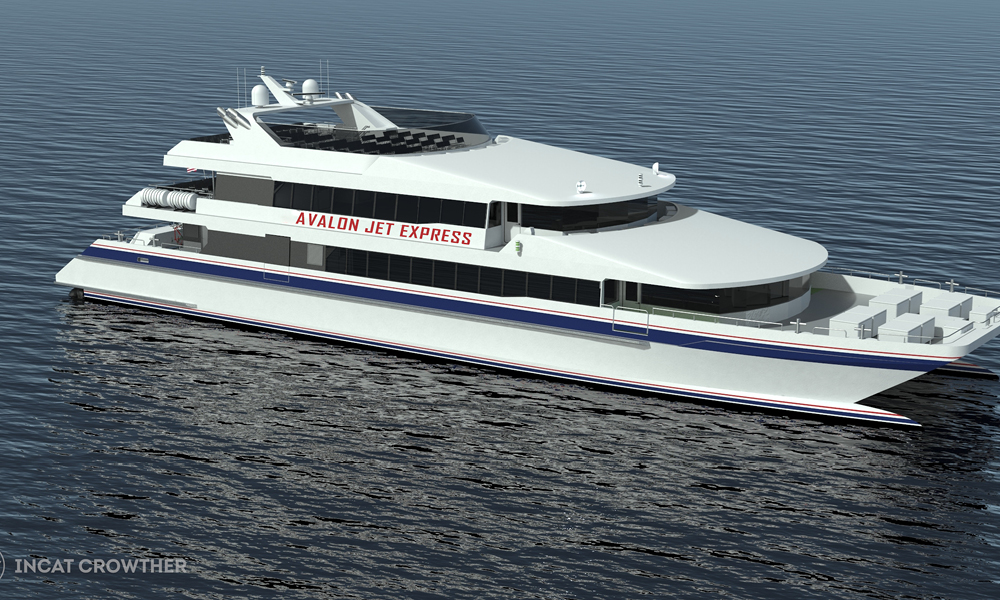
Avalon Jet Express is in the works for Catalina Express and will be the largest in its fleet upon completion. The 137′ ferry will replace three smaller Tier 2 and Tier 3 ferries, maintaining capacity and increasing environmental performance. Capable of transporting up to 516 passengers across three decks at speeds of up to 37 knots, the new vessel will be powered by renewable diesel fuel (R-99) comprised of plant-based stocks.
This new low-emission, renewable diesel-powered passenger ferry will be powered by four mtu 12V4000 M65L engines, delivering a combined output of over 7463 kW (10,000 bhp). The EPA Tier 4-certified engines will be paired with a selective catalytic reduction (SCR) system and a future diesel particulate filter (DPF) system once certified by CARB to meet the CARB commercial harbor craft regulations, as well as U.S. Coast Guard acceptance for safety.
Naiad active motion transom mounted interceptors and T-foils fitted to each hull to actively control the pitch and roll motions of the vessel. The ferry will feature four Hamilton Jet HTX65, four Reintjes VLJ930/1 Ratio 1.725:1, and a 24-volt battery system. Construction is underway and the ferry is expected to be delivered in 2027.
Operator: Chatham Area Transit Authority
Naval Architect: DeJong & Lebet, Inc.
Builder: Derecktor Shipyard
Type: Passenger ferry
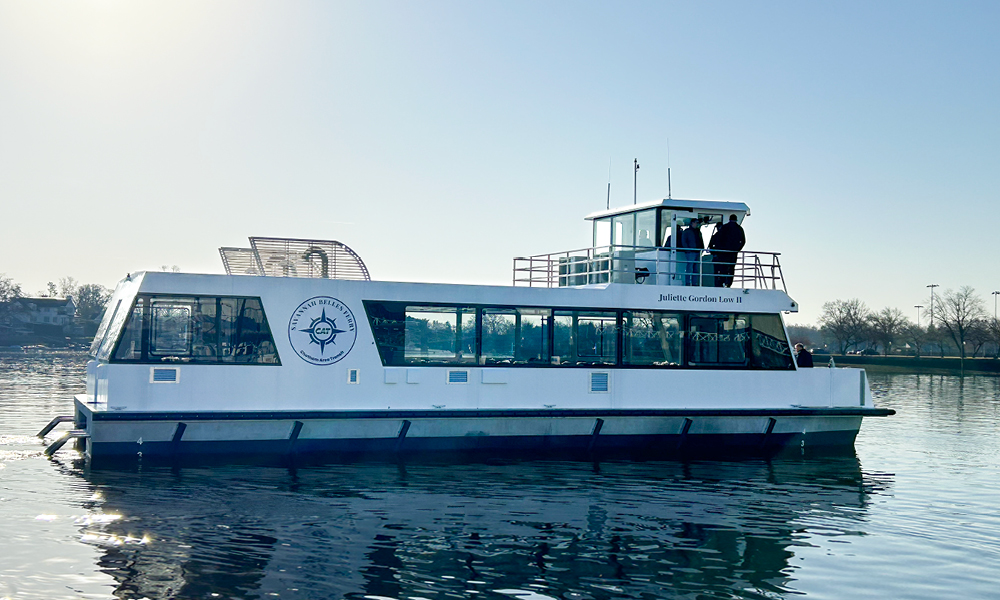
Chatham Area Transit has contracted to build a third 65′ hybrid passenger ferry for its Savannah River fleet. The Subchapter T vessel will have a capacity of 150 passengers plus two crew on protected waters. It is scheduled for delivery in the summer of 2026.
The catamaran will join two nearly identical ferries delivered in 2025, providing clean, quiet, and efficient transportation to commuters and visitors in Savannah. The previous two ferries were also designed by DeJong & Lebet and built at Derecktor Shipyard. The new ferry will have some design improvements from the first two vessels.
The vessel features an enclosed main deck with Freedman seating and AC (11 tons) and heat and forward boarding area on the main deck. The aluminum twin hull vessel will carry 800 gallons of fuel. The hybrid propulsion systems on all three ferries significantly lower fuel consumption and minimize environmental impact of the fleet. The ferry is powered by a hybrid electric propulsion system with a pair of Cummins variable speed diesel generator sets developing 200 kW each, and a pair of Lithium-ion battery banks with a capacity of 196 kW-hr each. The 250 HP electric propulsion motors drive jet drive units furnished by MJP Ultrajet. The hybrid electric system also provides power to run the house loads. Several other PVA associate members are involved in the project with keel coolers provided by Fernstrum, the fire suppression system from Fireboy, Ayres wall panels, and lighting from IMTRA.
Vessel: Manhattan III
Operator: Classic Harbor Line NYC
Naval Architect: Scarano Boat Building
Builder: Scarano Boat Building
Type: Tour and dinner cruise boat
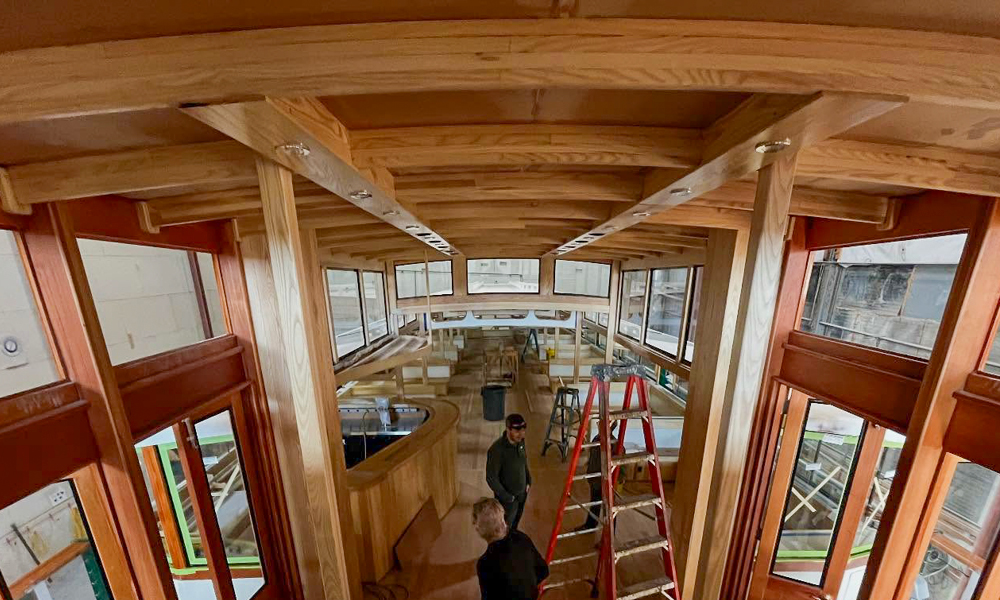
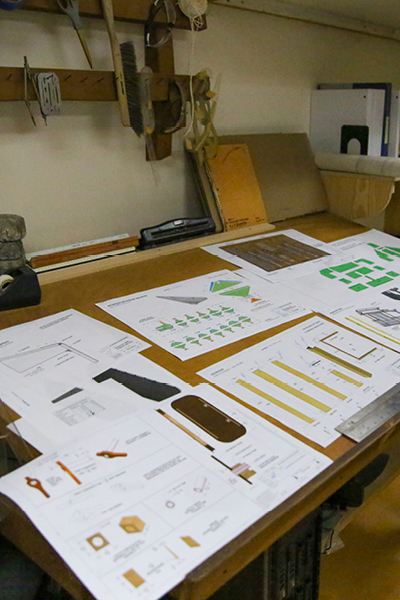
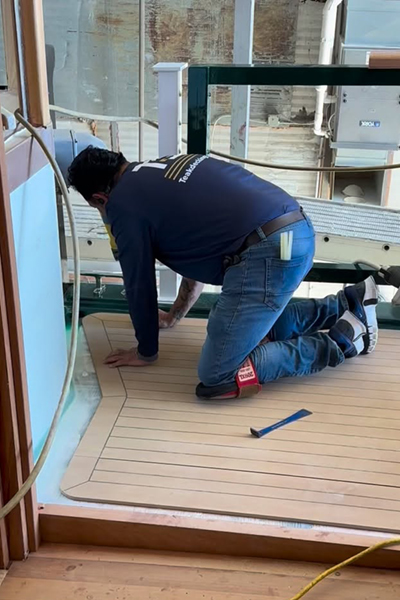
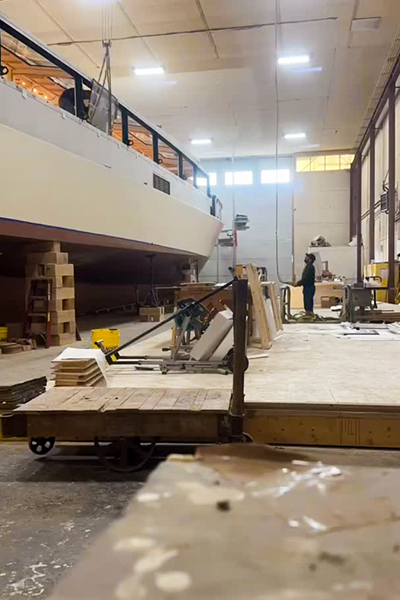
A new wooden yacht will soon be seen cruising the waters of the New York City Harbor. The team at Classic Harbor Line NYC is looking forward to welcoming Manhattan III to their fleet early in 2026. The 149-passenger vessel is the latest iteration of Scarano Boat Building’s Manhattan I.
This new vessel is not only larger than the first two but has a hull of laminated wood whereas the earlier versions were aluminum vessels. Douglas fir and a rare type of cedar are the main structural woods, while guests will enjoy the combination of mahogany and ash detailing throughout the interior of the ship.
Though larger than the first two vessels and with greater passenger capacity, hydrostatics show the Manhattan III should be as easy to push through the water for a more efficient performance. Despite increasing the size, the team worked to maintain the intimate feel of the vessel and the sight lines that allow passengers a clear view from either side of the ship. The 115′ U.S. Coast Guard-certified vessel is currently going through final testing of major systems.
Operator: Delaware River and Bay Authority
Naval Architect: Elliott Bay Design Group
Builder: Senesco Marine LLC
Type: Passenger and vehicle ferry
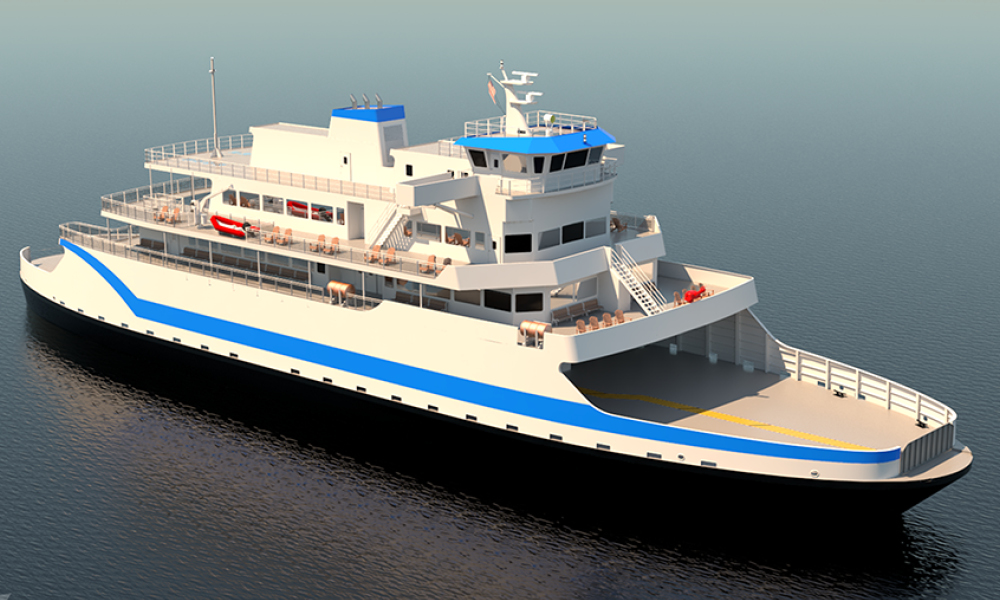
Delaware River and Bay Authority (DRBA) recently awarded a contract to Senesco Marine LLC for the construction and outfitting of a new diesel-hybrid 75-car passenger and vehicle ferry to join the Cape May–Lewes Ferry fleet. The new ferry will eventually replace the Cape Henlopen, a diesel engine ferry that is over 40 years old and serves passengers traveling between Lewes, Del., and Cape May, N.J.
The benefits of the hybrid vessel include lower operating and maintenance costs, decreased emissions at sea and zero emissions while near port and docked. The hybrid and all-electric operating modes are estimated to achieve an annual reduction of over two tons of carbon dioxide per year. Fuel consumption is estimated to be reduced by 35 percent.
The project’s price tag of $78.6 million is partially funded with a $20 million U.S. Department of Transportation grant award. With the recent bid award complete, construction on the new vessel is slated to start early in 2026 with a projected completion date of summer 2029.
Vessel: Falcon
Operator: Fisher Island Community Association
Naval Architect: Elliott Bay Design Group
Builder: Eastern Shipbuilding Group, Inc.
Type: Passenger and vehicle ferry
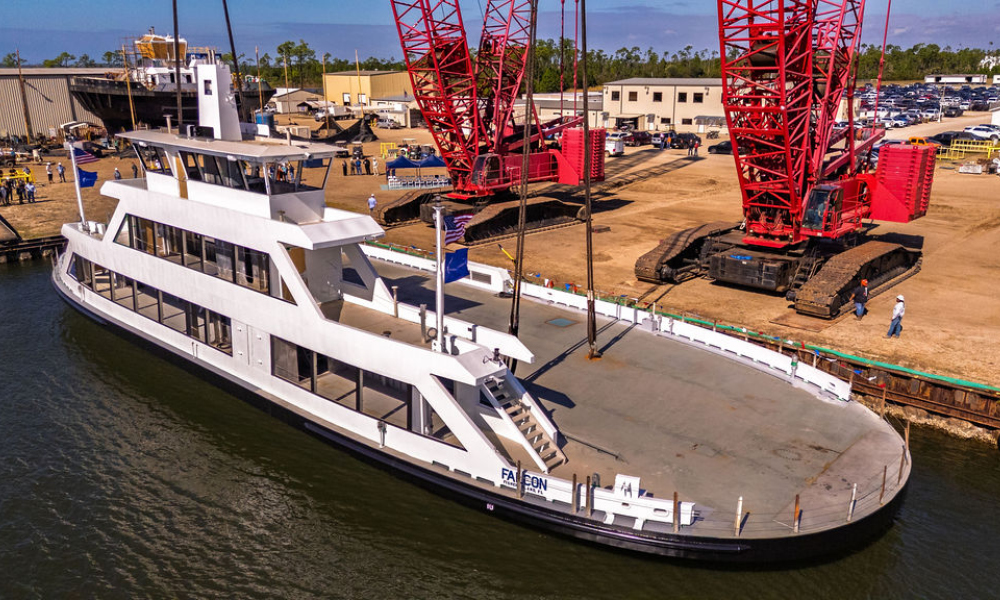
In early November, Eastern Shipbuilding Group Inc. launched a ferry for a Florida island community association. The 152′ vessel will carry up to 30 vehicles and 150 passengers on the route between Miami and Fisher Island. Launched ahead of schedule, the vessel will now proceed through outfitting, systems integration, sea trials and final commissioning ahead of delivery, which is expected in early 2026.
The vessel will be the fifth ferry in the community association’s ferry fleet which provides 24-hour service. The design by Elliott Bay Design Group, Seattle, with a flat vehicle deck and enclosed passenger cabin, allows quick loading and turnaround. Design took six months, followed by 20 months of vessel construction at Eastern’s Allanton Facility. With a 12′ hull depth and 8′ draft, the ferry is propelled by 1,200 BHP turning at 1,800 rpm, according to Eastern’s specs.
Operator: Flagship Cruises & Events
Naval Architect: Aurora Marine Design
Type: Passenger ferry
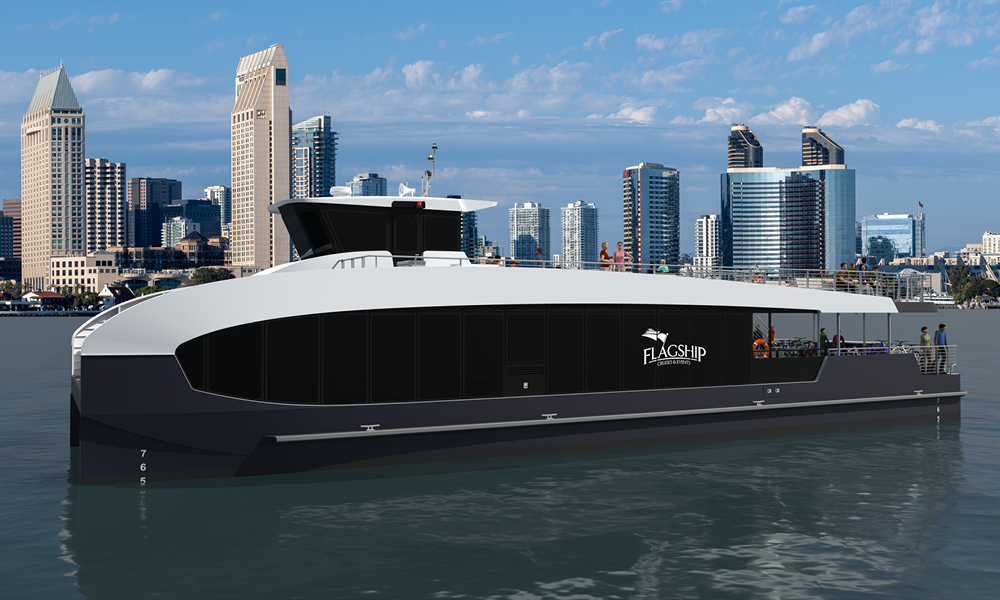
Two zero-emission ferries are being planned for Flagship Cruises & Events in San Diego, Calif. Designed by Aurora Marine Design, a bid package is currently open for shipyards interested in bidding on the construction of the all-electric passenger ferries.
The San Diego ZEST Project (Zero-Emission Sustainable Transportation) will introduce California’s first newly built battery-electric passenger ferries, funded by $15.27 million from CARB and approximately $5.5 million in cost share from Flagship Cruises & Events.
The two zero-emission vessels will replace aging diesel ferries on the high-ridership Coronado–San Diego route on San Diego Bay. The 275-passenger, fully ADA-accessible ferries will include space for bicycles and strollers, shoreside charging infrastructure, and will help train and upskill 50 local workers in clean maritime technologies.
The 90′ ferries will feature two 300KW Danfoss Powertrains, an Echandia 292 KWh LTO battery system, and a 600 KW NACS based charging system.
Vessel: Emerald Clipper
Operator: Clipper Navigation, Ltd.
Builder: Mavrik Marine, Inc.
Type: Sightseeing and excursion boat
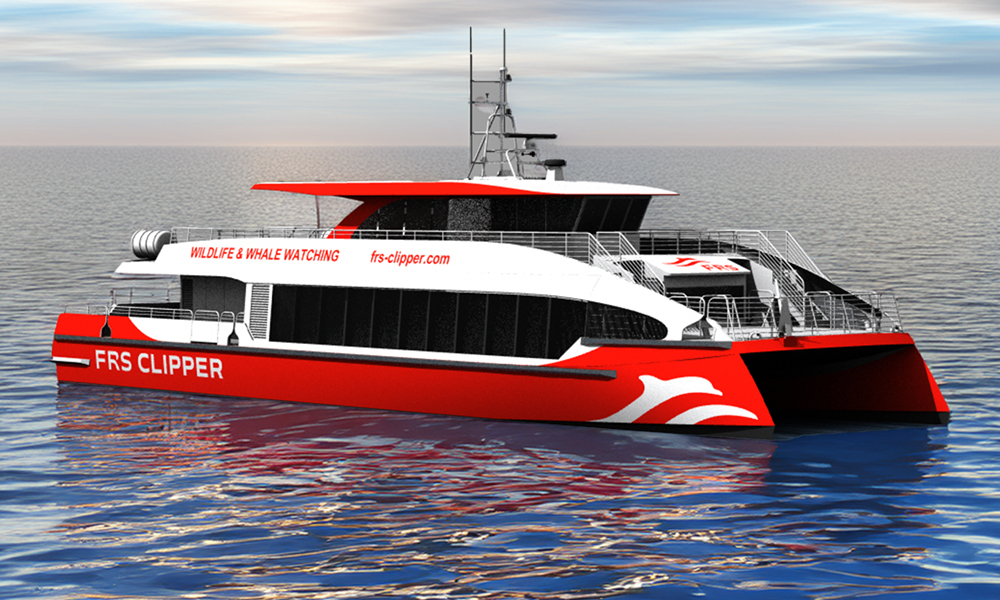
Coming to the Salish Sea near Seattle, Wash., in spring 2026 is the Emerald Clipper, the latest addition to the FRS Clipper Inc. fleet. The new 103′ catamaran will carry up to 150 passengers on wildlife and whale watching experiences.
The vessel will feature two wind-protected viewing decks, allowing guests to be outside in all weather conditions. Those sitting indoors will be able to view wildlife through floor to ceiling windows. The ship will also include a galley serving hot meals and a dedicated naturalist station where passengers can learn about Pacific marine life.
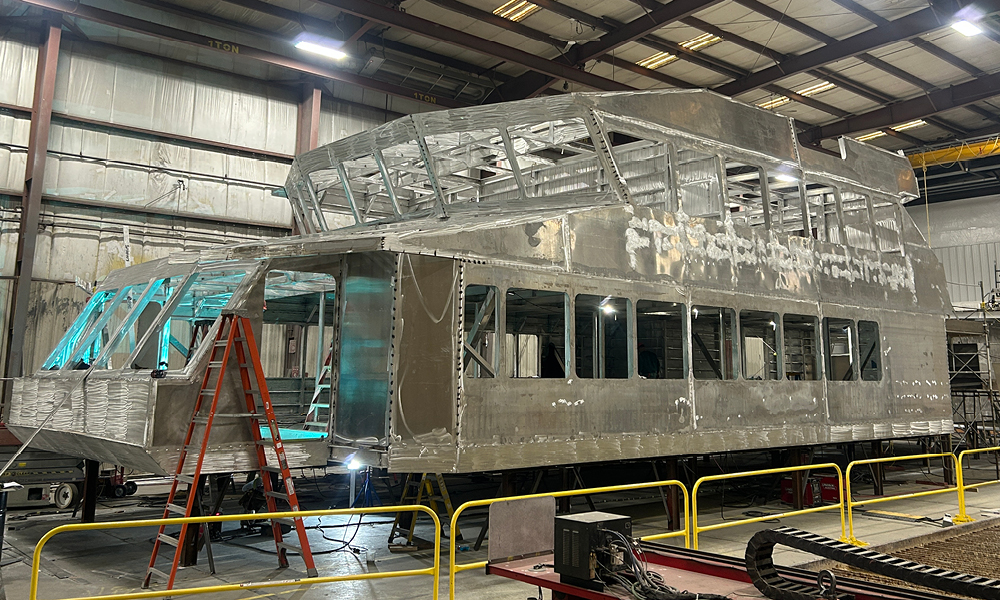
The aluminum vessel will be powered by quad Scania Di16-082M 588bkW and will also include a ZF 665 gearbox, Hamilton HTX42 waterjets, and Kohler generators. Combining improved fuel efficiency with a cruising speed of over 32 knots, the vessel will be able to quickly respond to reported whale sightings. The ceiling and paneling on the vessel are by PVA member Aryes. As of early November, the main deck was welded, and the ship had been moved to a larger shed for the wheelhouse to be attached. It is currently expected to be delivered in April.
Vessel: Holo Nui
Operator: Holoholo Charters
Builder: Holoholo Charters
Type: Sightseeing and excursion boat
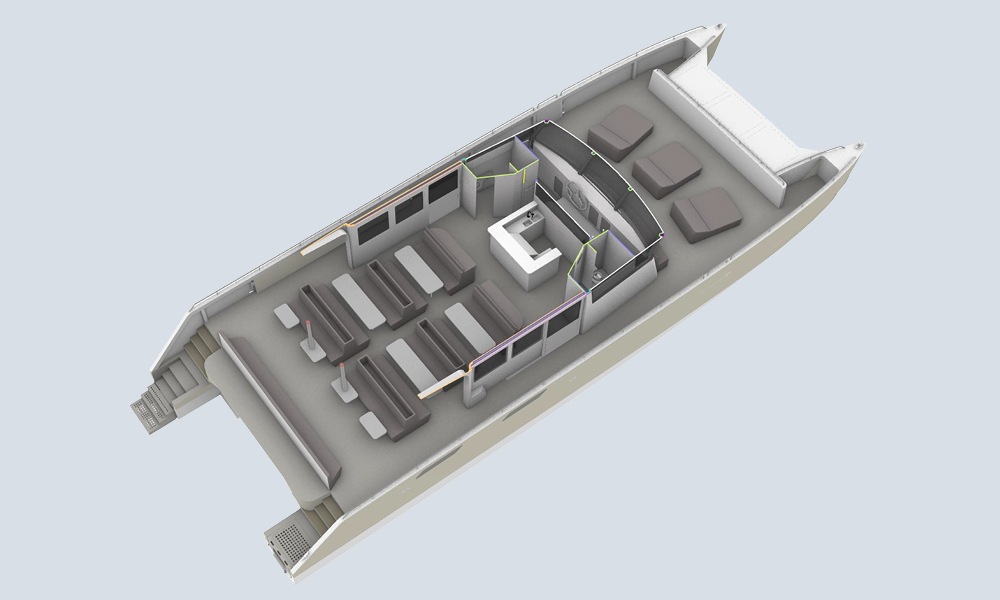
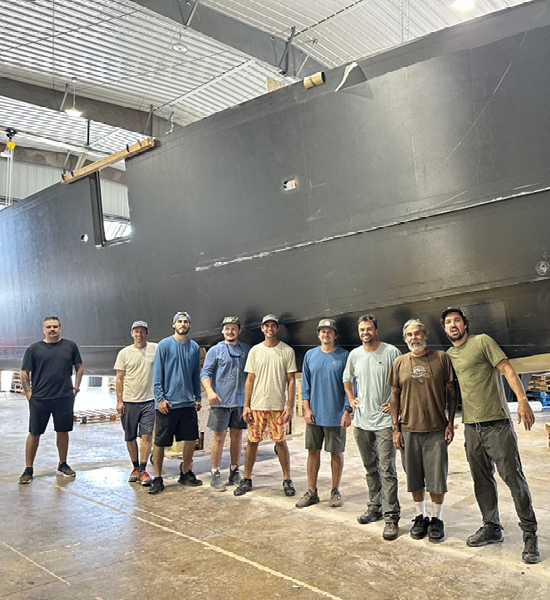
Holoholo Charters has designed and is building a new carbon fiber power catamaran, Holo Nui, to join their fleet in the summer of 2026. Their team partnered with a yacht designer and a naval architect on the project to create a custom-designed tour boat specifically for their location and operations. One of the few tour boat companies that designs and builds their own vessels, they’ve been able to draw from 27 years of operating experience to craft a vessel that enhances safety, comfort, and experience for both passengers and crew. They describe the carbon infusion build as unique in this vessel size and category. Its strong and lightweight construction ensures efficient performance and durability.
The 75′ vessel will be powered by twin Cummins QSL9 diesel engines with 450hp @ 2100 rpm. Also featured is a ZF 325-1 A gearbox. With a top speed of 28 knots, Holo Nui will take guests on snorkeling trips and tours of the Napali Coast and Lehua Crater in Hawaii.
Vessel: Nashville
Operator: Manthey Hospitality
Naval Architect: DeJong & Lebet, Inc.
Type: Dinner cruise boat
Full steam ahead will be the motto for the Nashville, a paddlewheel steamboat undergoing a complete renovation and slated to join Manthey Hospitality in its namesake Nashville, Tenn., in 2026. The vessel previously sailed as the Julia Belle Swain.
The steamboat was originally constructed in 1971 and used steam engines built in 1915 and repurposed from a former vessel. Two D13 series Volvos with 400 hp. rating at 1,800 rpm have been added to run in tandem with the steam engines both for redundancy in propulsion as well as safety. Also included in the overhaul are John Deere gensets, Twin Disc gears, Fernstrum coolers, and thrusters by IMTRA.
The 400-passenger steel monohull boat will offer mostly sightseeing tours starting in the summer of 2026. It will be one of the last three operational authentic steamboats on the Western Rivers. The intention is to have the steam engine run every day as part of a mission to tell the history of the river in which steamboats played a significant role.
Operator: Phillips Cruises & Tours
Builder: All American Marine
Type: Sightseeing and excursion boat
All American Marine is currently building a sister ship to the Chugach Express, which they delivered in 2024 for Phillips Cruises & Tours. The new vessel, like its predecessor, will carry guests on glacier and wildlife tours in Prince William Sound and will be based out of Whittier, Alaska.
The 84.5′ aluminum catamaran will be powered by quad Scania DI16 082M engines (800 mph each) and MJP 350X waterjets. The hydrofoil-assisted hull reduces resistance, increasing speed while cutting fuel consumption and emissions. It is expected to reach speeds of 33 knots fully laden. Its 1200-gallon fuel capacity supports extended-range operations, reducing fuel consumption and operational costs.
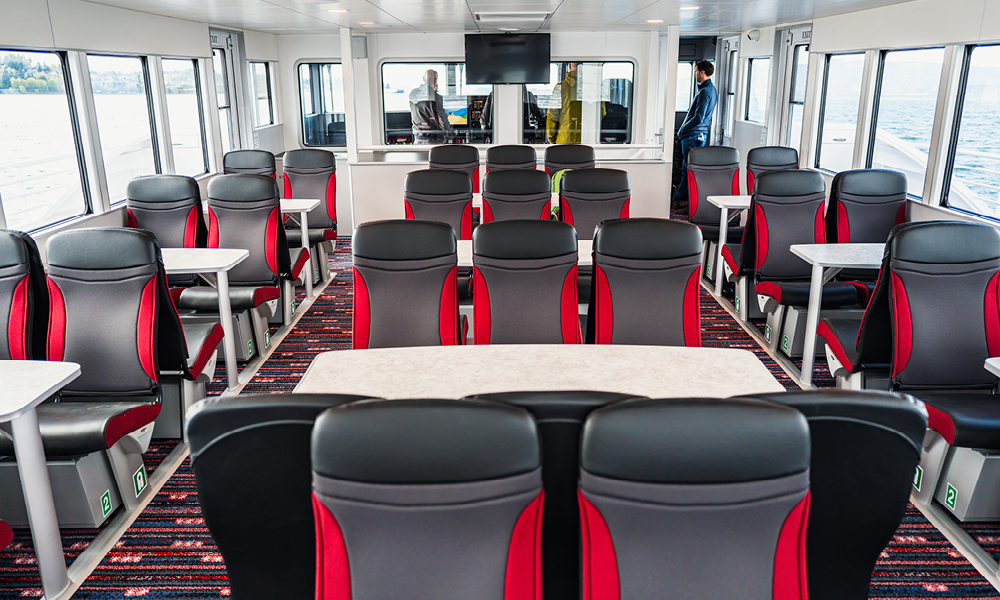
Like the Chugach Express, passengers will be able to relax in 150 fully enclosed seats with electrical outlets and USB plugs at every table. The two decks will include exterior seating and standing room for nature viewing. The entire main deck will have wheelchair access, and the main deck cabin includes wheelchair-designated seating locations. Passengers will be able to enjoy refreshments from a full galley and bar in the main deck cabin.
Operator: PROP Worldwide
Builder: Artemis Technologies
Type: Passenger ferry
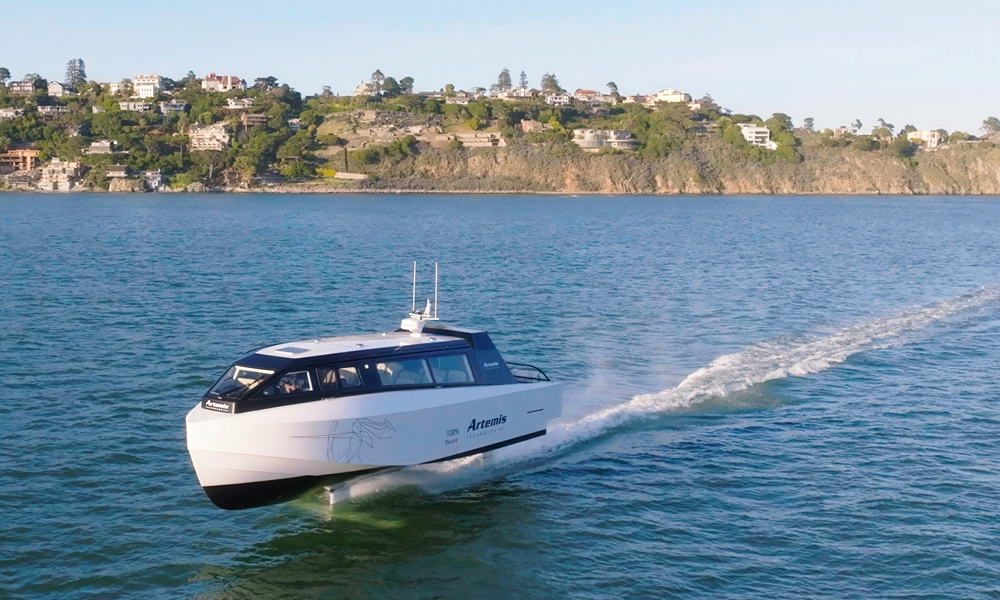
PROP Worldwide recently announced the purchase of an Artemis EF-12 Escape vessel, which can be configured for over 30 passengers. Artemis Technologies’ EF-12 Escape leverages the patented eFoiler® system, which enables vessels to foil above the water, reducing drag, and delivers more than twice the efficiency of traditional diesel ferries.
This first vessel acquisition by PROP Worldwide is partially funded through California’s Clean Off-Road Equipment Voucher Incentive Project (CORE) and marks PROP’s first step to scaling operations in waterway dependent communities that are often overlooked by larger ferry routes. The vessel is scheduled to be delivered in 2027.
Vessel: Crystal Grandeur
Operator: Seafair
Naval Architect: DeJong & Lebet, Inc.
Type: Event vessel
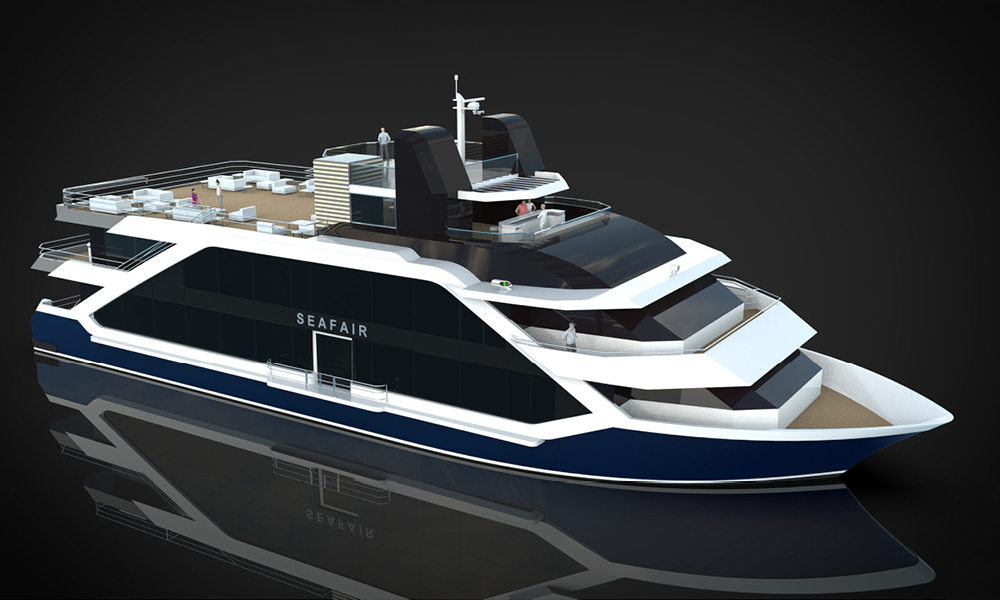
In the summer of 2026, a new megayacht will be sailing in Naples and Marco Island, Fla. Naval architects DeJong & Lebet, Inc., worked on this vessel that was designed specifically for private and corporate events. With a 600-passenger capacity, the vessel will have three decks, a performance stage, and boasts 12,000 sq. ft. of glass-walled event, dining, and entertainment space.
The steel monohull yacht will be powered by CAT engines and gensets. Multiple PVA associate members are contributing to the build with gears by Twin Disc, R.W. Fernstrum coolers, hatches by Advantec, and doors by Fabtek.
Operator: San Francisco Bay Area Water Emergency Transportation Authority
Naval Architect: Teknicraft with Aurora Marine Design
Builder: All American Marine
Type: Passenger ferry
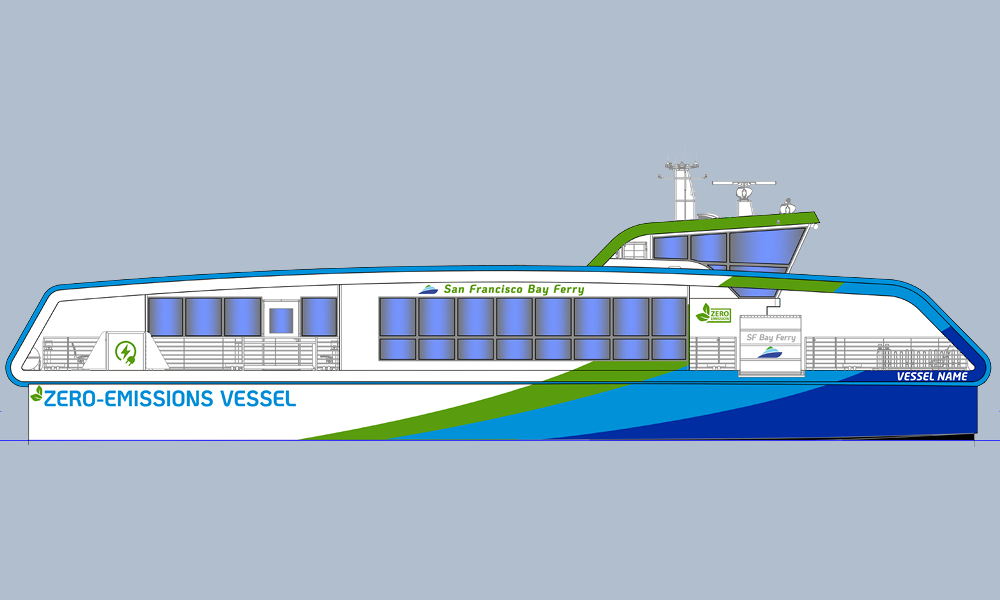
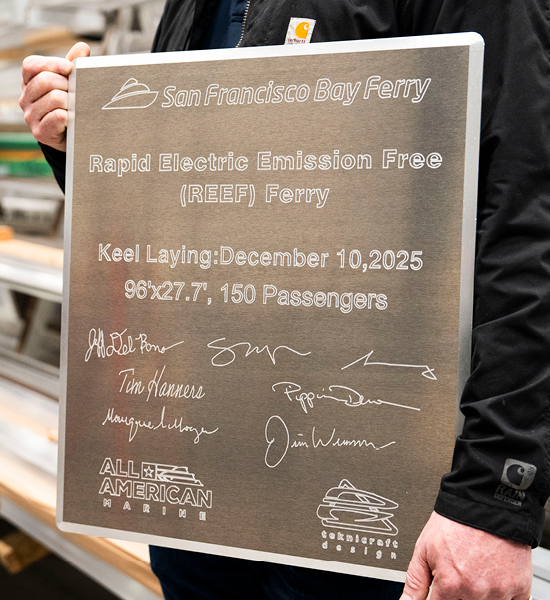
Three 150-passenger battery-electric vessels are in the works for delivery to San Francisco Bay Ferry in 2027. The concept vessel was initially developed by PVA member Aurora Marine Design as part of SF Bay Ferry’s Rapid Electric Emission Free (REEF) Ferry Program. Teknicraft Design further developed the concept and will serve as naval architect.
The integrated propulsion system will be provided by Wärtsilä. The power provided to the vessel’s system will come from a shore connection and be accumulated in the battery energy storage system (BESS) which is comprised of lithium titanium oxide battery modules. The battery architecture, coupled with the proposed hull, allows for two BESSs, one in each hull. Each BESS is made of a total combined energy storage of 437 kWh (218.5 kWh per hull). The vessels feature dual 625-kilowatt electric motors coupled to steerable propulsion pods. The vessels will offer rapid, quiet, and environmentally conscious ferry services with cruising speeds of 24 knots.
The seating design incorporates an open lounge-style interior with fixed seats and bar stools and defined wheelchair locations and wheelchair accessibility throughout the vessel.
Operator: San Francisco Bay Area Water Emergency Transportation Authority
Naval Architect: Incat Crowther
Builder: Nichols Brothers Boat Builders
Type: Passenger ferry
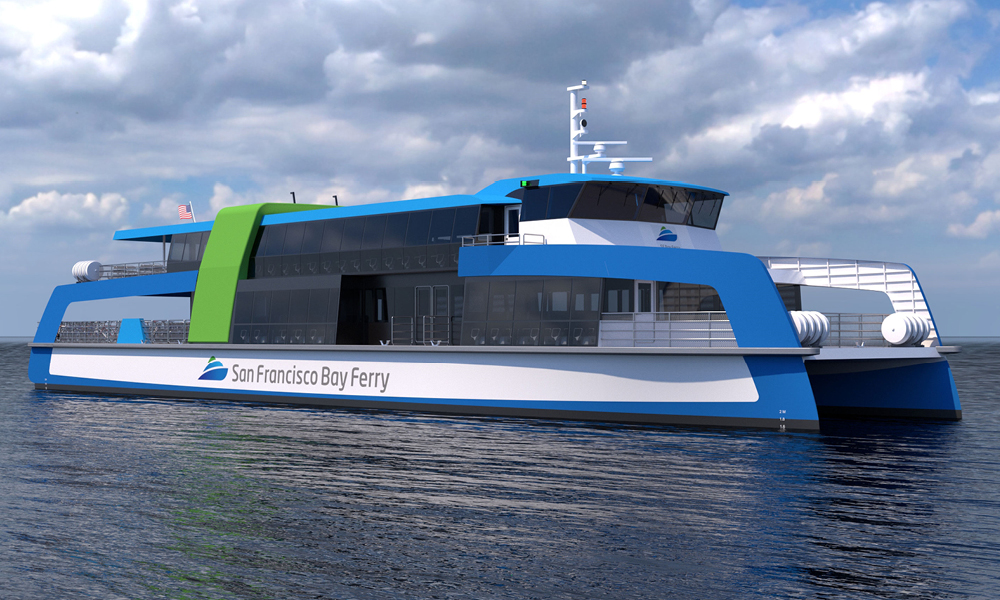
Two new electric ferries are in the works for San Francisco Bay Ferry with delivery expected in 2028. The ferries will be capable of transporting 400 passengers and 60 bicycles at speeds of up to 25 knots and will help San Francisco Bay Ferry significantly reduce emissions and advance sustainable transportation in the region.
The 141′ vessels will feature a modular propulsion system with four independent azimuth propulsion units. Electrical integration will be provided by Wärtsilä, including a scalable energy storage system from Echandia, MCS charging at a total of 5MW, a DC grid, and advanced DC conversion technology. The vessels will be charged via electric charging floats for recharging during passenger loading and unloading. The floats will double as the embarkation and disembarkation pathway between the shore-side gangway and the vessels.
The main deck will offer seating for 150 passengers, including six wheelchair accessible spaces, a kiosk with bar-style seating, three bathrooms, and an easy-to-access bicycle storage area on the aft deck. An internal staircase and an additional staircase on the aft deck connect to the upper deck, which seats 204 passengers in an air-conditioned cabin and a further 48 passengers in a covered outdoor deck.
Vessel: Monomoy
Operator: Woods Hole, Martha’s Vineyard and Nantucket Steamship Authority
Type: Passenger, freight, and vehicle ferry
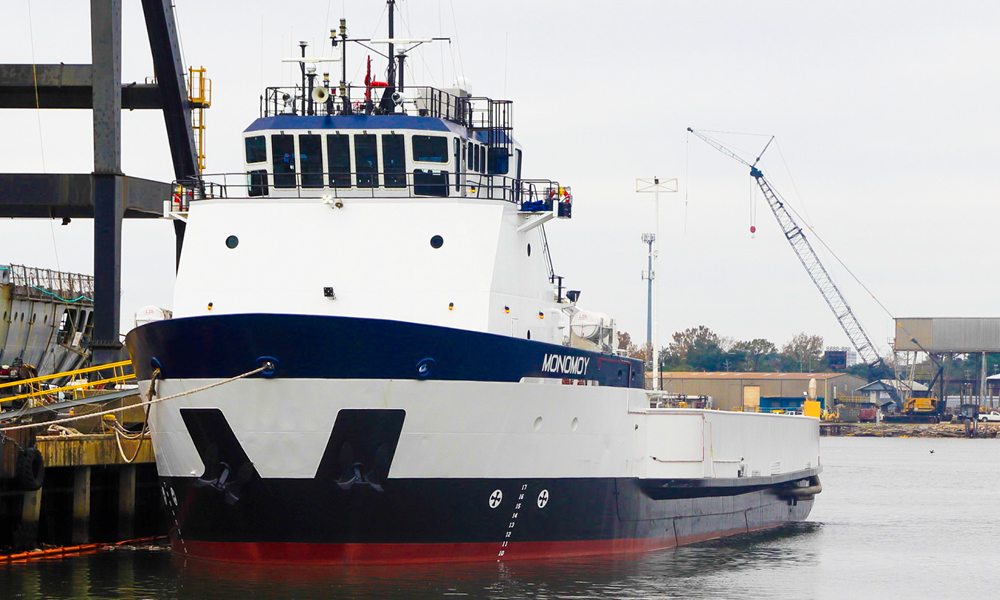
Delivered and slated to begin service in 2026, is the 350-passenger Monomoy, one of three offshore vessels (OSVs) reconstructed for Woods Hole, Martha’s Vineyard and Nantucket Steamship Authority. Its sister ships, Barnstable and Aquinnah, entered service in 2024 and 2025 respectively.
With the purchase of the three used OSVs, the financial burden was much lower than paying for three new builds. The costs worked out to getting three vessels for roughly the cost of a single new build, allowing the company to replace nearly a third of their fleet for the price of one new ship. That savings is a financial steppingstone towards the Steamship Authority investing in more upgrades or new vessels in the future.
The three new ferries are EPA Tier 2, an improvement over the Tier 0 vessels they are replacing, but there was also a consideration that they lend themselves to eventually being converted to a different propulsion system such as hybrid electric.
Vessel: Lena
Operator: Wendella Sightseeing Company, Inc.
Naval Architect: SeaCraft Design/Timothy Graul Marine Design
Builder: Burger Boat Company
Type: Tour boat
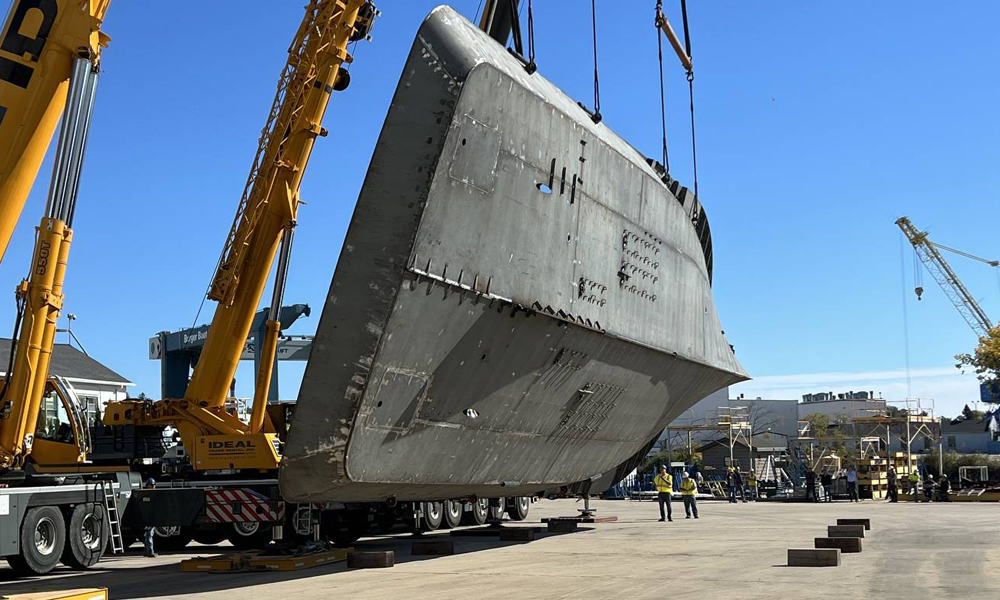
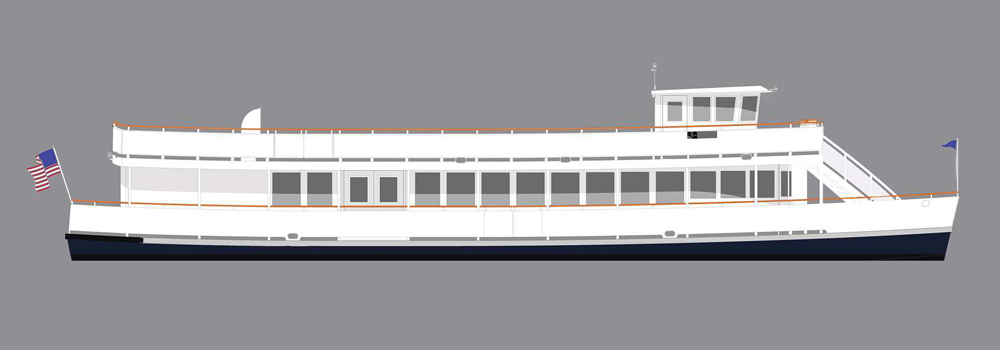
In May 2026, Wendella Sightseeing Company, Inc. plans to welcome a new vessel to their fleet. The 90′ Lena, designed by SeaCraft Design in collaboration with a fellow naval architect, is under construction at Burger Boat Company. This fourth sister ship of the Wendella, built in 2007, is the second built by Burger Boat Company for the operator. Once in service, it will carry up to 340 guests on architecture tours and private events in the waters around Chicago.
The Subchapter K twin screw steel monohull vessel features two Volvo Penta 0130-400 EPA Tier III compliant propulsion engines which are liquid cooled, four stroke diesel engines with direct injection, turbocharged, and after cooled, continuous duty rated at 394 BHP at 1800 RPM. The vessel also features two ZF 400 series gearboxes. It will have a top speed of 15 knots and a cruising speed of 9 knots.
Operator: Washington State Ferries
Naval Architect: Elliott Bay Design Group
Builder: Eastern Shipbuilding Group, Inc.
Type: Passenger and vehicle ferry
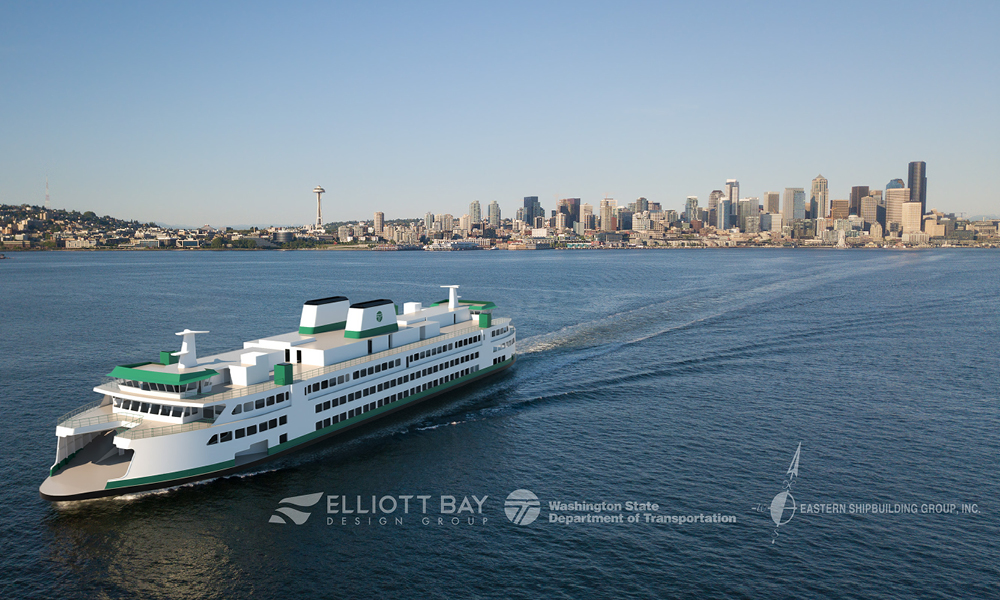
In the summer of 2025, Washington State Governor Bob Ferguson selected the $714.5 million bid from Eastern Shipbuilding Group to build three new hybrid-electric ferries for Washington State Ferries (WSF). The contract award comes after a comprehensive year-long process, the first competitive bid for ferry construction in more than 25 years. The shipyard has until 2030 to deliver the first vessel.
The shipyard bid is only part of the new build process. There is an additional approximately $150 million for the first vessel for owner-furnished equipment, construction management, WSF crew training, and risk contingencies. This brings the cost of the first vessel to approximately $405 million, the second to $360 million, and the third to $325 million, as contingency risk decreases with lessons learned from each previous construction.
The 409′ 6″ steel ferries will be certified to transport 160 standard-sized passenger vehicles and 1500 passengers. With a draft of 16′-6″, the ferries will achieve a speed of 17 knots at full load and are designed to interface with all existing WSF dock facilities.
The new hybrid-electric ferries are part of a larger plan to modernize the entire WSF fleet.
Vessel: Yankee Freedom IV
Operator: Yankee Fleet
Naval Architect: Incat Crowther
Builder: Gladding-Hearn Shipbuilding
Type: Excursion vessel
Yankee Fleet in Key West, Fla., will revitalize its fleet next summer with the addition of Yankee Freedom IV. The high-speed catamaran will carry up to 300 passengers on day excursions from Key West to Dry Tortugas National Park. The vessel will replace Yankee Freedom III which was also built by Gladding-Hearn Shipbuilding in 2012.
The 113′ all-aluminum catamaran was designed by fellow PVA member Incat Crowther and will have a top speed over 28 knots. The new, larger ferry will be powered by a pair of mtu 12V-4000M65R EPA Tier 4-compliant diesel engines, each delivering 2,000 Bhp at 1,600 rpm. The twin gearboxes will be ZF model 8000. The ferry will be equipped with an EPA Tier 3-approved genset with the addition of exhaust gas treatment. A Humphree active interceptor ride control system will be installed to control vessel pitch and roll. Multiple solar panels will power the vessel’s running lights and the pilothouse’s electronics.
The main cabin will include seating for 130 passengers, tables, a snack bar, and an audio/visual passenger information center. Seats and tables will be by Beurteaux and ceilings by Dampa. On the aft deck will be an open covered area with four passenger heads, a shower area, and stowage for kayaks and camping gear. A two-level platform and handrails will be installed on the open bow deck for passenger viewing. The second deck includes the pilothouse forward and an enclosed cabin with seating and tables for 60 passengers, and exterior seating for 72 passengers aft. The third deck will have additional outside seating for 40 passengers.
Operator: Golden Gate Bridge Highway & Transportation District
Naval Architect: Aurora Marine Design with One2Three Naval
Builder: Mavrik Marine, Inc.
Type: Passenger ferry
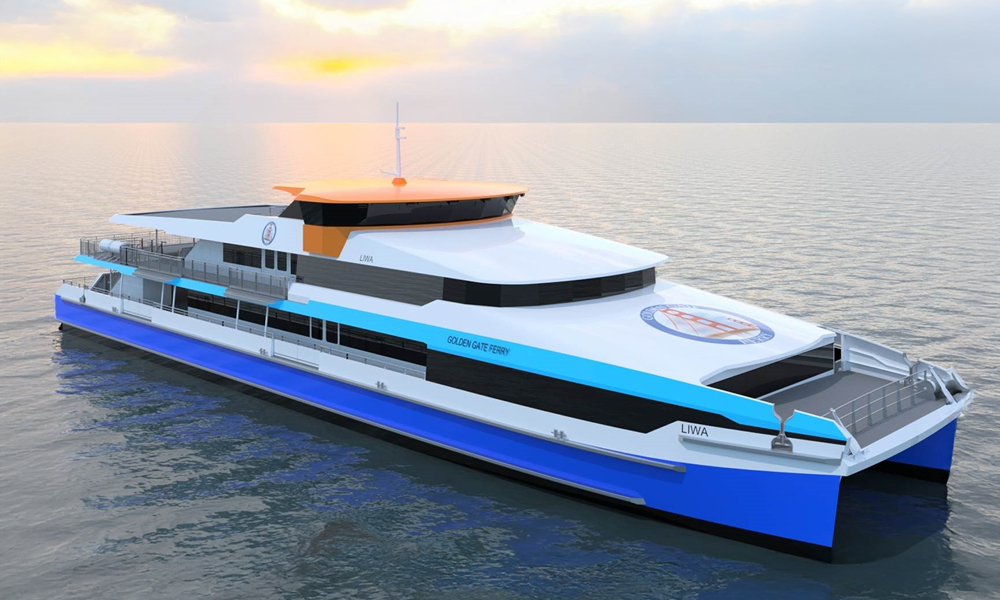
Mavrik Marine, Inc. is constructing catamaran passenger ferries as part of the Golden Gate Bridge Highway & Transportation District’s eight vessel Lima Class Ferry Replacement Program to provide transportation services in San Francisco Bay. The 164′ aluminum ferries specifications and systems were developed by Aurora Marine Design with structural design from a naval architect in Australia. Designed to comply with California Air Resource Board (CARB) Tier 4 emission regulations, the vessels will provide fast, efficient, regulatory compliant passenger service across San Francisco Bay. The District completes upwards of 20,000 trip crossings annually, resulting in approximately two million passenger trips.
The eight-vessel Ferry Replacement Program will update the District’s entire fleet over the next several years. The new high-speed catamarans will carry 500 passengers, accommodate 75 bicycles, and include an ADA compliant elevator, snack bar, and indoor and outdoor seating for passenger comfort, all while cruising at speeds of 39 knots. Powered by six MAN D2862 1066kW Tier 4 engines, the vessels will be outfitted with custom Marine Exhaust Systems DPF/SCR exhaust filter modules. Driveline Services of Portland carbon shafts connecting six Hamilton Jet HTX52 waterjets complete the propulsion system. Traditional diesel generators are replaced by DanFoss gear driven generators, connected to Reintjes/Karl Senner hybrid gear boxes. Electrical storage will be provided by Echandia and McKay will provide electrical outfitting, alarm and monitoring package.
Vessel: El Escudo
Operator: Harbor Breeze Cruises
Builder: All American Marine
Type: Sightseeing, excursion, and dinner cruise boat
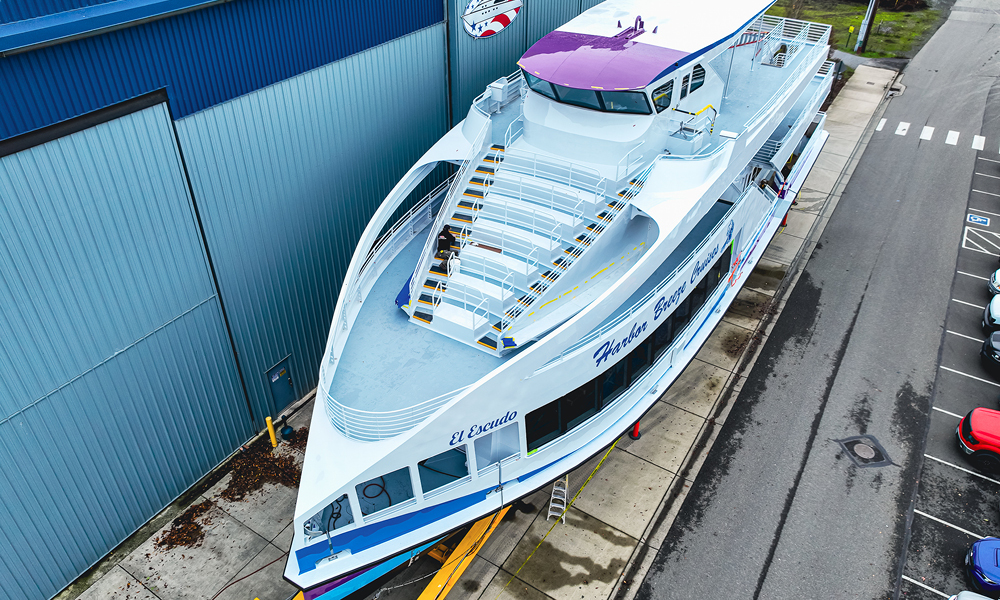
Nearing completion at All American Marine is a new 108′ hybrid passenger vessel for Harbor Breeze Cruises. Pending testing and sea trials, the vessel is expected to enter into service early in 2026 to transport guests in and around Los Angeles and Long Beach, Calif., on harbor tours, whale watching cruises, and for dinner events. With multiple decks the vessel will feature a customized stadium seating platform on the bow, a 350-passenger capacity, and enhancements prioritizing the passenger experience throughout.
The aluminum monohull vessel is the first of its kind in North America, and exceeds US EPA Tier 4 and California Air Resources Board (CARB) emissions requirements via selective catalytic reduction (SCR) and a diesel particulate filter (DPF) coupled to a parallel hybrid battery propulsion system, supplied by ABB. The system will feature twin 250kW traction motors and a 588kW BorgWarner energy storage system (ESS), allowing Harbor Breeze Cruises to operate harbor tours emission free. A PTO/PTI gearbox means that the batteries can either drive the propeller or the engine can drive the propeller, but the engine can also reverse feed into the batteries and charge them up during higher speed operations, so that the vessel can run on batteries when at the dock or when near whales.
The vessel will be designed with twin MAN D2862 EPA Tier 4 engines, supplied by Northern Lights. The engines will drive fixed-pitch propellers via a remote-mounted Reintjes gearbox provided by Karl Senner, LLC. This system will be fit with twin 250kW electric drive motors powered by the ESS which will provide an all-electric, zero emissions mode for the cleanest operations available for vessel propulsion.
Vessel: Holly Beach
Operator: Louisiana Department of Transportation and Development
Naval Architect: Elliott Bay Design Group
Builder: Thoma-Sea
Type: Passenger and vehicle ferry
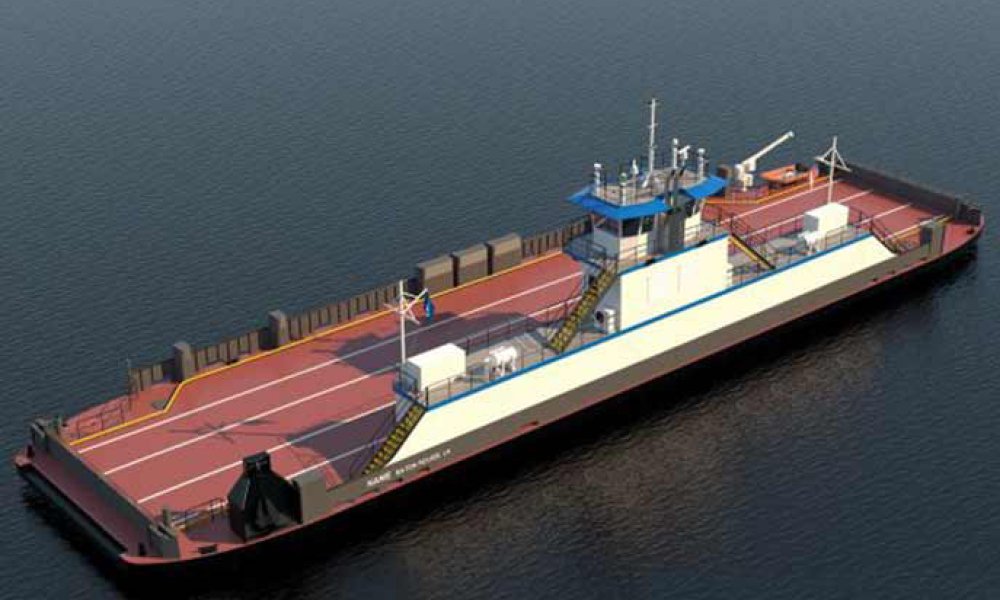
A hybrid ferry in the works for the Louisiana Department of Transportation and Development (DOTD) is expected to be delivered in 2026 to serve the Cameron crossing in Cameron Parish. The Subchapter H vessel will have the capacity for up to 32 vehicles and 265 passengers and will replace the Cameron II, built in 1964. The 190′ ferry will be equipped with the Siemens Blue Drive Eco® hybrid propulsion system and is designed to operate in a hybrid mode. It has CAT C18 main generators. In hybrid mode the diesel engine will share load with the propulsion batteries whereby the propulsion system will maximize the usage of the battery energy capabilities, resulting in lower exhaust emissions. It will have enhanced maneuvering capabilities provided by four azimuthing thrusters by Thrustmaster.
The ferry, Holly Beach, will be end-loading in order to load and unload large commercial vehicles. Two boats will be built so that ferry service will continue uninterrupted when one vessel undergoes required dry docking as per U.S. Coast Guard regulations. In the past, when Cameron II was in dry dock, a temporary side-loading ferry was put into service. While this allowed passenger vehicles to cross, trucks longer than about 50 feet were unable to use the ferry and had to detour approximately 100 miles around the Calcasieu Ship Channel. The new vessels will allow ferry service of commercial vehicles to continue uninterrupted.
COMMENTS