
Passenger vessel operators have had a powerful financing tool sitting in plain sight for decades, and most of them could not use it. The Capital Construction Fund (CCF), administered by MARAD and rooted in the Merchant Marine Act of 1936, is a federal tax deferral program built to help U.S.-flag operators accumulate capital for vessel construction, reconstruction, and debt retirement. Its reach was narrow for most of that history. It served ocean-going cargo operators, Great Lakes carriers, and a limited set of qualifying short-sea services including non-contiguous routes (think Alaska and Hawai‘i). The bulk of the passenger vessel industry, including sightseeing companies, dinner cruise operators, whale-watching boats, inner-harbor water taxis, and many inland ferry systems, sat outside the CCF’s reach.
This changed in December 2022.
The National Defense Authorization Act for Fiscal Year 2023 removed the geographic trading restrictions that had shaped CCF eligibility for more than fifty years and opened the program to all U.S.-built vessels engaged in domestic or foreign commerce. PVA spent years making the case that passenger vessel operators are capital-intensive businesses, build in American yards, operate under American law, employ American crews, and are exactly the type of domestic maritime operators the program should support.
An operator enters a formal agreement with MARAD, designates an eligible vessel or vessel project, and deposits eligible income into a dedicated account at an FDIC-insured or SIPC-member depository. Those deposits are excluded from taxable income in the year they are made, and earnings on the fund accumulate tax deferred. When the operator later withdraws the money for a qualified purpose, the withdrawal does not create a taxable event. It reduces the tax basis of the new vessel, spreading the tax impact over the life of the asset rather than forcing the operator to build with after-tax dollars upfront. The easiest way to think about it is as a maritime version of a traditional IRA. Operators accumulate capital with pre-tax dollars instead of after-tax dollars, and a dollar sheltered today and compounded over five, ten, or fifteen years does more work than a dollar already clipped by taxes before it ever reaches the vessel replacement account.
When the operator later withdraws the money for a qualified purpose, the withdrawal does not create a taxable event. It reduces the tax basis of the new vessel, spreading the tax impact over the life of the asset.
As of the end of 2023, 136 participants held approximately $2.6 billion on deposit in CCF accounts.
A Note On Pre-2022 Eligibility
Before the 2022 amendment, eligibility was tied to specific qualifying trades: foreign commerce, Great Lakes routes, short-sea transportation, and noncontiguous domestic trade. Noncontiguous trade generally meant routes connecting the contiguous 48 states to Alaska, Hawaii, Puerto Rico, or similar noncontiguous territories. Operators running those routes had a path into the program. Most passenger vessel operators did not. A sightseeing operator in California, a dinner cruise company on the Gulf Coast, a harbor water taxi, a river operator, or a commuter ferry running between two points in the contiguous United States could be locked out entirely, regardless of how capital-intensive the operation was or how clearly it fit the spirit of the program.
For operators already working in Alaska or Hawai‘i, the 2022 NDAA was less a new eligibility event than a simplification. They already had a path in. What changed was the compliance burden. Proving qualification under the old noncontiguous trade rules became less central, and eligibility narrowed to three clear tests: U.S.-built vessel, U.S.-flag operation, and qualified commerce.
How It Works In Practice
Eligible income sources include operating revenue, vessel depreciation recapture, and gains from vessel sales. Funds can remain in a CCF account for up to 25 years from the year of deposit. Qualified withdrawals cover new construction, reconstruction exceeding $1 million in capitalized costs, acquisition of vessels for eligible trades, and principal debt retirement tied to qualified vessel construction. Non-qualified withdrawals are treated as ordinary income and may trigger IRS penalties, so this is a tax-advantaged capital formation tool rather than a rainy-day fund with a maritime label, and it works best when operators treat it that way.
The application process is less intimidating than many assume. There is no standardized form, no application fee, and MARAD provides a single point of contact through its Office of Marine Financing. The requirements are governed by 46 CFR Part 390. Application review typically runs four to six weeks, with agreement drafting taking another two to four weeks.
One practical detail matters. An operator can reimburse its general operating account from the CCF for qualified expenditures made after the application is filed but before the agreement is formally executed, provided the reimbursement occurs within 120 days of the expenditure. Filing the application starts the clock, which matters for an operator already moving toward design, engineering, or long-lead equipment decisions.
Two tax deadlines also matter. Corporations and LLCs must submit by September 15 to capture the tax benefit for the prior year. Individuals have until October 15.
Ongoing compliance is real but manageable. Operators certify continued U.S. citizenship and file an annual fund activity report. MARAD must be notified when vessels change, depositories change, or a CCF-built vessel is sold. CCF-built vessels also carry a trading requirement, meaning they must operate in qualified trade for up to 20 years, and that obligation follows the vessel even if it changes hands. None of this is onerous. It does require operators, CPAs, and ownership groups to stop treating vessel replacement as something to solve only when the old boat becomes too expensive to keep limping along.
The Operator Perspective
The main value of CCF is not the tax deferral alone. The larger value is the discipline it forces into capital planning. Passenger vessel operators know this problem well. Boats age slowly until they age all at once. Repowers get pushed. Interior upgrades get pushed. Newbuild conversations get pushed until the vessel is tired, the shipyard schedule is full, the price is higher, and the operator is forced into a bad timing window. CCF does not solve every part of that problem, but it forces a more rational conversation about replacement capital before the crisis arrives.
A CCF account turns “we should probably build a new boat someday” into an actual capital plan. It makes ownership define a timeline, identify a vessel objective, and build a fund balance that exists before the construction contract has to be signed. That carries real weight in the construction market. Operators who show up with committed capital have a different conversation with shipyards, lenders, and internal stakeholders. They carry more pricing credibility during the design phase, they can talk to lenders with a clearer equity contribution, and they can weigh propulsion, emissions, and lifecycle-cost tradeoffs with a firmer understanding of what they can actually spend.

A CCF account turns “we should probably build a new boat someday” into an actual capital plan. …That carries real weight in the construction market.
The hardest internal sell is often not ownership. It is the CPA or financial officer who looks at the compliance structure, the restriction on funds, and the long commitment horizon and defaults to skepticism. The honest answer is an NPV comparison: weigh the value of deferring tax on a dollar today, compounding that dollar for five to ten years, and using it to reduce the debt needed for a new vessel. Add vessel cost escalation to the equation and the case strengthens. The program can materially improve the operator’s capital stack.
The most common mistake is entering the process too vaguely. MARAD’s Schedule B asks what vessel the operator intends to build, at what approximate cost, and on what timeline. Absolute certainty is not required, and agreements can be modified as projects become more defined. However, operators who enter without a working replacement or expansion thesis tend to treat CCF like a passive savings account, which wastes most of what makes it useful. The tool earns its keep when it is tied to a specific vessel strategy.
What It Means For The Industry
The passenger vessel sector has a capital problem that traditional financing alone does not solve well. New vessel construction costs have moved sharply upward. Emissions expectations are tightening. Fleet age is not going down. Yards are busy, long-lead equipment is not getting easier to procure, and operators are being asked to make larger capital commitments earlier in the construction process.
CCF reduces how much debt an operator needs, lowers the effective cost of the capital stack, and creates a funding runway that can be matched to a construction timeline. For operators weighing replacement tonnage, expansion vessels, alternative propulsion, or major reconstruction, that runway can decide whether a project stays conceptual or actually gets contracted.
CCF reduces how much debt an operator needs, lowers the effective cost of the capital stack, and creates a funding runway that can be matched to a construction timeline.
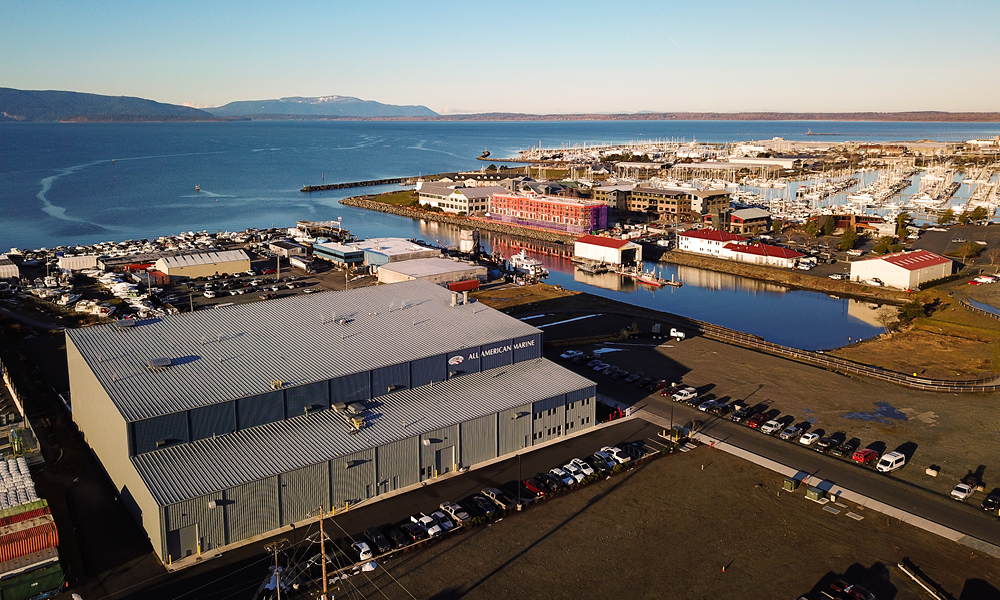
For builders like All American Marine, the downstream effect is direct. Operators with CCF capital are better positioned to move from letter of intent to contract because they arrive with committed funding rather than conditional intent. Conversations about options, propulsion choices, layout decisions, and lifecycle economics become more productive when the customer has already done the work of defining its capital plan.
For any operator that has not explored CCF, the first step is simple. Talk to your CPA about what your eligible income base looks like and what a five-year deposit cadence could produce, then contact MARAD’s Office of Marine Financing at marinefinancing@dot.gov or 202-366-5737. The application costs nothing to file and can be submitted as a PDF. If you know you will need to replace or expand tonnage in the next decade, the question worth asking is why you would fund that future vessel entirely with after-tax dollars and more debt than necessary. Given where construction costs are headed, inertia is expensive.
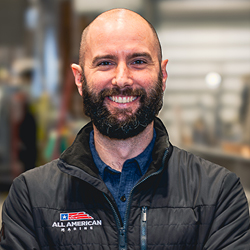
Business Development Manager, All American Marine
Zech is a Bellingham native with nearly two decades of commercial and recreational marine experience, including managing a 28-vessel charter fleet in the U.S. Virgin Islands. A holder of a 500-ton U.S. Coast Guard Master’s License, he joined All American Marine in 2023 and has helped secure marquee projects including fast electric ferries for San Francisco Bay Ferry and a research vessel for the University of Texas Marine Science Institute.