
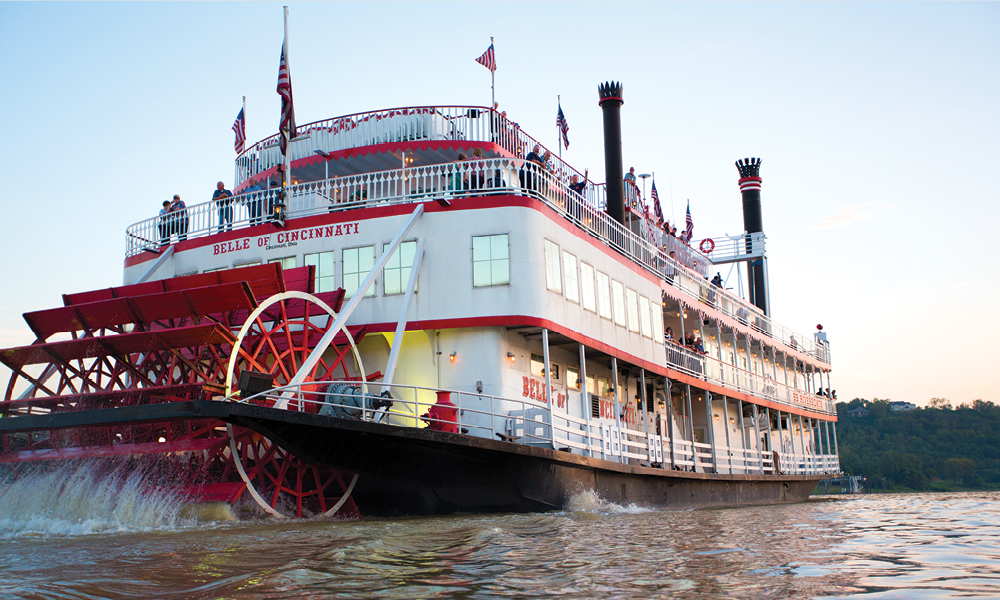
Every spring, as crowds gather along the banks of the Ohio River and the excitement of the Kentucky Derby Festival takes over Louisville, two legendary riverboats prepare for one of the most beloved traditions on America’s inland waterways: the Great Steamboat Race.
For those unfamiliar with the event, the concept itself already feels slightly unfair. The Belle of Cincinnati leaves Cincinnati and travels roughly 139 river miles down to Louisville just to participate in the race. Meanwhile, the hometown favorite, the steamer Belle of Louisville, essentially wakes up in its own driveway and strolls over to the starting line without burning an ounce of extra fuel.
And somehow, despite this glaring imbalance, everyone involved still insists the competition is perfectly legitimate. That is part of the magic.
The Great Steamboat Race is not just a race. It is theater. It is history. It is rivalry wrapped in river tradition and fueled by generations of storytelling, practical jokes, suspicious officiating, and just enough chaos to keep everyone guessing.
For decades, crew, captains, passengers, and spectators have embraced the unofficial understanding that a little “lying, cheating, and stealing” is simply part of the experience. Nobody is safe from accusations. Nobody fully trusts the judges. And absolutely nobody from Cincinnati believes Louisville plays fair. Naturally, Louisville feels exactly the same way about Cincinnati.
The race itself dates back to 1963, but its spirit reaches much deeper into steamboat history. During the golden age of river travel, bragging rights mattered. Steamboat captains competed fiercely for speed, prestige, passengers, and reputation. Stories of rival boats racing downtown became part of American folklore, and the modern Great Steamboat Race proudly keeps that spirit alive.
Of course, river traditions rarely go according to plan. This year’s race delivered enough drama to qualify as its own miniseries.
According to BB Riverboats leadership, the week began under unusual circumstances due to an ongoing “investigation” by Louisville officials into last year’s mechanical issues involving the steamer Belle of Louisville. Allegations were thrown around. Rumors circulated. Suspicion filled the air. As any seasoned riverboat crew member will tell you, arriving in Louisville during race week often feels less like entering a sporting event and more like walking into a highly organized ambush.
Then came race day. The Belle of Cincinnati loaded nearly 800 excited passengers and prepared for departure. There was only one problem: the boat was stuck firmly in the sand at the landing. Not metaphorically stuck. Actually stuck.
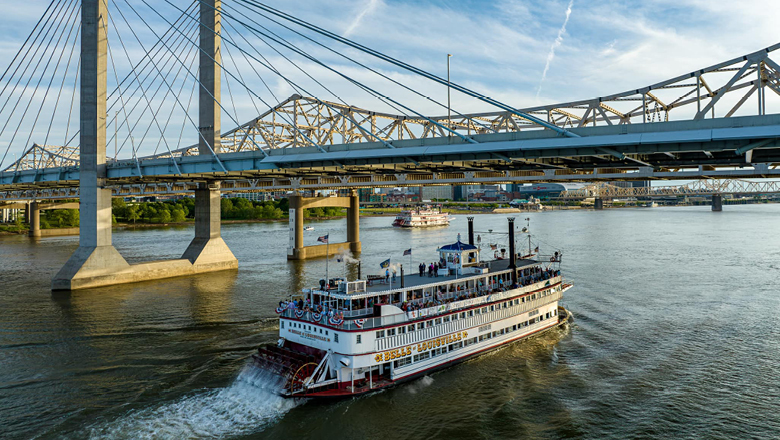
While the ceremonial cannon fired and the steamer Belle of Louisville triumphantly began heading upriver, the Belle of Cincinnati could manage only fifteen feet forward and fifteen feet backward before settling right back into the riverbed. For 45 minutes, crew members worked tirelessly to free the vessel while passengers watched the unfolding chaos with the kind of amusement only riverboat passengers can truly appreciate.
Eventually, the Belle of Cincinnati broke free and gave chase.
In true Great Steamboat Race fashion, the rivalry continued over the radio as the two boats agreed to race back toward the finish. Belle of Cincinnati managed to win that stretch of the competition, though the official judges still awarded the overall victory to Louisville—a ruling that surprised absolutely nobody from Cincinnati and shocked absolutely nobody from Louisville. And honestly, that may be the most authentic outcome possible.
The heart of the Great Steamboat Race is not simply who crosses the line first. It is the shared experience. The storytelling. The unpredictability. The generations of crews and passengers who continue to embrace a tradition that refuses to become polished, corporate, or overly serious.
Modern river operations are built around safety, professionalism, logistics, compliance, and precision. Yet once a year, the river community gathers for an event where the rules feel slightly negotiable, the accusations are most playful, and everyone understands the true goal is preserving a living piece of maritime history.
For the passengers aboard both boats, the race is unforgettable. For the crews, it becomes another chapter in a collection of stories that somehow grow larger with every retelling.
And perhaps the most impressive part is this: No matter who wins, both sides leave fully convinced that the other cheated.