
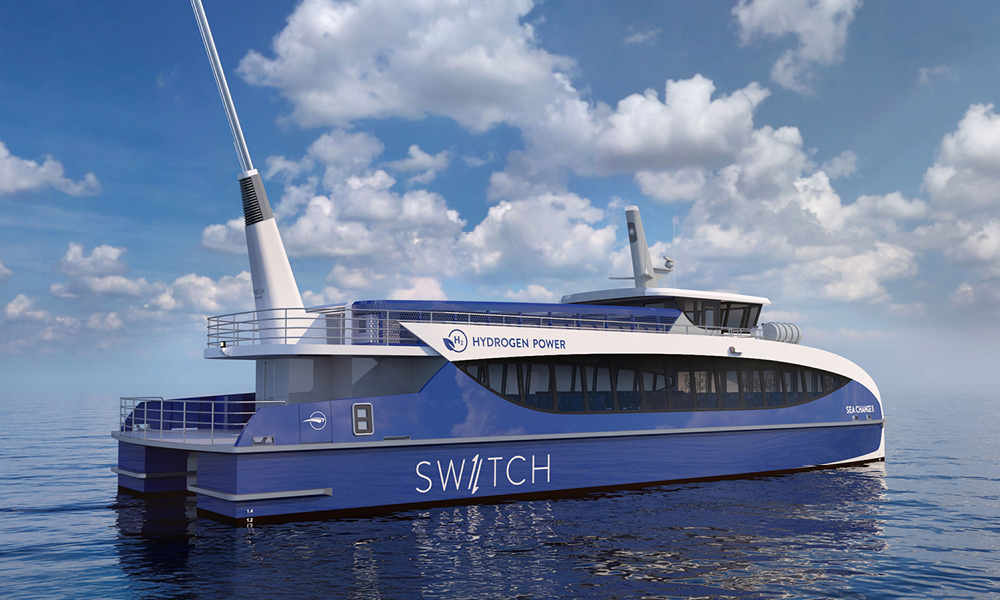
Incat Crowther and SWITCH Maritime are developing a new 93ʹ hydrogen fuel cell-electric fast ferry for New York waters. Design, naval architecture, and the regulatory approval process are being handled by Incat Crowther, while SWITCH is advancing project development beyond vessel design. The project team is planning to deploy a ZEF-150 demonstration based at the Brooklyn Navy Yard.
The new vessel, Sea Change II, is designed to align with existing infrastructure. Its hydrogen fuel cell propulsion and hydrogen storage system will ensure it can maintain an operational profile similar to that of a diesel-powered vessel including parallel service speeds, a daily bunkering schedule, no need to increase dwell time for charging, and no shoreside charging infrastructure or power grid updates.
Hydrogen fuel was chosen for its flexibility and offers a zero-emissions solution for an operation with longer range requirements and in locations where shoreside charging may not be technically or economically feasible.
The 150-passenger ferry will have a cruising speed of 25 knots and will have 720 kilograms of stored, compressed hydrogen capacity for the ability to operate on a range of routes across New York ferry networks. It will have a full day of operational range.
The main deck will feature comfortable seating, luggage storage, multiple bathrooms including a wheelchair accessible one, and large windows for a top passenger experience.
Development is supported by a $2 million grant from New York State Energy Research and Development Authority (NYSERDA).
Incat Crowther and SWITCH previously partnered on Sea Change, the world’s first zero-emissions hydrogen fuel cell-powered electric-drive high speed passenger ferry, now operating in the San Francisco Bay.