
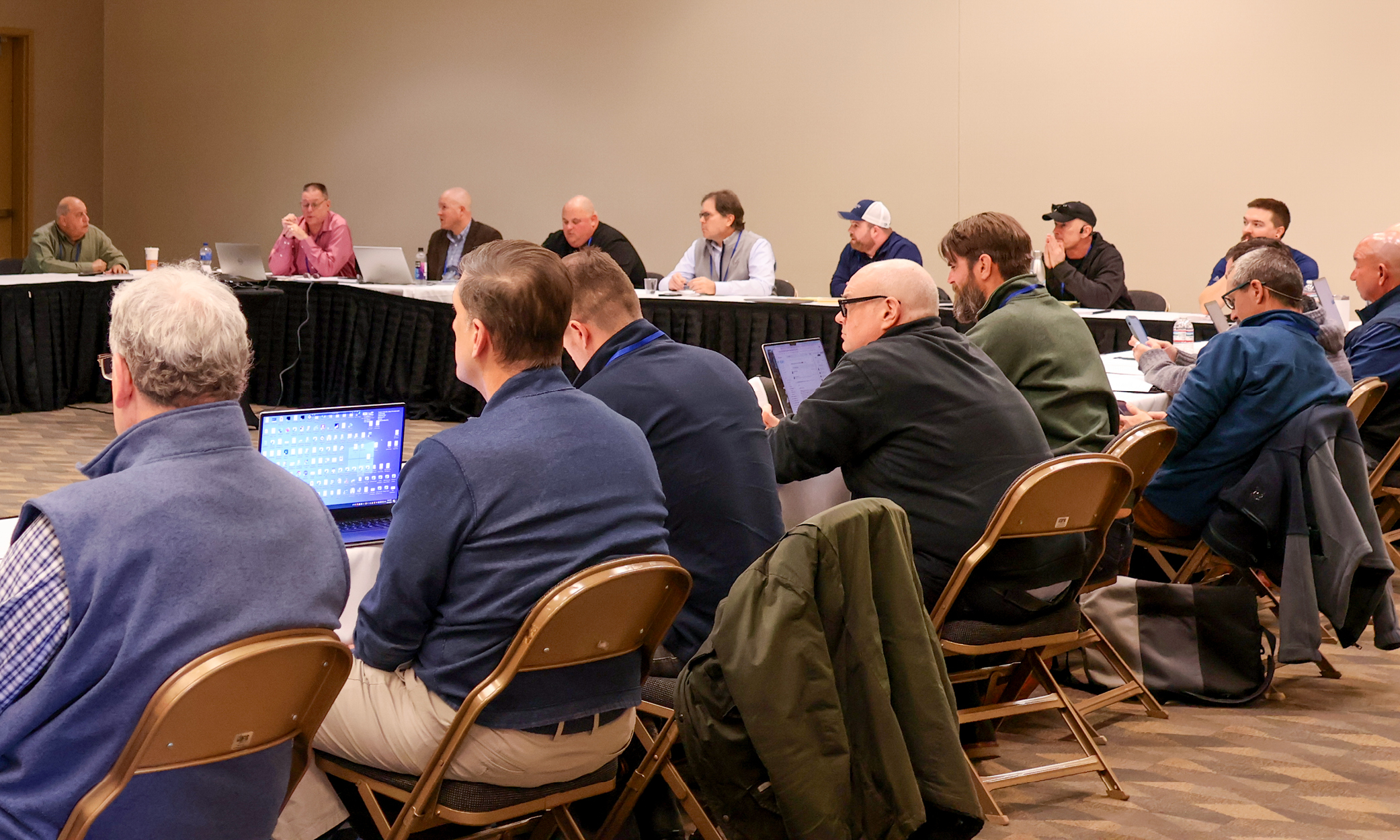
The PVA Regulatory and Safety and Security Committees met in person on Feb. 20, 2026, at the PVA Annual Convention at MariTrends 2026 in Covington, Ky. Over the course of the meeting, committee chairs and working group leaders discussed the accomplishments of 2025 and where effort needs to be put in 2026 and beyond.
Accomplishments In 2025
2025 was a good year to wrap up ongoing projects and deal with emergent issues associated with regulations, deregulations, and a new federal administration.
Regulatory Committee Chair Dave Whanger led a working group made up of both Regulatory and Safety and Security Committee members to develop a cybersecurity training framework to assist members required to have security plans in meeting the training phase of the U.S. Coast Guard cybersecurity regulations that became effective in July 2025. The cybersecurity training requirements became effective on Jan. 12, 2026, and the PVA cybersecurity training framework can be found on the PVA website under Member Resources.
The Regulatory Committee submitted comments to the docket regarding the following:
- Coast Guard Final Rule – Cybersecurity in the Marine Transportation System
- Occupational Health and Safety Administration (OSHA) Notice of Proposed Rulemaking (NPRM) – Heat Injury and Illness Prevention in Outdoor and Indoor Work Settings
- Pipeline and Hazardous Materials Safety Administration (PHMSA) NPRM – Advancing Safety of Highway, Rail, and Vessel Transportation of Hazardous Materials
- Office of Management and Budget Request for Information (RFI) – Deregulation
- First Coast Guard District Buoy Modernization Proposal
- Maritime Administration Collection of Information – Application for Waiver of the Coastwise Trade Laws for Small Passenger Vessels
- Department of Justice RFI – State Laws that Adversely Affect Interstate Commerce
In addition to the joint committee work on cybersecurity, the Safety and Security Committee projects completed in 2025 include:
- Revised Deckhand Training Manual available in an editable Word format on the PVA Member Resources page under Safety and Crew Training Tools.
- Engagement tools to assist PVA members in working with local fire departments to develop and exercise emergency response plans:
- Vessel Operator Engagement Checklist
- Small Passenger Vessel Pre-Fire Plan
- Memorandum of Understanding Template
These tools are posted under the Safety and Crew Training Tools section of the Member Resources page of the PVA website.
- Completion and deployment of the PIT Tool for assessing hull plate with isolated pitting. This tool will be particularly valuable for vessel operators scoping drydock work and when working with the Coast Guard on repair proposals. The tool went live on the PVA home page on Feb. 22, 2026, and is accessible to anyone who visits the site.
- LED and decorative lighting – The Coast Guard Marine Safety Center finally took up PVA’s recommendations on accepting new technology for LED and decorative lighting. Plan Review Guide E2-23 was revised to include many PVA recommendations. These changes will reduce the burden, cost, and time, associated with approving vessel light fixtures.
PVA at its core is a member-driven association. The dozens of volunteers who serve on the PVA Board of Directors, as region chairs, and on the various committees within PVA make a positive impact not only within PVA, but also the entire domestic passenger vessel industry.
2026 and Beyond
The Regulatory Committee submitted comments to the docket and developed a member template for the Coast Guard’s Request for Information on improving the Streamlined Inspection Program. The committee will continue to monitor the Federal Register for opportunities to comment on deregulatory efforts including rescheduling of cannabis, electronic chart requirements, mariner training, and Coast Guard enforcement regulations for the EPA Vessel Incidental Discharge Act Final Rule.
The Safety and Security Committee has several working groups and focus areas for 2026 including:
- Publish a Senior Deckhand Training Manual – This manual is nearing completion and will not only satisfy the guidance, training, and documentation requirements in Coast Guard Navigation and Vessel Inspection Circular (NVIC) 01-91 Recommended Qualifications for Small Passenger Vessel Deckhands, but also duties associated with crew management, training, engineering, and security requirements.
- Stand up an Illegal Passenger Operations Working Group in support of the Government Accountability Office (GAO) study scheduled to begin in 2026 – PVA has pushed for a study of the impacts of illegal passenger operations on public safety and we want to make sure GAO get the best information possible.
- Slips, trips, and falls assessment 2022–2024 – By analyzing data on reportable accidents among passengers and crew, this standing working group under the Coast Guard/PVA Quality Partnership, strives to provide information to vessel owners and operators that will identify and mitigate the risk of slips, trips, and falls.
- Initiate Revision 6 of the PVA Alternative Security Program (ASP) – The PVA ASP requires updating to reflect new cybersecurity regulations coming into force in July 2027. PVA was successful in getting the Coast Guard to accept industry specific ASPs to meet cybersecurity requirements. The working group will seek to maximize the flexibility in the cybersecurity regulations to minimize the burden on members.
- Improve and promote the use of the Streamlined Inspection Program and PVA’s Flagship Safety Management System – As Coast Guard resources become constrained by other priorities of the current administration, vessel operators need to look for opportunities to reduce the time the Coast Guard spends on physically inspecting their vessels.
- Near miss reporting has continued to evolve over the last few years and with the Maritime Administration and the Bureau of Transportation Statistics SafeMTS System now online, passenger vessel operators are expressing more interest.
Interested in Joining A Committee?
PVA at its core is a member-driven association. The dozens of volunteers who serve on the PVA Board of Directors, as region chairs, and on the various committees within PVA make a positive impact not only within PVA, but also the entire domestic passenger vessel industry. As you can see above, there is more work to be done in the regulatory and safety and security realms. Members interested in joining either the Regulatory or Safety and Security Committees should reach out to me, Eric Christensen, on the PVA staff at echristensen@passengervessel.com, or one of the committee chairs listed in the PVA Membership Directory.

Eric Christensen is the PVA Director of Regulatory Affairs & Risk Management