
Few people enter the passenger vessel industry because they love changing oil, scraping rust, or completing maintenance records. We choose this work because we enjoy operating
vessels, serving passengers, and being on the water. Yet the longer I work in this industry, the more convinced I am that the strongest organizations are not necessarily those with the newest boats or the largest budgets. They are the ones that treat maintenance as a philosophy, not merely a list of required tasks.
Ask almost anyone around boats what comes to mind when they hear maintenance, and you will likely hear the same familiar list: oil changes, valve adjustments, painting, inspections, cleaning heads, chasing leaks, and fixing whatever broke that week. All are necessary. Few are anyone’s favorite job.
Maintenance has always had an image problem. It lacks the excitement of putting a new vessel into service or carrying a full passenger load on a sunny holiday weekend. When done well, almost no one notices, so it is often seen as an interruption to operations, a reason to take vessels out of service, and another demand on limited budgets. That view misses something fundamental.
We often describe taking a vessel out of service for maintenance as if it interrupts the real work. In reality, maintenance is the work. Every safe departure, on-time arrival, and uneventful voyage depends on thousands of maintenance decisions passengers never see. The reliability our customers expect is not created when the captain advances the throttles; it is built weeks, months, and often years earlier by the people inspecting equipment and correcting small problems before they become large ones.
The reliability our customers expect is not created when the captain advances the throttles; it is built weeks, months, and often years earlier by the people inspecting equipment and correcting small problems before they become large ones.
One of maintenance’s greatest ironies is that success is nearly invisible. Passengers do not compliment a properly adjusted steering system or notice when a cooling pump starts as it should. Nobody applauds because the fire pump passed its weekly test. The absence of failure simply feels normal—until it does not. When equipment fails, everyone notices, but the deterioration has often been building quietly for months or years.
Equipment rarely fails without warning. More often, it deteriorates slowly and quietly. Corrosion creeps beneath damaged coatings. Bearings wear one revolution at a time. Electrical connections loosen after years of vibration. Cooling passages gradually restrict flow. Because these changes happen so slowly, it is easy to believe another week—or another season—will not matter. Sometimes we are right. Eventually, we are not.
Equipment rarely fails without warning. Because these changes happen so slowly, it is easy to believe another week—or another season—will not matter. Sometimes we are right. Eventually, we are not.
When failure comes, maintenance becomes impossible to ignore. A small repair or deferred task becomes an operational disruption. A manageable expense becomes overtime, canceled trips, disappointed passengers, or, in the worst cases, a safety event.
Stewart Brand captured this paradox perfectly in “Maintenance of Everything:” “Maintenance is absolutely necessary and maintenance is optional.” The contradiction is the point. We can always postpone maintenance, but we cannot postpone the consequences forever. Deferred maintenance does not eliminate cost; it pushes that cost into the future, usually with interest.
That is why I believe we often define maintenance too narrowly. Many organizations think of it as preventive schedules generated by software or manufacturer recommendations. Those programs matter, but they are only one part of the picture. Maintenance begins long before the first work order is written.
It begins with decisions about vessel design, equipment selection, parts standardization, component access, documentation, and technician training. It continues through inspections, preventive work, corrective repairs, coatings, crew training, record keeping, and eventually major refits or vessel replacement. Viewed this way, maintenance is not a department. It is the full lifecycle of an asset.
History shows why maintainability matters. Henry Ford is remembered for the assembly line, but his broader use of interchangeable parts was just as important. Standardization did more than speed manufacturing; it made repairs practical. Components could be replaced without custom fitting, reducing downtime and simplifying maintenance.
The same principle applies across our industry today. When operators choose standardized equipment, keep accurate documentation, stock critical spares, and invest in training, they make operational decisions that shape reliability for decades. Maintainability deserves the same careful attention as purchase price.
Few challenges make this clearer than corrosion. Corrosion never takes a day off. It works beneath coatings, inside piping, around fasteners, and in overlooked spaces. By the time major corrosion is visible, it has often been developing for years. NACE International’s 2016 IMPACT study estimated the global cost of corrosion at roughly $2.5 trillion annually—about 3.4 percent of global GDP—and found that existing corrosion-control practices could reduce those costs by 15 percent to 35 percent.
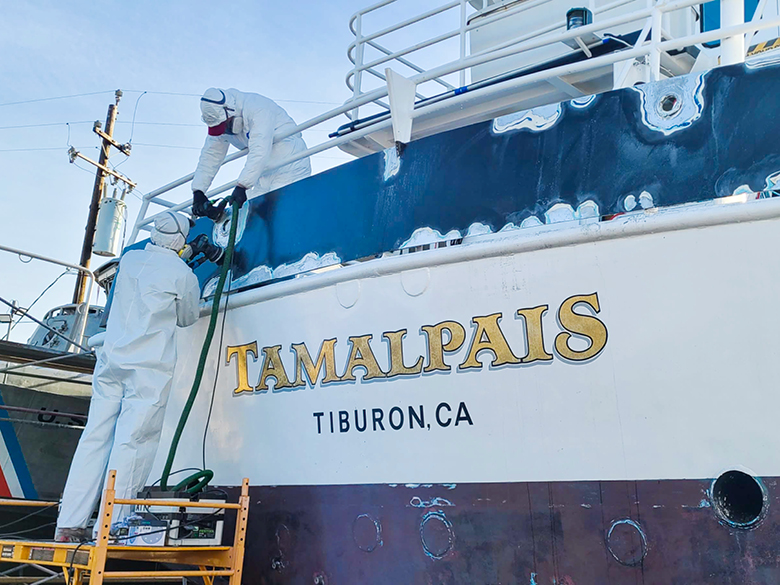
Paint is not cosmetic; it is protection. Every properly prepared surface and well-maintained coating system delays deterioration, extends equipment life, and protects capital investment. There is an old joke about nuclear submarines: the hull exists to protect the paint, and the reactor exists to move the paint around. Like most good sea stories, it is funny because it carries more truth than exaggeration.
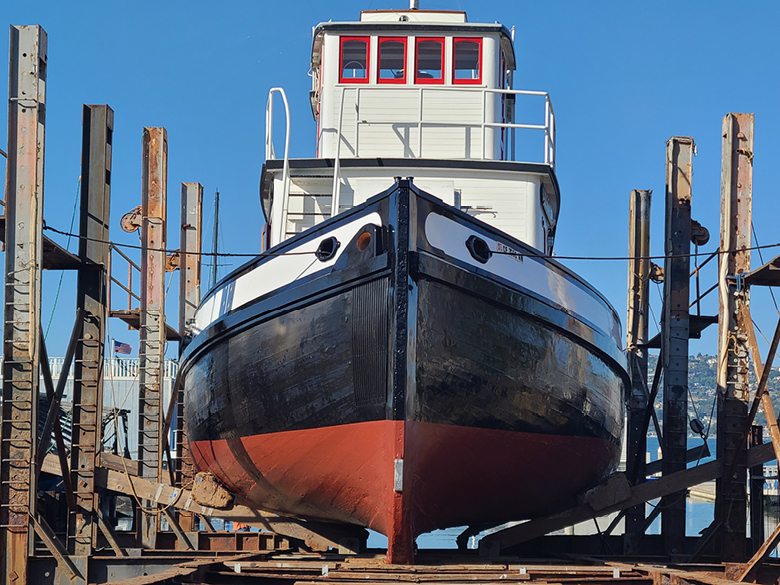
I am also the steward of a wooden tugboat built in 1912. Restored as a recreational vessel and floating home, she still operates more than a century later. A great deal of care—along with cotton, oak, skill, and persistence—has kept her going, but her coatings have been one of the most important constants in her survival.
Maintenance also develops people. Crews who help maintain their vessels become better operators because they understand what normal looks and sounds like. A crew member who has spent a week needle-gunning rust, rolling paint, or assisting with engine service develops a sense of ownership that cannot be taught in a classroom.
Maintenance also develops people. … A crew member who has spent a week needle-gunning rust, rolling paint, or assisting with engine service develops a sense of ownership that cannot be taught in a classroom.
After someone restores a coating, their eyes naturally return to it over time. They notice the next patch of corrosion before anyone asks. I have seen this repeatedly with our employees: those who spend part of the winter maintaining the fleet often become the people who keep the vessels cleaner during the operating season because they know what they are protecting.
The same is true in the machinery spaces. The crew member who helped with an oil change is often the first to notice that an engine sounds different. People who fix things notice things. That awareness creates better operators, and better operators build more resilient organizations.
Our industry is entering one of the most significant technological transitions in its history. Electric propulsion, battery systems, predictive diagnostics, and remote monitoring are changing what maintenance looks like, but not why we do it. In some ways, maintenance may become easier: electric propulsion has fewer moving mechanical components than traditional diesel systems, and some routine tasks may become less frequent. Predictive diagnostics can identify problems before they cause failures, and remote monitoring can reveal trends that once required physical inspections.
But maintenance is not disappearing; it is evolving. Instead of injector timing, we are evaluating battery cooling systems and high-voltage electrical connections. Instead of rebuilding transmissions, we are analyzing software diagnostics, managing thermal systems, and maintaining charging infrastructure. Electrical systems introduce new concerns—insulation, connection corrosion, ventilation, cybersecurity, and software updates—that are becoming as important as oil changes once were.
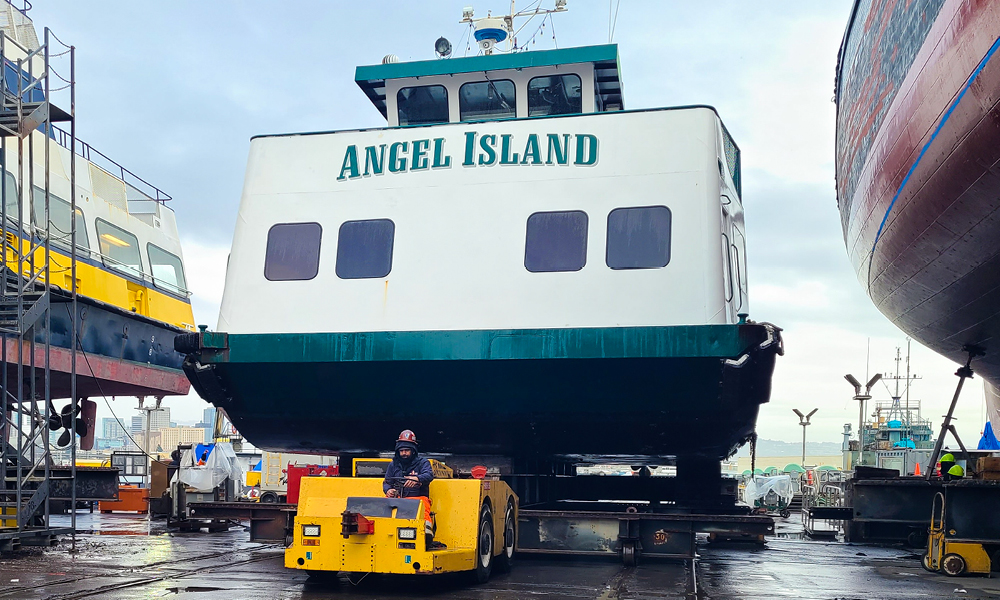
At Angel Island–Tiburon Ferry, we are converting two vessels to electric propulsion while designing a new hybrid vessel. Much of the work has involved systems outside the propulsion package itself. Before the first electric motor turns a propeller, we upgraded shoreside electrical infrastructure and replaced our floating dock so charging would be ready on day one. That planning is part of the same maintenance philosophy.
We are also developing operating procedures, maintenance protocols, and training programs as the installation is designed. Our maintenance technicians are receiving high-voltage safety training before the equipment enters service so they can work with these systems safely. As we install twenty-first-century propulsion systems in vessels built in the 1960s and 1970s, we are balancing range, speed, stability, safety, maintainability, and operational flexibility. The tools are changing, but the responsibility remains the same.
Every passenger who steps aboard one of our vessels places enormous trust in people they have never met. They trust that machinery has been inspected, safety systems tested, crews trained beyond the regulatory minimums for man-overboard recovery and firefighting, and countless maintenance decisions made before the lines are cast off. That trust is not earned through regulations alone. It is earned through maintenance.
So, is maintenance a necessary evil? I do not believe it is. A necessary evil is something we endure because we have no alternative. Maintenance is a deliberate investment in reliability, safety, and the long-term health of the vessels entrusted to us.
A necessary evil is something we endure because we have no alternative. Maintenance is a deliberate investment in reliability, safety, and the long-term health of the vessels entrusted to us.
The equipment we operate will continue to evolve. Propulsion systems will change, software will become more sophisticated, and diagnostics will grow more capable. What will not change is our responsibility to leave tomorrow’s crew with equipment that is safer, more reliable, and better understood than when we received it. Every maintenance decision is an investment in tomorrow’s operation. We can make that investment deliberately, or we can pay for it later—with interest.
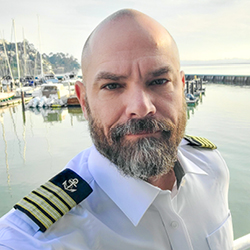
Capt. Aaron Swerkes // Port Captain, Angel Island–Tiburon Ferry
Capt. Aaron Swerkes is port captain at Angel Island–Tiburon Ferry and has spent 12 years in the passenger vessel industry. He helps lead vessel operations, maintenance planning, crew training, and fleet modernization, and provides technical leadership for the company’s electric and hybrid propulsion projects. His work reflects a practical, lifecycle-focused approach to passenger vessel reliability, safety, and stewardship.