
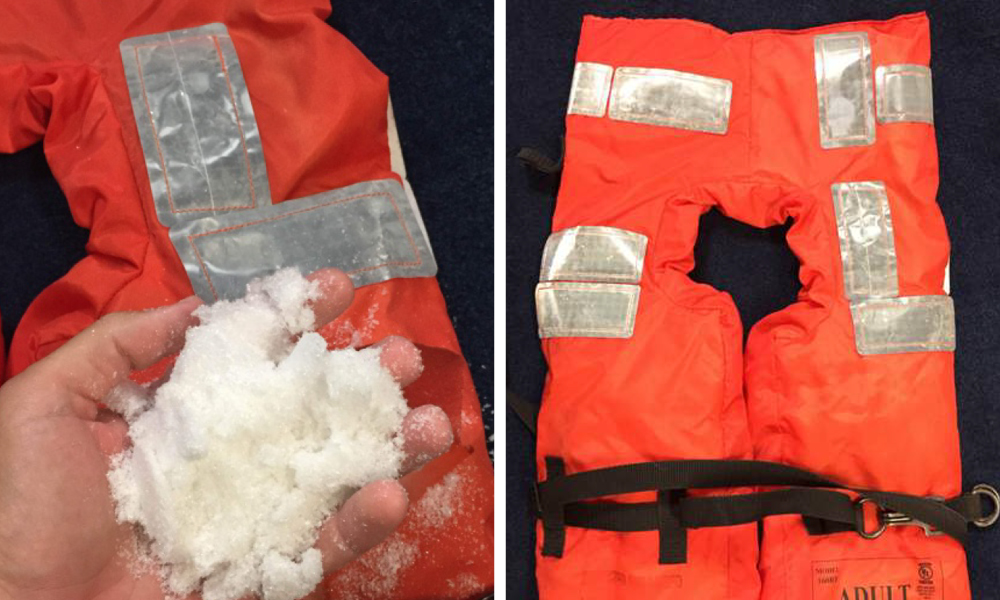
A PVA Member recently had to replace more than 200 Type I lifejackets during a U.S. Coast Guard inspection after inspectors determined the lifejackets were no longer serviceable.
The issue involved the bags containing the unicellular foam buoyant material (commonly referred to as kapok) inside the nylon outer shell. Inspectors found the bags were leaking air, requiring the lifejackets to be removed from service and destroyed. The lifejackets had been properly stored, kept dry, and protected from direct sunlight.
If a buoyant chamber leaks air, moisture can enter the flotation material over time, reducing its buoyancy and rendering the lifejacket unserviceable. Be sure to review the Coast Guard guidance on PFD selection, inspection, and serviceability, click the button below.
This recent inspection serves as another reminder that aging lifejackets should be routinely inspected before a Coast Guard examination. In 2016, the Coast Guard issued Marine Safety Alert 07-16 on lifejacket serviceability, which remains a valuable reference.
Inspect Your Type I Lifejackets
PVA encourages vessel owners and operators to inspect their lifejackets regularly, in accordance with company policy and before Coast Guard inspections. During your inspection:
- Examine lifejackets for rips, tears, holes, damaged seams, worn straps, or deteriorated hardware. Look for signs of waterlogging, mildew odor, or shrinkage of the buoyant material.
- Check retroreflective tape and replace any sections that are no longer reflective.
- Compress the lifejacket to approximately half its original thickness. The buoyant material should quickly return to its original shape. If it remains hard, stiff, or brittle, it may have lost its resiliency.
- If your lifejackets contain bags of kapok or other buoyant material, gently squeeze each bag to check for air leaks. A leaking bag indicates the lifejacket should be removed from service. Once moisture enters the buoyant material, it can become stiff, waterlogged, and lose buoyancy.
- Verify buoyancy if there is any doubt. A Type I adult lifejacket is required to provide a minimum of 22 pounds of buoyancy. One practical field check is to attach a 22-pound weight and confirm the lifejacket will keep it afloat.
Removing Defective Lifejackets From Service
Federal regulations require that defective lifesaving equipment be removed from service. Specifically, 46 CFR 115.808 and 46 CFR 176.808 state that the owner or managing operator must destroy defective lifejackets and other lifesaving devices, in the presence of a Coast Guard marine inspector, when they are found to be incapable of repair.
If you have any questions regarding lifejacket inspection or serviceability, contact your local Coast Guard inspection office or reach out to PVA’s Eric Christensen at echristensen@passengervessel.com.