
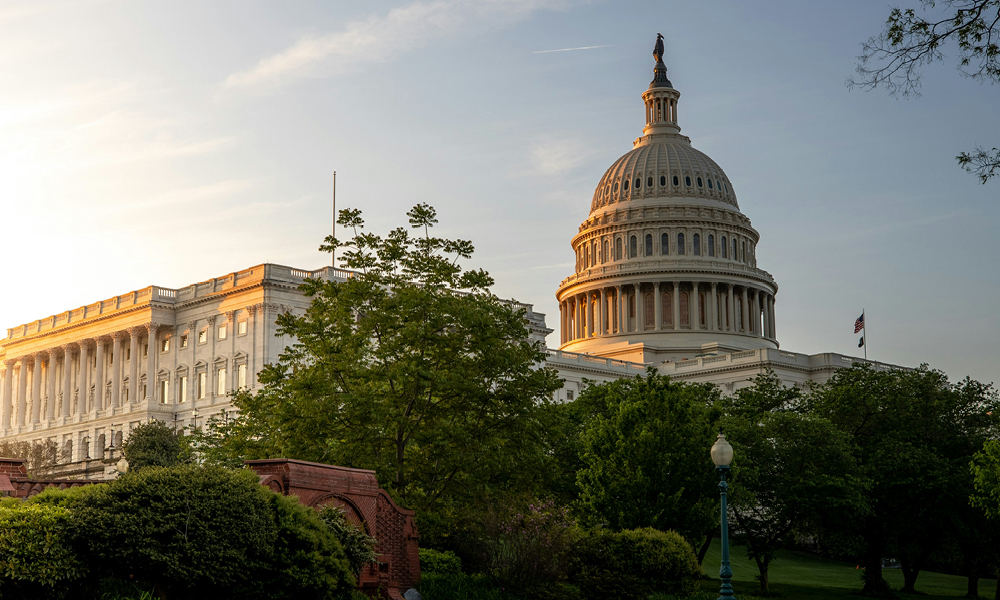
The House Transportation and Infrastructure Committee recently approved the Building Unrivaled Infrastructure and Longterm Development for America’s 250th Act (BUILD America 250 Act), legislation that would reauthorize federal surface transportation programs when current funding authority expires later this year. The bill now moves to the House floor as Congress begins what is expected to be a lengthy effort to develop the next multi-year surface transportation authorization.
While the legislation addresses a wide range of highway, transit, rail, and freight transportation programs, it also includes continued support for several federal ferry programs that are important to PVA members, including the Federal Highway Administration’s Ferry Boat Program and the Federal Transit Administration’s Passenger Ferry Grant Program.
During committee consideration, Rep. Scott Perry (R-PA) offered an amendment that would have eliminated federal ferry funding. The amendment was defeated on a voice vote, preserving the ferry funding provisions included in the committee’s underlying bill. The outcome reflects continued bipartisan recognition of the important role ferries play in connecting communities, reducing roadway congestion, and supporting local economies.
Although committee passage of the BUILD America 250 Act represents an important milestone, the authorization process remains in its early stages. The bill must still be considered by the full House, while the Senate is expected to develop its own transportation authorization proposal. PVA will continue monitoring the process and advocating for policies that support passenger vessel operators and ferry services nationwide.
Marad Highlights Maritime Action Plan And Shipyard Investment
Maritime Administrator Capt. Stephen Carmel recently testified before the House Coast Guard and Maritime Transportation Subcommittee regarding the administration’s Fiscal Year 2027 budget request and maritime priorities.
A central theme of the testimony was implementation of the administration’s Maritime Action Plan, which was developed pursuant to Executive Order 14269, Restoring America’s Maritime Dominance. According to MARAD, the plan serves as a roadmap for strengthening the U.S. maritime industrial base, expanding domestic shipbuilding capacity, supporting the U.S.-flag fleet, and addressing maritime workforce challenges.
The administration’s budget proposal also continues support for several programs of interest to the passenger vessel industry, including the Maritime Security Program, maritime academy training, port infrastructure investments, and the Small Shipyard Grant Program.
MARAD Administrator Carmel highlighted the Small Shipyard Grant Program as one of its most successful and consistently oversubscribed initiatives. The program provides funding for capital improvements, equipment purchases, and workforce training projects at qualified shipyards across the country. Many PVA members rely on small and mid-sized domestic shipyards for vessel construction, maintenance, repair, and modernization work, making continued investment in shipyard capacity and workforce development an important priority for the industry.
As Congress begins consideration of both the FY 2027 budget request and future maritime legislation, PVA will continue monitoring developments affecting MARAD programs and advocating for policies that strengthen the domestic maritime industry and U.S.-flag passenger vessel operations.
Oral Fluid Testing Moves One Step Closer
The Food and Drug Administration (FDA) has taken an important step toward making oral fluid drug testing available for federally regulated transportation employees. In a recent Federal Register notice, FDA proposed removing a regulatory hurdle that has delayed the development and certification of oral fluid testing devices. The change could help clear the way for laboratories and testing equipment needed to support the oral fluid testing program authorized by the Department of Transportation in 2023.
Oral fluid testing is viewed as less susceptible to cheating and better able to detect recent drug use than traditional urine testing. While the FDA proposal addresses a major obstacle, oral fluid testing still cannot be used under federal transportation testing programs until at least two laboratories are certified by the Department of Health and Human Services. PVA and other transportation organizations continue to support efforts to bring oral fluid testing online as an additional option for workplace drug testing.

Richard Patch is the Legislative Director of the Passenger Vessel Association.