

The U.S. Coast Guard recently established the Quality Management Staff (CG‑5P‑QM) under the assistant commandant for prevention policy (CG‑5P) to strengthen policy governance, improve consistency and transparency, and build feedback loops that drive measurable improvements across prevention programs. For passenger vessels—regulated under Title 46 of the Code of Federal Regulations (CFR) Subchapters T, K, and H—this will mean clearer guidance, more predictable inspections, and timely, better-coordinated updates that respond to the evolving needs of the maritime community.
The Role of the Assistant Commandant for Prevention Policy (CG-5P)
The assistant commandant for prevention policy develops and oversees the implementation of policies that promote safety, security, and environmental protection across the maritime domain. This includes regulatory oversight, inspections, investigations, mariner credentialing, and compliance programs that directly impact the passenger vessel industry and U.S. mariners. Prevention policy translates statutory and regulatory mandates into actionable guidance used daily by Coast Guard personnel and the maritime industry.
Clarity, consistency, and timeliness in policy and guidance are essential to safe, reliable operations and efficient compliance. CG-5P-QM’s work is grounded in recognized quality management principles: standardization, accessibility, data-driven improvement, and sustained stakeholder engagement.
How the Quality Management Staff Came to Be
CG-5P-QM builds on two decades of Coast Guard quality management evolution and aligns with international standards.
- 2003: The International Maritime Organization (IMO) initiated the Member State Audit Scheme—initially voluntary (VIMSAS), later mandatory (IMSAS)—to strengthen implementation of IMO instruments.
- 2004: To meet amendments to the International Convention on Standards of Training, Certification and Watchkeeping for Seafarers (STCW), the Coast Guard implemented a Quality Standards System for the Mariner Licensing and Documentation Program, adopting ISO 9001:2000. The approach matured into the current Mission Management System (MMS), an ISO 9001-based quality management system (QMS).
- 2008: The U.S. completed its first voluntary audit under the VIMSAS, reinforcing its MMS structure.
- 2012: The Coast Guard promulgated the MMS Commandant’s Instruction, formalizing MMS as the enterprise framework for standardized processes and continuous improvement.
- 2016: The IMO Instruments Implementation Code (III Code) came into effect. CG-5P directed an internal audit of Coast Guard responsibilities under the III Code to examine consistency, compliance, and effectiveness across prevention functions.
- 2022: The U.S. published a consolidated strategy for III Code implementation and underwent its first mandatory IMSAS, which identified the need for a centralized quality management function to coordinate and oversee MMS implementation across the enterprise.
- 2023: The Prevention Program Quality Management, Audit, and Standardization (5PQMAS) Project Team was designated to scope assignments, timelines, and deliverables, laying the foundation for the establishment of the Quality Management Staff.
- 2024: The Quality Management Staff (CG-5P-QM) was established, and subsequently, the Mission Management System (MMS) instruction (COMDINST 5200.4C) was updated to formalize this new office’s roles and responsibilities.
Altogether, these milestones show the progression from program-specific quality systems to an enterprise framework, refined through internal, third-party, and international audits, and ultimately institutionalized through CG-5P-QM. For passenger vessel operators, this history matters: the new office stands on proven practices, clear international benchmarks, and lessons learned from assessments.
Quality Management Staff Timeline
2003
IMO Implements a QMS
The IMO Member State Audit Scheme (IMSAS) commenced as a voluntary scheme.
October 2004
QMS for MLD Program
The Coast Guard implemented a Quality Standards System (QSS), later coined the Mission Management System (MMS), for the Mariner Licensing and Documentation (MLD) Program to meet 1997 STCW amendments. STCW didn’t specify a particular QSS, so the Coast Guard chose the internationally accepted ISO 9001:2000 standard.
April 2008
VMSAS Completed
The U.S. participated in its first IMO Voluntary International Maritime Organization Audit Scheme (VIMSAS).
March 2012
MMS Instruction Promulgated
The Coast Guard published COMDTINST 5200.4, Mission Management System (MMS).
January 2016
(III) Code Published
The IMO Instruments Implementation Code (III Code) came into effect.
March 2016
IMSAS Internal Audit Completed
CG-5P directed an internal audit of the Coast Guard as it relates to the responsibilities in meeting the requirement of the III Code.
January 2022
(III) Code Strategy Disseminated
The U.S. Consolidated Strategy for the IMO Instruments Implementation (III) Code was published.
March 2022
IMSAS Audit Completed
The U.S. participated in the mandatory IMO Member State Audit Scheme (IMSAS), which revealed the need to establish a centralized Quality Management Staff responsible for the coordination and oversight of the MMS beyond what had already been implemented.
May 2023
5PQMAS Project Team Designated
The Prevention Program Quality Management, Audit, and Standardization (5PQMAS) Project Team was designated, with further project team assignment, duration, and deliverables outlined in the 5P Memorandum in December 2023.
December 2024
CG-5P-QM Established
The Quality Management Staff was established to implement the Coast Guard’s MMS, enhancing the effectiveness and efficiency of all marine safety activities.
Introducing the Quality Management Staff (CG-5P-QM)
The Quality Management Staff is planned to comprise eight personnel—four active‑duty and four civilians—by summer 2026. The staff is tasked with implementing the Coast Guard’s MMS to enhance the effectiveness and efficiency of all prevention activities. Implementation will be phased, but the structure is in place for sustained continuous improvement and quality service delivery to maritime stakeholders.
At its core, CG-5P-QM is focused on three key objectives:
1. Policy Governance: Strengthen the governance of prevention policy from concept to field execution, ensuring guidance remains current, consistent, and easy to use across all echelons.
- Standardize CG-5P policy development and review: Establish a defined lifecycle—from drafting and subject-matter review to legal sufficiency, stakeholder vetting, issuance, and periodic refresh—with common templates, version control, and change histories to minimize ambiguity and regional variance.
- Improve accessibility and searchability: Consolidate prevention policies, standards, and guidance documents into an authoritative, searchable library with clear taxonomy, metadata, cross-references, and revision histories—so units and operators can quickly locate requirements, interpretations, and job aids.
- Embed MMS across headquarters, areas, districts, and field units: Use MMS as the common backbone for policies, procedures, and job aids—harmonizing how guidance is written, taught, and executed from headquarters to the waterfront.
What this means for passenger vessel operators: Clearer requirements, fewer conflicting interpretations, and faster alignment when guidance changes.
2. Assessments and Accountability: Structured assessments verify performance, close gaps, and link findings to corrective actions and metrics that demonstrate improvement.
- Audits: Leverage IMSAS results, collaborate with Force Readiness Command’s Assessments Division (FC‑A), prevention’s third-party audit arm, to ensure accurate and focused audit criteria, and use CG-5P internal audits to validate compliance, consistency, and effectiveness across prevention programs.
- Nonconformity management and adjudication: Standardize processes from issuance and root-cause analysis through adjudication and closure—with clear timelines and evidence requirements.
- Development of measures and metrics: Build a balanced set of leading and lagging indicators—such as policy issuance cycle time, inspection variance, nonconformity closure timeliness, and service-delivery measures—to track performance, inform prioritization, and guide risk-based improvements.
What this means for passenger vessel operators: More consistent inspections and determinations, clearer follow‑up, and reduced rework through data‑driven improvements.
3. Oversight and Partnership: CG-5P-QM will couple oversight with active partnership to meet international obligations, improve transparency, foster learning, and align priorities with operational realities.
- Intergovernmental Coordination: Coordinate whole‑ of‑government efforts supporting the IMSAS, including compliance planning, reporting, and audit support.
- Executive Oversight: Fulfill the service’s ISO 9001:2015 requirements for oversight and periodic management reviews by administering the CG-5P Executive Oversight Board, Prevention Quality Management Board, and the Quality Management Assist Team.
- Partnership: Leverage the Coast Guard’s extensive and formally established affiliations, Coast Guard Advisory Committees and Quality Partnerships, to enhance research efforts, promote safety, and improve performance.
What this means for passenger vessel operators: Stronger accountability, better visibility into performance criteria, and more productive engagement on schedule‑ and safety‑critical issues.
We aim to franchise the Coast Guard’s Marine Safety experience. Just like a Big Mac in Alaska is the same as in Miami—we want industry’s experience and the quality of our service to be consistent across the country. But from a quality perspective, we’re shooting for Wagyu, not ground beef!
– U.S. Coast Guard Quality Management Staff
Why Quality Management Matters to the Passenger Vessel Industry
The passenger vessel industry is a vital component of the U.S. maritime sector, providing transportation, tourism, and economic opportunities to millions of Americans. However, the unique characteristics of passenger vessels—such as high passenger volumes and diversity in itineraries and operations—present distinct challenges for safety and compliance.
For vessel operators, compliance is both a legal obligation and a safeguard for passengers, crew, and assets. Inconsistency or unclear guidance can create uncertainty, raise costs, and compromise safety. This is where CG-5P-QM’s focus on standardization and quality management becomes particularly relevant.
By promoting consistency in inspections, audits, and enforcement actions, CG-5P-QM can help passenger vessel operators navigate regulatory requirements more effectively. This, in turn, allows operators to focus on delivering safe and enjoyable experiences for their passengers while minimizing operational disruptions. The establishment of CG-5P-QM offers several potential benefits for the passenger vessel industry, including:
1. Improved Clarity and Predictability: Standardizing policies and procedures across the enterprise reduces the likelihood of regional or individual variability in Coast Guard inspections and enforcement actions. This creates a more predictable regulatory environment for vessel operators.
2. Streamlined Processes: Through continuous improvement initiatives, CG-5P-QM aims to identify inefficiencies and redundancies. This could lead to faster processing times for inspections, certifications, and other regulatory requirements, reducing administrative burdens for operators.
3. Enhanced Collaboration: Stakeholder engagement is a cornerstone of Coast Guard missions. By working closely with industry representatives, the Coast Guard can better understand the challenges faced by passenger vessel operators and develop solutions that balance safety with operational feasibility.
4. Increased Confidence in Safety Standards: A consistent and transparent approach to quality management reinforces public trust in the safety and security of passenger vessels. This is particularly important in an industry where customer confidence is paramount.
Aligning with Industry Best Practices
Passenger vessel operators have long applied best practices for safety and quality, such as aligning vessel inspection job aids and checklists to reduce interpretive variance in lifesaving appliances, stability records, and electrical system maintenance—common drivers of discrepancies on Subchapter T, K, and H vessels. Many operators already implement their own quality management systems to ensure compliance, improve efficiency, and enhance customer satisfaction. The Coast Guard’s establishment of CG-5P-QM aligns with these efforts by providing a framework for collaboration and mutual improvement.
Looking Ahead
The Future of Quality Management in Maritime Safety
Establishing CG-5P-QM marks a milestone in the Coast Guard’s Prevention mission—but it is only the beginning. As the maritime industry continues to evolve, the Coast Guard must remain responsive and mission focused in its approach to quality management. This includes strengthening data collection and analysis to spot trends early, target interventions, and communicate changes transparently to operators.
For the passenger vessel industry, the future of quality management holds great promise. By fostering a culture of collaboration and continuous improvement, CG-5P-QM can help operators navigate the complexities of the regulatory landscape while maintaining the highest standards of safety and quality service. Quality management is not an end state but a commitment to continual improvement—one that benefits both the service and the maritime community it serves.
CG-5P-QM Three Key Objectives
1. Policy Governance:
Strengthen the governance of prevention policy from concept to field execution, ensuring guidance remains current, consistent, and easy to use across all echelons.
What this means for passenger vessel operators:
Clearer requirements, fewer conflicting interpretations, and faster alignment when guidance changes.
2. Assessments and Accountability:
Structured assessments verify performance, close gaps, and link findings to corrective actions and metrics that demonstrate improvement.
What this means for passenger vessel operators:
More consistent inspections and determinations, clearer follow-up, and reduced rework through data-driven improvements.
3. Oversight and Partnership:
CG-5P-QM will couple oversight with active partnership to meet international obligations, improve transparency, foster learning, and align priorities with operational realities.
What this means for passenger vessel operators:
Stronger accountability, better visibility into performance criteria, and more productive engagement on schedule- and safety-critical issues.
Conclusion
Establishing the Quality Management Staff under the assistant commandant for prevention policy marks a pivotal step toward greater clarity, consistency, and performance. For the passenger vessel industry, this means a more predictable regulatory environment, a stronger link between findings and fixes, and a collaborative framework for continuous improvement across the Coast Guard’s prevention missions.
With standardized policy governance, rigorous assessments tied to meaningful metrics, and a partnership-driven oversight model, CG-5P-QM will help ensure that safety and compliance remain at the forefront—while enabling operators to deliver safe, efficient, and reliable passenger experiences across America’s waterways.
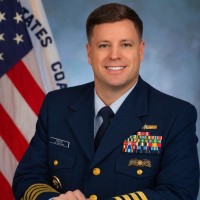
Chief Quality Officer, U.S. Coast Guard
Captain Smoak assumed the role of chief quality officer in July of 2025. As a seasoned marine safety professional, he has experience in ports on the East, West, and Gulf coasts as well as the Great Lakes. Prior to his previous assignment at the Executive Office of the President, Smoak served as the Pre-vention Department head at Coast Guard Sector Maryland-National Capital Region where he led the whole-of-government response and reconstitution operations following the 2024 Key Bridge collapse.