
In the 1890s, a young Croatian immigrant jumped ship in New Orleans and headed to Biloxi, Miss. He had no money and couldn’t speak English, but as he waited for a trolley car, a man recognized his accent. They found a common language in Italian and began to chat. Little did he know that this chance meeting would change his family’s future, leading to the founding of Ship Island Excursions which is celebrating 100 years in business.
Recently, Captain Louis Skrmetta of Ship Island Excursions sat down to talk about the company’s history. The young man waiting for the trolley was his great-great uncle, Nick Skrmetta, and as Louis put it, “he lucked out.” The man he met was Lorenzo “Laz” Lopez, a prominent figure in the thriving Biloxi seafood industry at the time, and he offered Skrmetta an entry level job at his processing plant. Nick quickly rose to be one of the best employees, leading Lopez to ask the young immigrant if there were more people in his family he could bring to America to join the company’s workforce.
Pete Martin Skrmetta was only 18 years old when he came to Biloxi in 1903 and began working with his Uncle Nick in Lopaz’s plant and crewing sailing schooners bringing in the daily catch. Louis explained that everyone in the family, even the children, worked in processing plants. “My grandmother was a little girl standing next to her mother, standing on crates, picking shrimp,” he said. “That’s the way it was when they first came over here and worked their way up.”
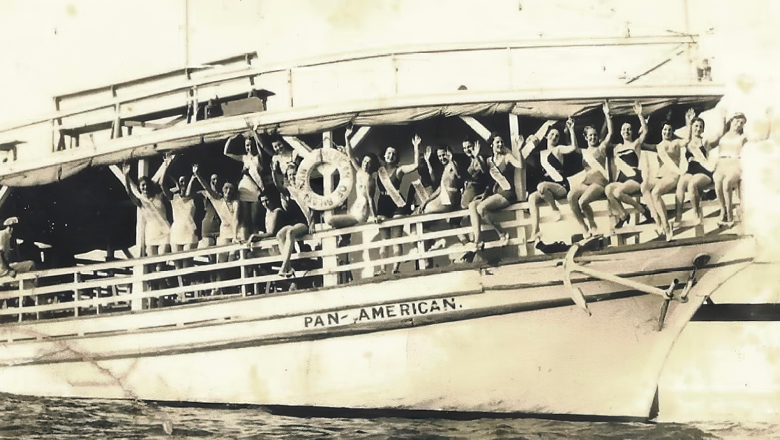
By the early 1920s, Peter Martin owned his own 58ʹ, diesel-powered schooner lugger he named the Pan American. He chose the name for the pride he had in being an American citizen and in honor of the opportunities that he found in his new home country.
At the same time that Peter Martin was building his first boat, prohibition fell upon the country, outlawing the production, importation, transportation, and sale of alcohol. The enforcement of the laws along the Gulf Coast was lax and tourists flocked to the region. A small island, roughly 10 miles south of Biloxi, was renamed Isle of Caprice and a resort was built, offering not only alcohol but gambling and a lively dance hall.
Peter Martin became one of several boat operators who ferried guests to the island, offering up to three trips a day. In 1926, a round-trip ticket to the island cost one dollar per person and on the vessel, passengers could enjoy food and highballs made from bootleg whiskey. In the evening, jazz bands, roulette tables, and slot machines transformed the excursion boats into floating parties. The business proved so fruitful, that Peter Martin extended the Pan American to 76ʹ, added a second deck, and increased seating to accommodate over 150 passengers.
The heyday of the Isle of Caprice lasted only a few years. An ill-fated combination of storms, strong currents washing against its shores, and a growing interest in harvesting the protective sea oats that held the sand in place, led to the island sinking beneath the Gulf waves by 1932.
While the Isle of Caprice was gone, Skrmetta had discovered the economic potential of the excursion business and in 1932 he formed the Pan American Association, purchasing property on the eastern end of nearby Ship Island with plans to build his own resort. Using timber from abandoned buildings on the Isle of Caprice, he built a small beach pavilion and dock, and by summer, was ferrying guests to the new resort. The area grew in popularity with its natural white sand, clear water, and the gambling and drinking that still thrived.
By the early 1920s, Peter Martin owned his own schooner lugger he named the Pan American. He chose the name for the pride he had in being an American citizen and in honor of the opportunities that he found in his new home country.
Gambling wasn’t just for resort guests. Skrmetta family lore has it that Peter Martin once gambled and lost the Pan American in a dice game one evening. Fortunately, he won it back the same night. In fact, Louis still remembers slot machines on a later boat, the Pan American Clipper, and at the snack bar on the island.
On the western end of the island sat Fort Massachusetts, a nineteenth century brick fortification commissioned to protect New Orleans from foreign invasion. By the 1870s the structure was considered obsolete and was abandoned by the federal government by 1900. In 1933, the fort and the western section of the island were purchased by the American Legion and transformed into a resort for World War I veterans.
Peter Martin partnered with the American Legion and, agreeing to give up his own resort operations, became the exclusive ferry carrying guests from Biloxi to Fort Massachusetts. The arrangement proved to be lucrative and remained in place until the National Park Service purchased the entire island in 1971. During those years, Skrmetta expanded his fleet with the Pan American Clipper (1937), Gulf Clipper (1950), and Pan American II (1963).
Louis’s father, Peter Martin’s eldest son, Peter, told him a funny story about the Pan American Clipper. At one point, Peter Martin received a letter from the former airline company Pan American World Airways (Pan Am), known for its Clipper series of planes. The letter stated that Peter Martin could no longer use the name Pan American Clipper for his boat. Peter Martin pushed back and ended up being able to keep the name of his vessel.
Eventually, the island grew to be a financial burden for the American Legion, and in 1947, they turned all operations of the island over to Peter Martin and his family. For the next twenty-four years, the Skrmettas provided all the labor, equipment, infrastructure and financing to build and maintain docks and facilities on the island. In 1959, Louis’s father, Peter, paid more than $4,000 of his own money to keep Fort Massachusetts from collapsing. When it didn’t work, Louis said several of his father’s friends who were local historians teamed up with a local hotel owner, coming to his rescue, forming a committee to save the fort.
The burden on the family grew when Hurricane Camille hammered the island in 1969, destroying the modern structures on the island including a 3000 sq ft snack bar, a power plant, and a 600ʹ boat dock. Peter mortgaged everything he owned in 1970 to rebuild the facilities that were critical to guests’ experience of the island.
Louis said that they were able to repower the vessels in part thanks to PVA. On two occasions, they learned of grant opportunities and how to apply through information PVA shared.
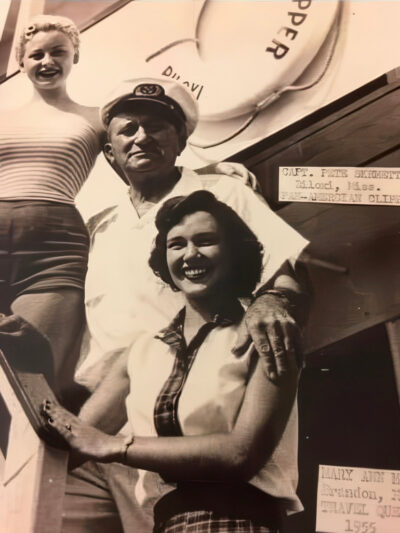
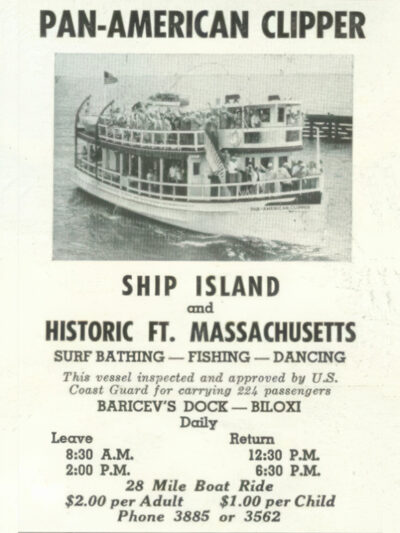
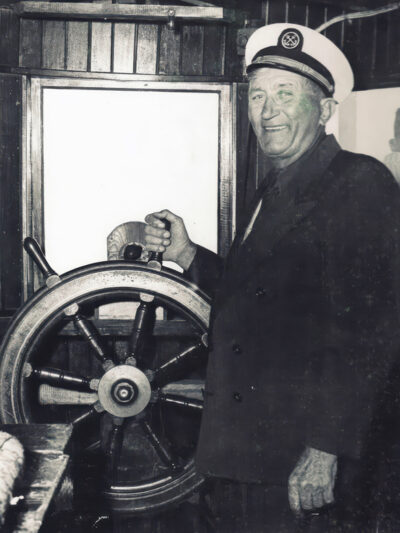
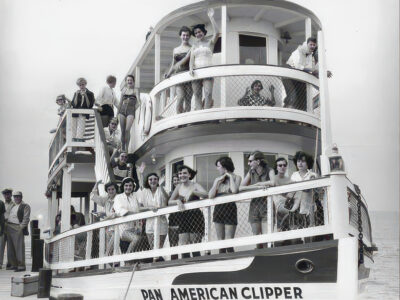
Vintage Photos: Ship Island Excursion
In 1971, the National Park Service took over the island and established the Gulf Islands National Seashore and added Fort Massachusetts to the U.S. National Register of Historic Places. Ship Island Excursions at this point was run by Peter and his brother James Noel, their father, Peter Martin, having passed away in 1963. The company became the official concessionaire for Ship Island with a five-year National Park concession permit. Starting in 1976, the family successfully bid on the first 10-year park concession contract and have been servicing the island ever since.
Ship Island Excursions, started with Peter Martin’s first wooden boat 100 years ago, has transformed over the years. Louis was able to convince his father in the summer of 1990 to purchase the Spirit of Mt. Vernon, a 100ʹ, 300-passenger aluminum vessel that Louis said, “changed our business.” They named the boat Gulf Islander and eventually obtained a second aluminum boat which they named in honor of the man who started it all, Captain Pete.
Gulf Islander and Captain Pete are the company’s two vessels to this day. Being a seasonal operation that runs from March through October, Louis acknowledged it can be a tough business and that the replacement cost of one of their vessels is prohibitive, so they do all they can to maintain their vessels. Louis partly credits this to their Croatian heritage. “If you go to Croatia,” he said, “you’ll notice all the boats are well maintained. They might be living in stone houses, but all their boats are always maintained. We take pride in our vessels.”
He said that they were able to repower the vessels in part thanks to PVA. On two occasions, they learned of grant opportunities and how to apply through information PVA shared. He noted that Ed Welch, PVA’s then legislative director and now senior legislative advisor, specifically helped his family out. “We couldn’t have done it on our own,” Louis said.
In the 100 years his family has been ferrying passengers to the barrier islands off the coast of Biloxi, they’ve watched the islands transform as well. The fate of the Isle of Caprice serves as a reminder of how fragile the barrier islands ecosystem is, and the Skrmettas have, unfortunately, witnessed similarly frightening effects on Ship Island.
When Hurricane Katrina slammed into the coast in 2005, she split the island in two. It was thanks to the Park Service that it was possible to pump sand back in, making the island whole again. Louis described the sight of the island restored to its original state. “She’s back to seven miles long. Beautiful seven-mile-long Gulf beach and high quality natural white sand and the clear green water that we get 10-12 miles south of the Mississippi Gulf Coast. People love it.” He noted that visitors can see fish swimming alongside the pier as the boat docks, red-wing blackbirds flying up looking for popcorn, as well as stingrays and bat rays in the water. As guests stroll the beach, they’re sometimes treated to the sight of dolphins swimming parallel to the shore, seemingly following them as they hike to the island’s end.
Protecting such a special place has been important to Louis and Ship Island Excursions. As National Park Service concessionaires, they have a close partnership with the agency. They ask passengers to bring reusable bottles or cups instead of single-use plastics. There are recycling bins on the island to reduce waste. They have a limit on the number of people they bring out to the island at one time and encourage guests to follow a pack in/pack out policy.
He laughed when he talked of being asked by guests about what to do on the island after visiting the fort. Louis tells them, “You walk!” “I grew up there every summer of my life,” Louis said. “I never get tired of walking the beach on Ship Island.”
They also try to educate passengers about the barrier islands and best practices to help protect them. Guests learn what they can do to maintain the natural soundscapes and quiet of the island, which have been recognized as an aspect of protection of Park resources. They are reminded to keep their distance from any wildlife, to never touch any animals, and not allow pets to interact with them. Instead, it is recommended visitors bring binoculars to better observe wildlife. Recalling the fate of the Isle of Caprice, guests are also asked not to touch the island’s plants.
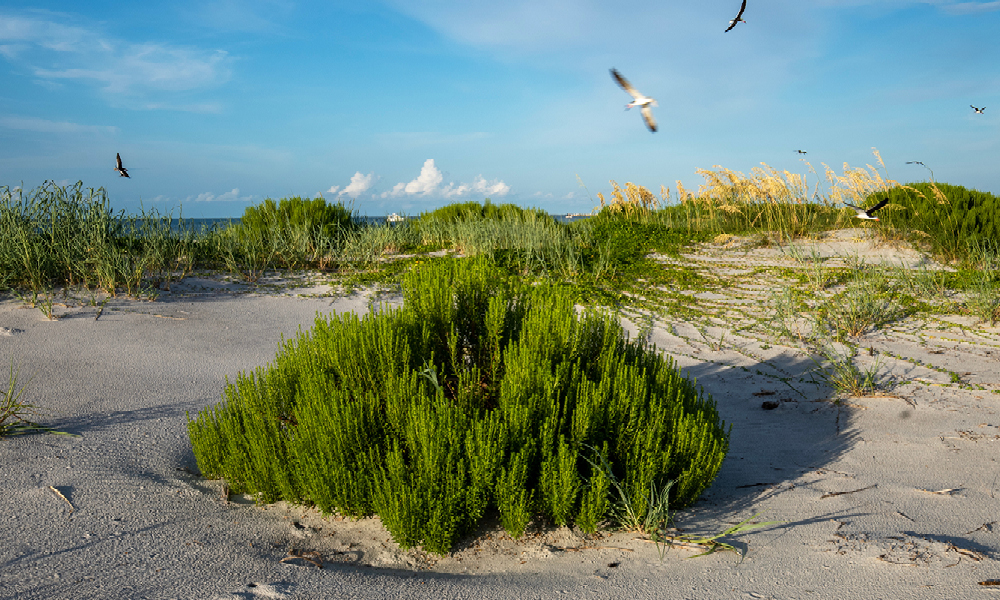
The sea oats that were so critical to holding the sand in place on the Isle of Caprice are also a crucial part of the ecosystem of Ship Island. In the 1920s, people discovered these hollow wheat-like plants on the Isle of Caprice and cut them for commercial flower shops. One man was sending sea oats by the truckload to Chicago. Combined with a series of storms, the destructive harvesting of the plants contributed to the island’s demise. “It’s still out there,” Louis said. “You can actually stand on it at low tide. But it’s never come back. The other barrier islands, we’re losing them as well.”
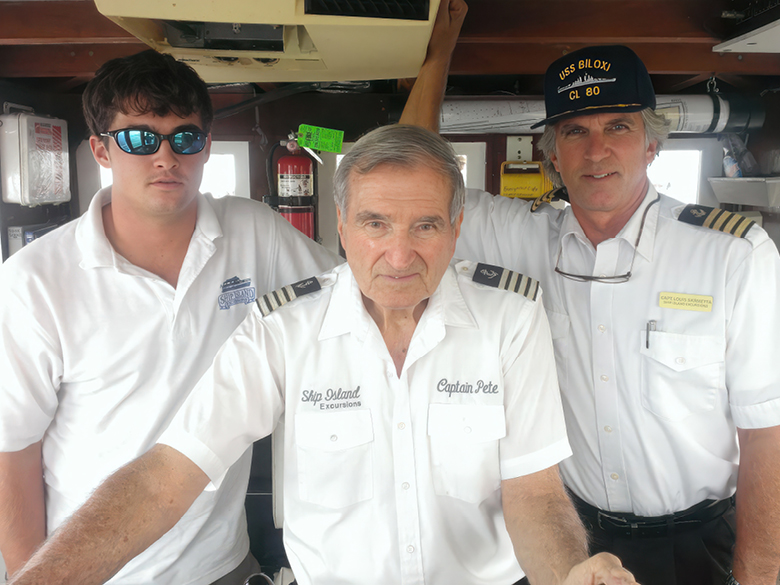
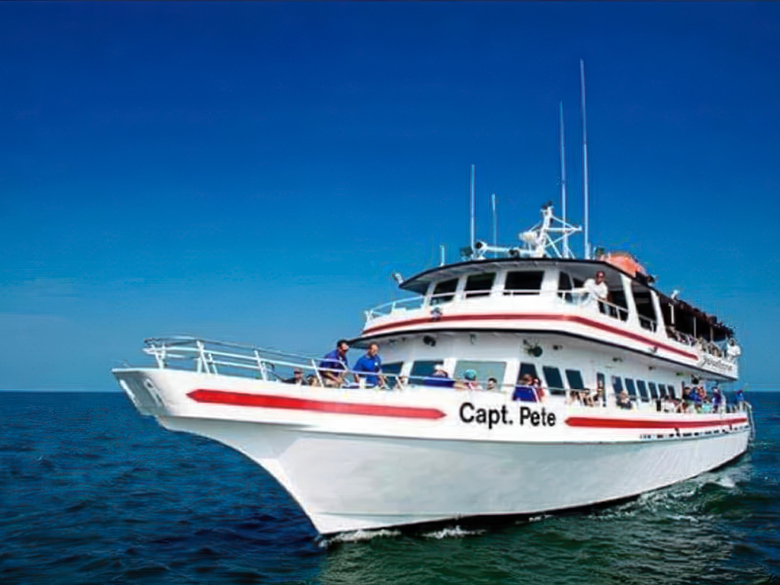
Channelization is also a threat to the islands. Louis explained that deep channels are constantly being dredged in the shallows of the Mississippi Sound and along the Gulf Coast. The channelization process effects the flow of the sand moving to the islands. While one may think of an island as static and made of sand and matter from only the surrounding areas, the reality is quite different. “There’s a natural process,” Louis explained. “The islands are moving westward from sand from the Appalachian Mountains, believe or not.”
Louis is active with the Gulf Islands National Seashore, the National Parks Conservation Association, is on the Sierra Club committee for the state, and helped found the 12 Miles South Coalition. He and these groups work closely with the Park Service to fight inappropriate development around the islands.
The Park Service is not a regulatory agency and depends on the public for support, making these groups vital to the islands’ future. Through these organizations, Louis and others reach out to the community, informing them of proposed development, and rallying support for this fragile ecosystem. “We gotta do it,” Louis explained. “Especially when the park service comes to you and says, ‘Hey, look, we need your help.’”
The islands are a special place. With no cars, no hotels, no apartments or houses, the undeveloped Ship Island offers solitude and respite from the bustle of modern life. Protecting all the islands not only for their own sake and the wildlife, but for future generations to enjoy is important to Louis and his family. He laughed when he talked of being asked by guests about what to do on the island after visiting the fort. Louis tells them, “You walk!” He advises them to grab a big straw hat and a bottle of water and stroll along the beach to the tip of the island and watch the currents go by. “I never get tired of that, and I grew up there every summer of my life,” Louis said. “I never get tired of walking the beach on Ship Island.”