

It is a beautiful late-spring day on the water, and everything seems to be going perfectly. Boarding concluded on schedule, the trip is underway without delay, and the sun glistens across the water like a painting. Passengers smile, laugh, and take in the scenery. From your vantage point, your second trip of the day could not be going better.
Then, suddenly, you hear a faint popping sound. You pause, listening more intently. It comes again—this time in rapid succession. Your mind races through possibilities like a search engine scanning a database. It is broad daylight; it cannot be fireworks. An equipment malfunction, perhaps? But nothing in the engine room makes that sound. These thoughts fire through your mind in under two seconds. Then another pop—this time unmistakably a bang, and much closer than before.
In an instant, you recognize the sound: gunshots. Someone is shooting on board your vessel. What will you do? How will the crew respond? How will you keep passengers safe? Your heart pounds, your palms sweat, and time seems to slow.
Your Worst Fears Are Realized
Whether this is your first season on the water or the culmination of decades of experience, you have certainly handled emergencies: medical incidents, fires, equipment failures. But this is different. The decisions you make in the moments ahead could determine the trajectory of the incident. You will not have time to consult policy manuals, discuss options with the crew, or radio headquarters. Your response must be instinctive.
We spend countless hours training and drilling for emergencies precisely because the time to think about how to respond to an active shooter incident is not during the event itself. These scenarios must be rehearsed repeatedly so that when the unthinkable occurs, your body and mind automatically shift into action.
As training takes over among the crew, they begin directing passengers away from the sound of gunfire, ushering them to safer areas. Humans acting under stress may be unpredictable, but trained crew members responding in unison can be a powerful force for safety.
While this type of emergency shares some conceptual similarities to fire response—particularly the goals of control and containment—the comparison ends there. Fire behaves predictably; people do not. Nonetheless, the objective remains to isolate the threat and minimize casualties. As training takes over among the crew, they begin directing passengers away from the sound of gunfire, ushering them to safer areas. Humans acting under stress may be unpredictable, but trained crew members responding in unison can be a powerful force for safety.
Defining an Active Shooter
The FBI defines an active shooter as one or more individuals actively engaged in killing or attempting to kill people in a populated area. An armed individual firing indiscriminately on board an underway vessel fits this definition precisely. Active shooters are not there to negotiate, take hostages, or seek leverage. Their objective is to inflict maximum casualties before law enforcement response.
It is also important to recognize that although the common term is active shooter, active assailants may use a variety of weapons—guns, knives, explosives, or toxic substances. For this reason, active shooter and active threat are often used interchangeably.
Avoid – Barricade – Confront
Commit the steps of avoid – barricade – confront to memory. You should be able to apply and explain them even under extreme duress.
1. Avoid
As soon as you identify an active threat, immediately move away from the assailant. Instruct passengers to run away from the violence as quickly as possible and to leave belongings behind—no laptops, purses, or souvenirs. During critical incidents, irrational behavior often takes over, so these directions must be clear and assertive.
Place as many decks and bulkheads as possible between yourself and the threat. Direct passengers to stairwells, hatches, or other escape pathways.
In the maritime environment, distancing passengers from a threat poses unique challenges that are not present in land-based settings. Expect that you may need to transition quickly to the next step.
2. Barricade
If escape is not possible, barricade your location. Get out of sight—do not remain in the open. Position yourself behind solid objects, under tables, or in corners. Lock doors, block entry points with furniture or equipment, and turn off lights if it is safe to do so.
Active assailants, like many people under stress, tend to choose the path of least resistance. A secured, difficult-to-breach area is less attractive than open, accessible spaces.
Understand the difference between cover and concealment:
- Cover stops bullets (bulkheads, engine blocks, solid metal structures).
- Concealment hides you but offers little physical protection (curtains, banners, drywall).
Use cover whenever possible.
3. Confront
If avoidance and barricading fail, be prepared to fight for your life—and fight unfairly. This is a survival situation.
The passengers and crew of United Flight 93 on Sept. 11, 2001, demonstrated the power of collective resistance when no other option remained. If you reach the confront phase, you and those around you must act decisively. Use everything at your disposal: strike, kick, gouge, and utilize improvised weapons such as water bottles, coffee mugs, fire hoses, or axes.
While this is not a movie and disarming an attacker is extremely difficult, evidence shows that aggressive resistance can disrupt an attacker’s focus and may slow or stop the assault.
Calling for Help
As soon as practical, notify the U.S. Coast Guard, local law enforcement, EMS, your company, and any other relevant agencies. Use radio, telephone, or any available communication method. Multiple calls from multiple individuals can improve response accuracy, as each caller may provide unique details.
Rendering Aid
Once it is safe, prioritize medical care. The human body can sustain only limited blood loss, and uncontrolled bleeding is the primary cause of preventable death in trauma. Crew members should be trained to apply tourniquets, pack wounds, and apply chest seals. With potential delays in EMS response, your crew effectively becomes a triage team.
Medical readiness should be a standard component of annual training for all personnel, regardless of job title.
Solicit assistance from passengers—any additional help can be lifesaving. Medical readiness should be a standard component of annual training for all personnel, regardless of job title.
When Help Arrives
When law enforcement arrives, the situation will be highly tense. Dispatch reports may contain conflicting descriptions and varying accounts of the number of assailants, leaving officers uncertain about who poses a threat. Whether they arrive by air, boat, or at the dock, expect loud commands, rapid movement, and visible weapons. It is essential to follow every instruction precisely—nothing more, nothing less—to ensure the safety of passengers and crew. Statistically, most officers will never respond to more than one active shooter event in their career, so stress will be a significant factor. Although they are trained for these incidents, you can help them assist you more effectively by remaining calm, attentive, and compliant.
Conclusion
To date, no active shooter incident has occurred aboard a U.S. passenger vessel underway. Yet as firearm access expands, ideological extremism rises, and mental health resources remain strained, the risk cannot be dismissed.
While no single measure can fully prevent such an event, layered strategies—passenger screening, vigilant crew members, and a clear, easily executed response plan—can position your organization for the best possible outcome should the unthinkable occur.
Have a plan. Train the plan. Rehearse the plan. Your preparedness may save lives when every second counts.
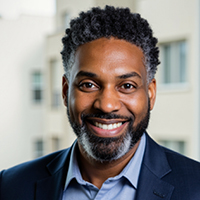
Chief Learning Officer, Vitality Sight
Jarrod D. Broadway is a nationally respected leader in public safety education, translating 30 years of frontline law enforcement and EMS experience into practical, evidence-based training. As chief learning officer of Vitality Sight, he develops programs focused on wellness, resilience, and operational effectiveness across public safety and related professions. His academic background—a B.S. in Criminal Justice and M.Ed. in Adult and Continuing Education—grounds his work in both lived experience and sound learning science.