

A growing number of passenger vessel operators are looking at batteries as a potential alternative to diesel power. That is the right instinct, but it often comes with the wrong framing. Owners and operators too often start by stating, “OK. Let’s switch to batteries. We will replace our gensets,” and from there, the conversation gets stuck in a circle of trying to justify the decision.
Batteries do not replace generators. They are a different class of tool entirely, and the operators who get the most out of them are the ones who stop trying to make the substitution work and start asking a more useful question: how are we going to use the battery? What are we trying to do?
What follows is a practical framework for working through those useful questions, drawn from years of designing battery-integrated power systems across the maritime industry.
Start With What A Battery Actually Is
Two very important terms get conflated constantly in the media when reporting on batteries: power and energy. They are different quantities, and the difference matters.
Power is a rate, measured in kilowatts (kW). Power is familiar, like horsepower in a car. It is how fast something is happening. Energy is a lot less familiar. Energy is a quantity, measured in kilowatt-hours (kWh), kilowatts multiplied by hours. Five kWh can be five kW for one hour, or one kW for five hours. Energy is the total power used over a period of time.
A diesel engine makes a clear analogy when paired with a fuel tank: the engine is the power; the fuel tank is the energy. With a battery, those two are not independent — they are linked by a single piece of hardware. A bigger battery has both more energy and more power. Different battery designs trade one against the other. A battery built for high power tends to have lower energy density; one built for energy density typically has lower power capability.
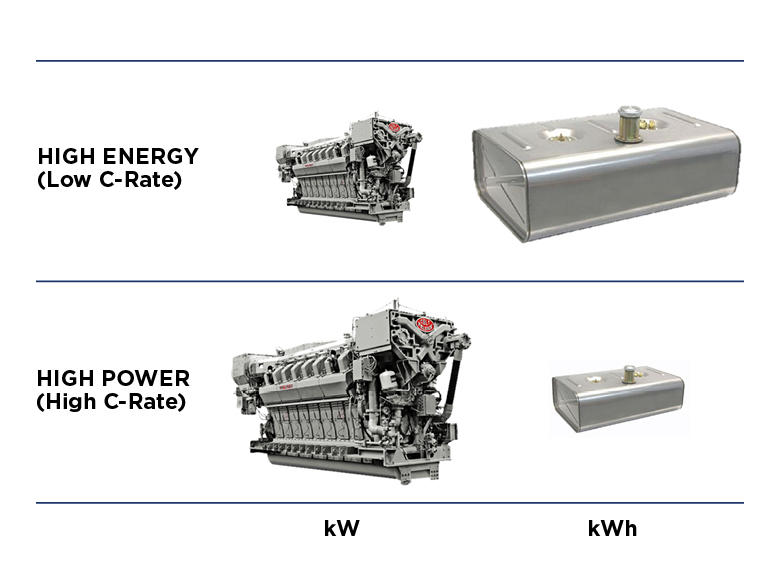
Power capability is very relative for a battery. For instance, a requirement for 500 kW. Is that a lot? Well, it depends on the battery. The metric that captures this relationship is C-rate — the ratio of power to energy. A 500-kW output from a 50-kWh battery is 10C; the same 500 kW from a 500-kWh battery is 1C. So energy is key for grounding our sizing for batteries. C-rate tells you whether a given amount of battery kWh can produce the required amount of power. Understanding these relationships gives great insight and familiarity to the real capabilities and tradeoffs that exist between technologies.
Three things are worth understanding under the hood. First, the battery management system, or BMS, is the software brain that monitors and protects the cells—it is often misunderstood as some sort of safety disconnect, but in reality, it is a monitoring system that is keeping the battery in balance and keeping tabs on the thousands of cells. In addition, the BMS is really the main touchpoint for all systems outside the battery—PMS, EMS. Second, thermal management is harder than people expect. Heat is the first and foremost cause of degradation. And engineering thermal systems is difficult, lithium cells operate in a narrow temperature window. Third, the cell chemistry itself is full of tradeoffs, among energy density, power, cycle life, safety, and cost. There is no free lunch, and choosing a chemistry without understanding the tradeoffs is how operators end up disappointed three years in.
That is the equipment. The harder problem is using it.
A diesel engine makes a clear analogy when paired with a fuel tank: the engine is the power; the fuel tank is the energy. With a battery, those two are not independent—they are linked by a single piece of hardware.
Battery Sizing Is Not Load Analysis
Sizing a generator is straightforward. You add up the maximum simultaneous load of every component, multiply by a margin factor, and pick the next-larger genset off the shelf. The discipline is conservative oversizing.
Sizing a battery looks nothing like that.
If you take peak power and multiply by mission duration, you will end up with a battery that is enormous and expensive. Battery size is driven by average power over the operational profile, not peak. Peaks are absorbed easily; what drives the energy requirement is what the vessel is actually doing most of the time.
This is where a different mindset is required. A battery is a tool that shapes power flow over time. To size it, you need to know the shape: when the vessel is heavily loaded, when it is lightly loaded, where the peaks are, how often they occur, what the average sits at, and what redundancy or spinning-reserve requirements look like. This is the key to success, the better this is done, the better the results will be.
Every vessel has its own answer. A water taxi running short hops at high duty has a fundamentally different profile from a dinner cruise that sits at low load for hours, which is itself different from an excursion vessel that mixes long transits with extended dock time. Two sister ships on different routes can have vastly different operational profiles. There is no off-the-shelf “passenger vessel”-sizing exercise, there is only the operational profile, and that is the input that decides almost everything.
The same point holds across the industry. Offshore supply vessels can use small batteries for spinning reserve in dynamic positioning—low usage, very high power. Some ferries face the harshest duty cycle for batteries on the planet: five-minute recharge, up to fifty cycles a day, with the charging infrastructure as much of a challenge as the battery itself. Tugs and workboats use batteries to avoid low loading on diesels and to provide zero emissions in port. Passenger vessels, feeders, and coasters often look closest to the tug case as far as objectives—batteries used to keep diesels in their efficient operating range, with zero-emissions capability at the dock as a meaningful secondary benefit—but obviously the operational profile is vastly different.
These applications all use batteries, but the batteries are doing very different jobs. These extremities serve to paint the picture of why evaluating what is going on, what the vessel is doing, is so important in engineering the right hybrid or battery electric solution.
The Hybrid Lesson: Focus On The Genset
For most passenger vessel operators, the realistic near-term path is hybrid rather than fully electric. And the hybrid lesson, learned the hard way across the industry, is counterintuitive: the goal of adding a battery is not to try to push the diesel off center stage. The goal is to ensure that the diesel spends its time doing exactly what it does best and most efficiently.
Take a representative operational profile: average load around 100 kW, with intermittent peaks reaching 400 kW. The natural specification, using diesel logic, is a 500-kW genset that can absorb the worst case. That genset will then spend most of its life running at 20 percent load, burning roughly 20 percent more fuel than is necessary. In reality, most diesels spend most of their lives running load percentages even lower than that.
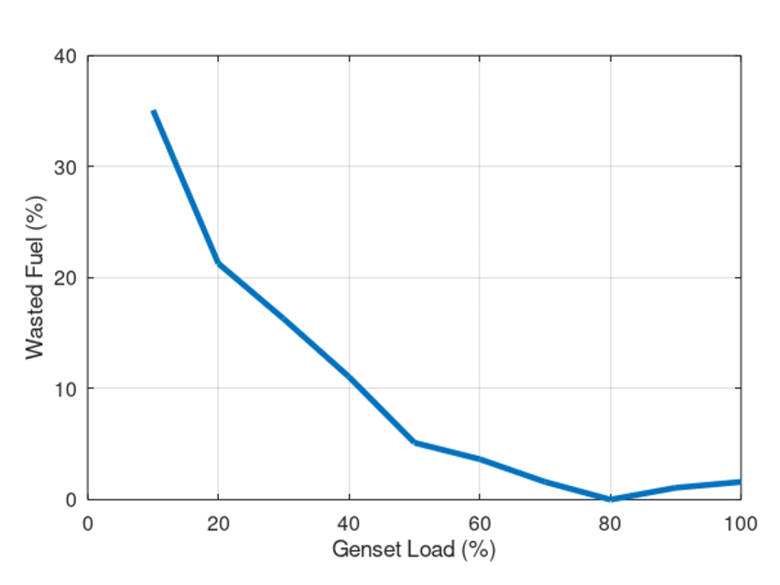
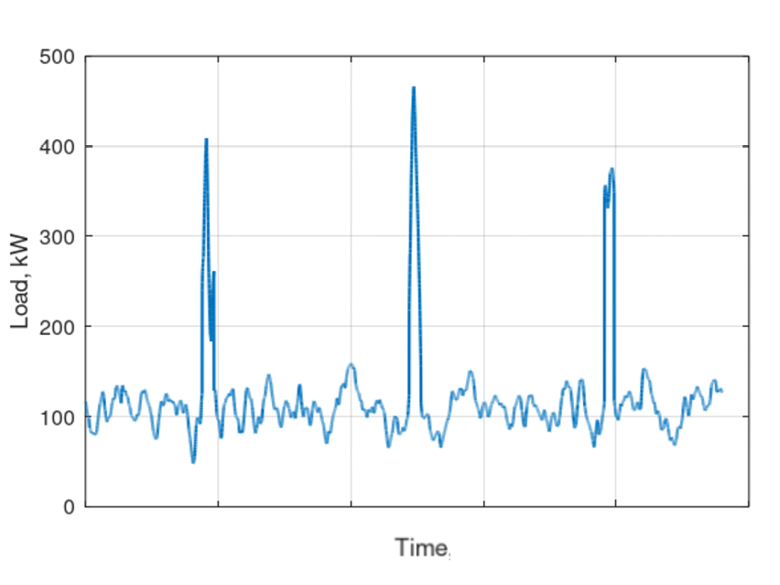
The intuitive battery response is peak shaving—let the battery handle the peaks, leave the genset alone. This produces almost no benefit, because the genset is still oversized and still spending its life at 20 percent load.
The correct approach is to focus on ensuring when the diesel is on it is loaded efficiently and use the battery to enable that and absorb any variations. The result, then, is to use the battery to handle peaks and resize the genset down. A 200-kW genset running near its efficient operating point, supported by a battery that absorbs peaks and recharges during off-peak periods, will burn dramatically less fuel than the 500-kW unit it replaces—not because the battery did more work, but because the diesel is now operating where diesels work best. Further reinforcing those benefits, the diesel will now avoid wet-stacking and also reduce maintenance intervals, benefits that apply to parties besides just those paying the fuel bill.
The fuel-savings figure we used to cite for this approach was 15-20 percent, or up to 30 percent. In other hybrid industrial electrification applications, where SPOC has used these very same principles, some fleet wide savings are now averaging 80 percent. The mechanism is the same in every case: the added technology is there to support the engine, not replace it.
This is also why we say, “it’s easy to build a bad hybrid.” A hybrid sized without an honest operational profile or built around the assumption that the generator will just be replaced with a battery, will under deliver. A hybrid sized around the genset’s efficient operating window, with the battery doing the shaping work, will not.
The Opportunity Hiding In The Architecture
There is one more layer worth understanding, because it is where a lot of the unrealized value sits.
A battery is just a DC voltage source. To connect it to anything and make it do useful work, you need an inverter. The inverter is what dictates how the battery actually behaves—what functions it performs, how and when it responds, how it integrates with the rest of the system. Many people think the subject of DC power distribution comes up because batteries are also DC. The reality is that batteries make us start considering bi-directional power flow, as we start combining and orchestrating multiple loads and sources. Once we start doing that, we start thinking more about inverters. And once we start doing that, a DC bus just starts to make sense.
Inverters and DC busses are not new to vessel operators. Every variable frequency drive on board—every variable frequency drive (VFD) running a thruster, pump, or fan—is an inverter, and a DC bus. Same hardware, same physics. VFDs are commonplace because the benefits are real: efficiency, precision control, reduced inrush, lower harmonics.
Once you have batteries connected through inverters, and loads running through VFDs, and an interest in letting the diesel run at its sweet spot, the question of how to wire it all together starts to change. The traditional approach—a single AC bus with everything synchronized to it—now starts to add inefficiency and complexity at every interface. A DC-bus architecture, where the diesel, the battery, the thrusters, and the hotel loads all connect through their own power-electronic interfaces to a common DC link, fundamentally simplifies the component interactions and system operation. It also opens up new options for redundancy, sectionalization, and fault management that would be awkward and costly to implement on AC.
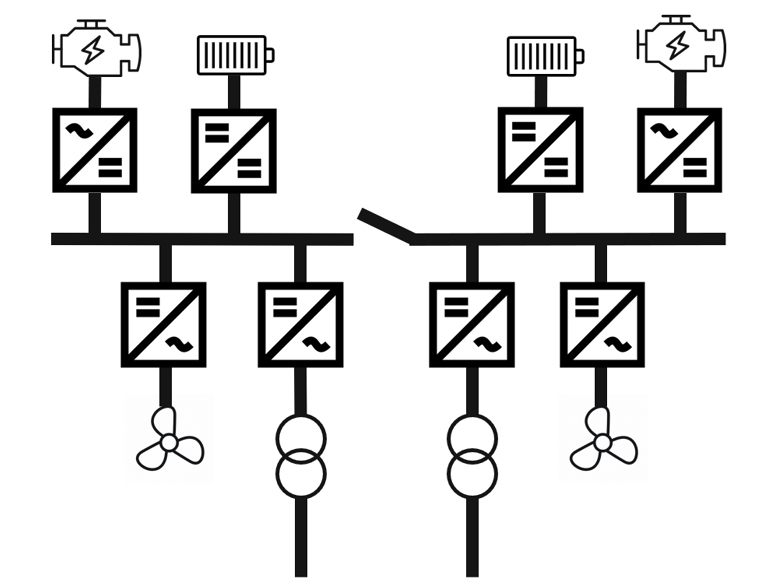
That is a longer conversation than this article can fit, but the framing is what matters: when you commit to using batteries seriously, the architecture of the power system itself is now also on the table. Some of the largest gains—efficiency, control, redundancy, simpler load sharing—come from there, not from the battery alone.
Closing
The single most useful shift in thinking, for an operator evaluating battery power, is to stop treating the battery as a generator and start treating it as a tool—one tool in a power-system toolbox that now also includes inverters, VFDs, and DC-bus architectures. The decisive input is the operational profile. The decisive design discipline is letting each piece of equipment do what it does well. And the largest opportunities, especially for passenger vessel operators, sit not in the battery itself but in what becomes possible once the battery is part of a properly designed system.
The single most useful shift in thinking, for an operator evaluating battery power, is to stop treating the battery as a generator and start treating it as a tool—one tool in a power-system toolbox.
SPOC builds the inverter-based power systems that bring these architectures together—hybrid, charging, microgrid, multi-drive lineups, and VFD. We’ve been doing that across maritime and industrial applications for over 20 years, with over 85,000 inverters installed and over 2,000 DC microgrids. The framework above, though, applies whether or not we ever talk, get the operational profile right, size around it, and treat the battery as a tool. The rest follows.

Dr. Ben Gully is chief technologist at SPOC Energy, where he provides technical leadership for power solutions built around novel system architectures and DC configurations. He has 14 years’ experience engineering battery and hybrid power systems across maritime, utility, microgrid, and industrial electrification applications, including three years in Norway as DNV’s subject matter expert on lithium-ion batteries. He holds a PhD from the University of Texas in maritime battery hybrid modeling and controls.