
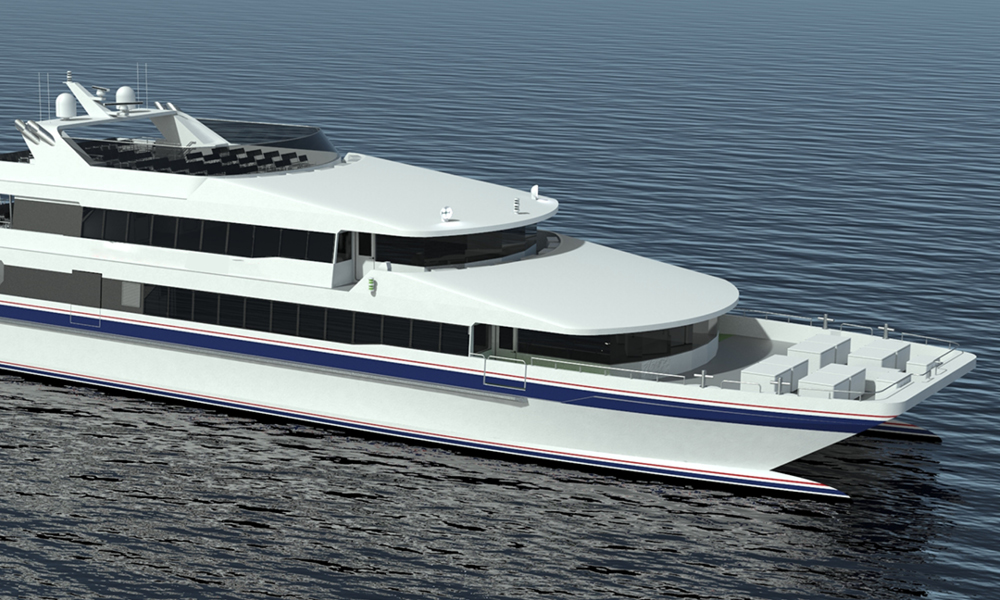
Marine Group Boat Works (MGBW), based in Chula Vista, Calif., has been selected to begin construction of a new low-emissions passenger ferry for fellow PVA member Catalina Express. This cutting-edge vessel will meet the requirements of the California Air Resources Board (CARB) Commercial Harbor Craft Regulation, advancing the state’s commitment to cleaner maritime transportation, while adding significant economic impact to the community. The vessel is expected to be launched and begin sea trials in the third quarter of 2027.
Catalina Express is part of the LA MER (Los Angeles Marine Emission Reduction) project, a collaborative initiative between CARB and the Port of Los Angeles. Backed by a $31 million CARB grant, the project aims to accelerate the adoption of lower emission harbor craft across California. As part of this effort, Catalina Express received a $15 million grant to match its own $15 million contribution to the project. This emission-reducing technology demonstration project aligns with Catalina Express’ and MGBW’s dedication to environmental consciousness and revitalizing the California boatbuilding industry.
The new 46-meter Catalina ferry, designed by Incat Crowther, will be equipped with four Tier 4 MTU 12V 4000M65L engines and a proposed CARB-verified diesel particulate filter once certified by the EPA, the U.S. Coast Guard, and CARB to meet CARB commercial harbor craft regulations.
Catalina Express is the primary link between the Southern California mainland and Catalina Island, making sustainable transportation a critical priority. The introduction of this new 524-passenger vessel will replace three Tier 2 and Tier 3 vessels, enhancing service efficiency while also cutting down on environmental impact.
The new vessel construction also represents a significant investment in Southern California’s maritime economy and workforce. The project will generate more than 100 full-time jobs for craftsmen, engineers, production personnel and support staff throughout construction. In addition to the direct employment impact, the project strengthens the regional supply chain through the purchase of more than 200,000 pounds of locally sourced aluminum and over 880 feet of piping materials. Using standard MARAD maritime industry economic multipliers, the project is estimated to generate more than $54 million in total regional economic impact.