
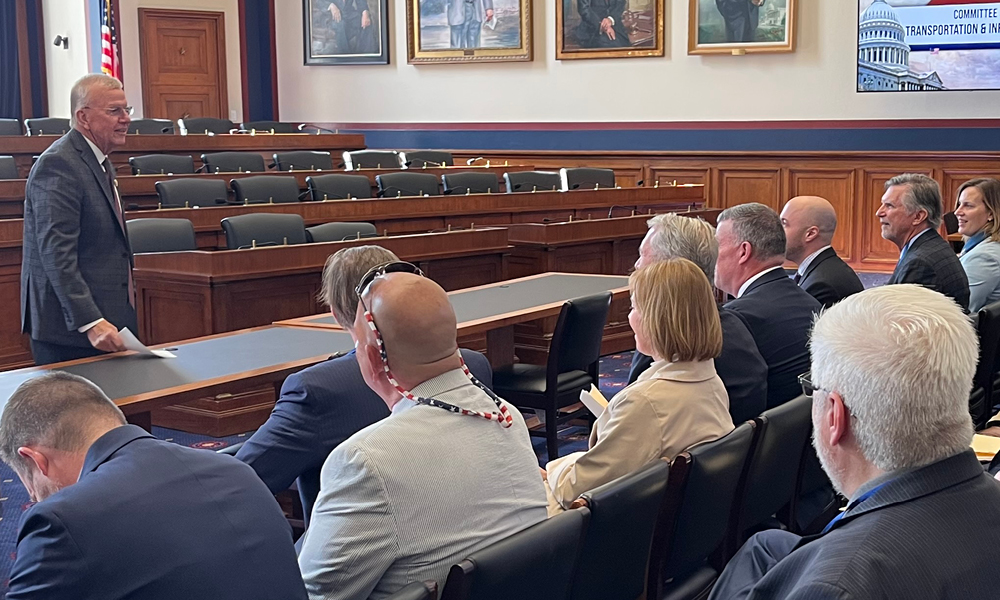
The value of a trade association like PVA is often measured by the laws it helps pass. In reality, some of the most important advocacy happens long before a bill is introduced. It happens by building relationships, earning credibility, and being present when policymakers ask for ideas. Over the past several months, PVA has seen two excellent examples of why maintaining a strong presence in Washington, D.C., matters.
Earlier this year, Senate Commerce Committee staff, under the leadership of Ranking Member Senator Maria Cantwell, invited maritime stakeholders to submit recommendations for the next Coast Guard Authorization Act. Rather than waiting for legislation to be introduced, the committee sought practical ideas from the industries that rely on the U.S. Coast Guard every day.
PVA responded with a recommendation based squarely on our members’ experiences during previous government shutdowns. We urged Congress to ensure that the Coast Guard’s National Maritime Center (NMC) and National Vessel Documentation Center (NVDC) could continue operating during future lapses in appropriations.
Passenger vessel operators know firsthand how disruptive government shutdowns can be. Delays in processing merchant mariner credentials, medical certificates, and vessel documentation create uncertainty throughout the industry. Qualified mariners cannot report for work without valid credentials. Vessel documentation renewals are delayed. Operators face scheduling challenges during peak operating seasons, and businesses across the maritime transportation system feel the ripple effects.
We were encouraged when Senate Commerce Committee staff informed us that they had developed draft legislative language addressing PVA’s recommendation. The proposal would authorize the Coast Guard to continue operating the NMC and NVDC during a government shutdown by allowing credentialing, medical certificate processing, vessel documentation, renewals, and related services to continue uninterrupted using available user fee funding. Committee staff have advised PVA that the proposal has now been shared with the Committee’s majority staff for consideration as work begins on the next Coast Guard Authorization Act.
There is no guarantee that this language will ultimately become law. But the fact that Congress sought stakeholder recommendations, listened to our concerns, and translated one of PVA’s proposals into legislative language demonstrates the value of maintaining an active and credible presence in Washington. The importance of those relationships became evident again just a few weeks later.
During PVA’s Congressional Fly-In this spring, nearly 40 passenger vessel leaders met with members of Congress and their staff to discuss the industry’s priorities. In our final meeting of the day, PVA President Andrew Sargis spoke with House Coast Guard and Maritime Transportation Subcommittee Chairman Mike Ezell about a growing concern shared by operators throughout the country: as the Coast Guard assumes expanding responsibilities related to border security, national security, and other emerging missions, its traditional marine safety mission is showing signs of strain.
Andrew reminded the chairman that Congress faced similar concerns nearly two decades ago. In 2007, the subcommittee conducted oversight hearings examining whether the Coast Guard’s prevention mission was receiving the attention and resources it required. He suggested that it might be time for Congress to once again examine whether the Coast Guard’s domestic marine safety responsibilities are receiving the attention they deserve.
Chairman Ezell agreed.
Before the meeting concluded, the chairman directed his staff to begin organizing an oversight hearing. That conversation has since evolved into a congressional roundtable that will bring together members of Congress, Coast Guard leadership, and representatives from several segments of the maritime industry to discuss the Coast Guard’s delivery of its domestic marine safety mission. PVA was invited to participate in that discussion and had the opportunity to share the passenger vessel industry’s perspective directly with congressional leaders and Coast Guard officials.
Neither of these developments happened by accident. They are the product of years of relationship-building, thoughtful advocacy, and a willingness to engage constructively with policymakers whenever opportunities arise.
Whether responding to a congressional request for legislative recommendations or raising operational concerns during a Capitol Hill meeting, PVA is able to represent the passenger vessel industry because we have earned a seat at the table. Our credibility comes from bringing practical solutions, real-world operational experience, and a commitment to working collaboratively with Congress, the Coast Guard, and our maritime partners.
PVA is doing exactly what its members expect—bringing the passenger vessel industry’s experience directly to policymakers at the moments when it can make the greatest difference.
Neither of these efforts is finished. The Coast Guard authorization bill is still being written, and the congressional roundtable is only the beginning of what we hope will be a broader discussion about strengthening the Coast Guard’s domestic marine safety mission. But both demonstrate that PVA is doing exactly what its members expect—bringing the passenger vessel industry’s experience directly to policymakers at the moments when it can make the greatest difference.
Washington rewards organizations that show up, build trust, and offer practical solutions. These recent opportunities remind us that effective advocacy isn’t simply reacting to legislation after it is introduced. It is helping shape public policy before the bill is ever written.

Richard Patch is the Legislative Director of the Passenger Vessel Association.