
In the early 1970s, Brian R. D’Isernia made a very unusual career move—he went from practicing law to building fishing vessels. After falling in love with fishing on long line fishing trips, he got a hold of what one of his sons describes as “some leaky wooden fishing boats” from Honduras that he retrofitted for longlining swordfish off the Grand Banks. Brian soon headed to Florida to explore rumors of a large swordfish population in the Gulf of Mexico, making enough money to afford a new vessel that “wasn’t wooden and didn’t leak.”
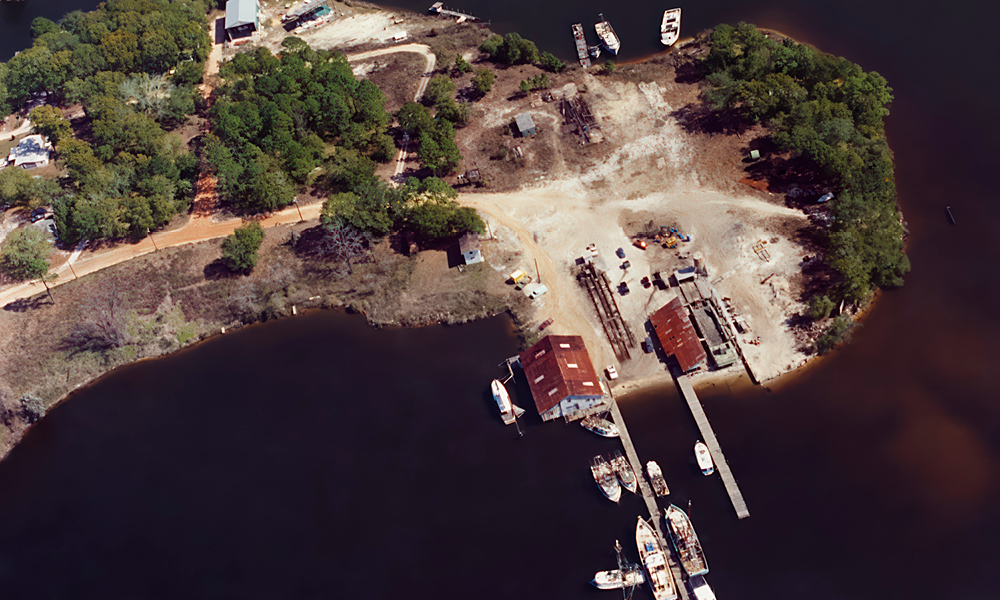
Brian picked up a contract that another operator let go of at a local Florida shipyard. He was able to get the boat out and make a success of it but had faced challenges getting it done in a timely manner and in the way he wanted. When he had financing for more longliners, he decided to build them himself and leased an acre of land in Panama City, Fla., founding Eastern Shipbuilding Group in 1976.
What started with a single wooden boat has grown into a company with three shipyards in Florida which have built over 350 vessels ranging from commercial fishing vessels where the business got its start to tugs, U.S. Coast Guard cutters, offshore supply vessels, fireboats, Ro-Ro passenger ferries, and high-speed passenger vessels, to name only a few. Today, six of Brian’s ten children are part of the company and his son, Joey, is chairman and CEO of Eastern Shipbuilding Group (ESG).
Brian built the company on solid values and demanding standards, and while many aspects of the company have grown and changed over the 50 years since he started it, the commitment to delivering quality work and taking care of employees and community remain core to ESG.
Joey explained that the myriad vessel types ESG is known for grew in part from the need to retain their workforce. Servicing a wider range of maritime sectors makes it easier for the company to ride the ups and downs that can be a part of the shipbuilding industry. To ESG, employees are family and a steady flow of work thanks to the diversity of the company portfolio has kept jobs in place, allowing ESG to grow in a sustainable fashion.
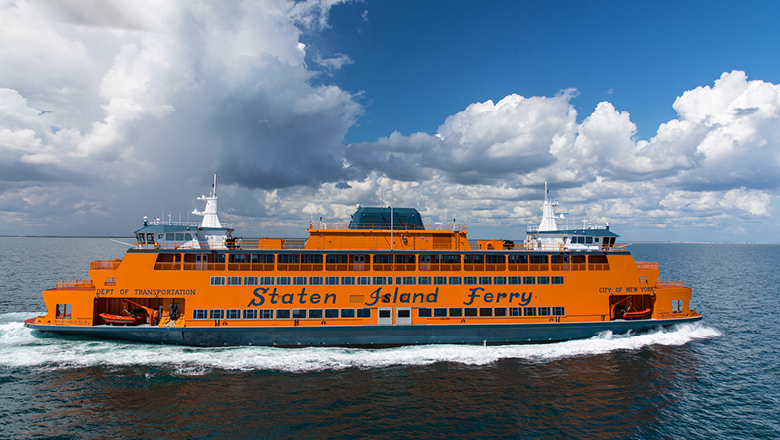
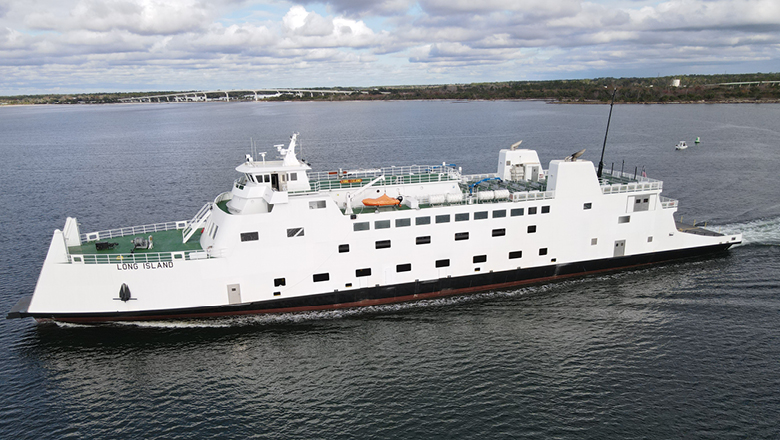
The shipyard entered the passenger vessel sector in the early 1980s, working on several conversions for Cross Sound Ferry. Most recently, ESG delivered a ferry for a community association on Fisher Island in Florida and has built vessels for Bridgeport & Port Jefferson Steamboat Company, Staten Island Ferry, and Washington State Ferries, among others. Contributing to this industry and having the opportunity to build vessels—some which he called game-changing ferries—is a point of pride for Joey. Getting to know passenger vessel owners and operators over the years, he describes them as the most salt of the earth people who care deeply about what they do. “They’re carrying people for a living and it’s the most precious cargo that any vessel can carry.”
People are at the very core of ESG’s company ethos. “We mean what we say, and when we make promises to our customers, we keep them,” Joey said. “The only way you can do that is by doing everything you can to make promises to your employees and their families and being honest with those folks and trying to keep those promises.”
“When we make promises to our customers, we keep them,” Joey said. “The only way you can do that is by doing everything you can to make promises to your employees and their families.”
The company has invested heavily in its employees from extensive recruitment efforts to helping existing team members grow their careers within the company. They have partnered with Gulf County to create the Maritime Academy, teamed up with Haney Technical College to launch the Marine Electrician Apprenticeship Program, put a welding facility in a local high school, and developed the Eastern Shipbuilding Group Coastline Initiative which promotes welding and engineering skills for students through a competition to design an artificial reef. “The greatest challenge that faces any shipbuilder in the U.S. is being able to recruit, retain, and train enough skilled workers,” Joey said.
He saw firsthand how important workforce development was in the wake of Hurricane Michael. The category 5 storm hit Florida in 2018 as the third-most intense Atlantic hurricane to make landfall in the continental U.S. in terms of pressure. Coming out of that storm, ESG faced significant challenges to continue attracting skilled laborers to an area that had been ravaged by a hurricane. It forced the company to “step up their game,” as Joey put it, and develop a more comprehensive, more focused approach to recruitment.
This led to Eastern Shipbuilding creating their BUILD initiative which promotes workforce growth, recruitment, and retention through competitive wages and benefits, investments in training, and fostering a culture of collaboration. BUILD enabled ESG to double their workforce within only a few years after the hurricane.
The support for employees doesn’t end with recruitment, ESG also focuses on developing career frameworks to help employees discover growth opportunities within the company and to create the necessary path to reach their goals. Job openings are posted internally first to find interested and qualified candidates and support is offered for them to advance their careers. If Joey has a great employee, he wants to keep them. His interest is in keeping good employees even if they want to take on a different craft or work in a different area of the shipyard. “Recruiting is a huge part of what we do,” he said, “but if you’re not able to retain the people, then the challenge becomes much harder.”
ESG’s dedication to employees reaches beyond the shipyard, extending to family engagement. As a family-owned, family-run company, that level of involvement is important to them. They organize an annual picnic where the county allows them to take over much of a local park. At the end of the season, they rent out a water park for a day for employees and their families to come together and enjoy the rides.
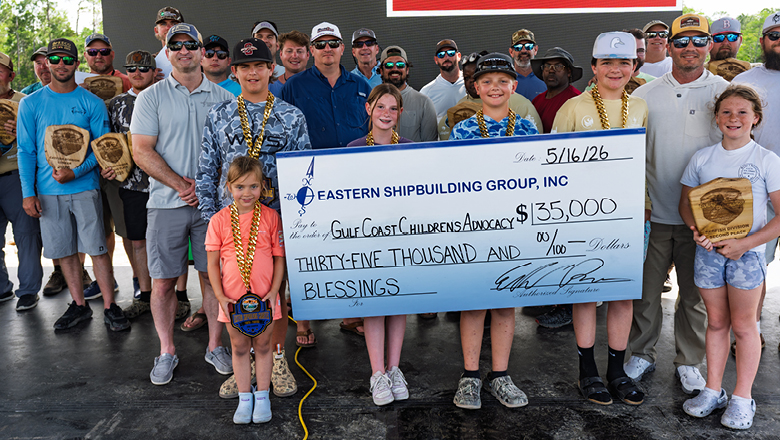
As the largest private employer in the region, ESG leverages their position to take care of not only the people within their company, but the people within their community. The company hosts a charity fishing tournament and a charity golf tournament. These events are not only for employees and their families but bring together vendors and suppliers from around the world and raise money for local and regional charities.
In addition to the tournaments, ESG donates to Gulf Coast Children’s Advocacy Center and recently celebrated 20 years of working with the organization OneBlood. Through OneBlood, they host blood drives at their facilities with contributions that are estimated to have positively impacted over 18,500 lives to date.
Joey points to the company’s interest in doing great things for their employees and on behalf of their employees for the community. These initiatives are greater than what any one person could do alone and allow employees to be involved in something bigger. “It’s rewarding to be a part of,” he said.
Since Brian founded the company in 1976, ESG has held itself to high standards. Joey shared that his father would lay down challenges with new projects that would sometimes leave the team a bit surprised. Brian had done his research though and asked of the company what he knew they could achieve. “At first, we’d be flabbergasted,” Joey said. “Then we’d pick ourselves up and we’d figure out ‘What do we need to do to make this work and to be successful.’” Watching the company rise to meet and succeed at these challenges time after time is a point of pride for him.
He saw that it drove the team to work hard, collaborate, and most importantly, never give up. Joey sees this in shipbuilders in general, they strive to meet and succeed at any projects placed before them. He sees it in his customers, too— they never back down and find solutions to conquer any challenge they face.
Those high standards have allowed ESG to achieve several certifications over the years. While some certifications have been driven by contractual requirements, Joey explained that many are a result of how they’re already doing business. For example, their ISO 140001 certification pertaining to environmental compliance is not required by any contract. The company follows laws and regulations, but above all, they are led by their own love for the water. Growing up fishing in the local waterways, Joey touched on his personal interest in making sure his children and grandchildren can enjoy the same experiences on the water that he had. The certifications they have received are often a reflection of the company’s existing standards and business practices; it’s simply a way to show them to others.
The certifications they have received are often a reflection of the company’s existing standards and business practices; it’s simply a way to show them to others.
As Joey looks towards ESG’s future, he wants to see the company continue the same trajectory it’s had for its first 50 years. Shipbuilding is an ever changing industry and companies can’t rest on the laurels of what they have already achieved. He hopes to see ESG maintain its competitive edge, adapting and evolving to always be a part of the solution for customers. While new challenges may arise, he sees them as a push forward.
It’s about “being able to take on that challenge with a combination of workforce development, technology integration, process improvement,” Joey said. “It’s not reinventing but renewing how you do what you do. If you work on it hard enough, you can do it better than anybody else, and certainly, that will support being here for at least another 50 years.”