
When thinking about ticket sales in small business, one cannot deny the importance of direct bookings. Overall, more direct bookings are directly linked to higher profit margins within small businesses. However, it is important to consider what exactly links these two things together. More direct bookings give a business owner more control and flexibility over how their business is represented to the public in terms of branding, ticket prices, company policies, and customer experience. Increasing one’s direct bookings also allows for independence from third-party platforms and online travel agencies (OTAs), allowing an owner to save and reinvest money into their business, and ensuring that valuable guest data is retained.
This helps the business owner to understand a typical customer’s preferences to aid in future marketing and helps to foster stronger relationships with customers via direct communication. Clearly, there are several reasons why direct bookings are so important for a small business, so how can a business owner increase their direct bookings? One tool that plays a major part in this is your company website. In fact, over 90 percent of travelers will do their trip research online, and 82 percent will end up making their booking online as well, further validating the importance of websites in small business1. Outlined below are the key factors in having a functional and successful website that will drive your direct bookings up and help your business to grow.
Consider how easy it is to navigate through your website’s booking path. Ideally, you want your customers to spend as little time as possible on your website while still purchasing whatever your business is offering.
Marketing On Your Website
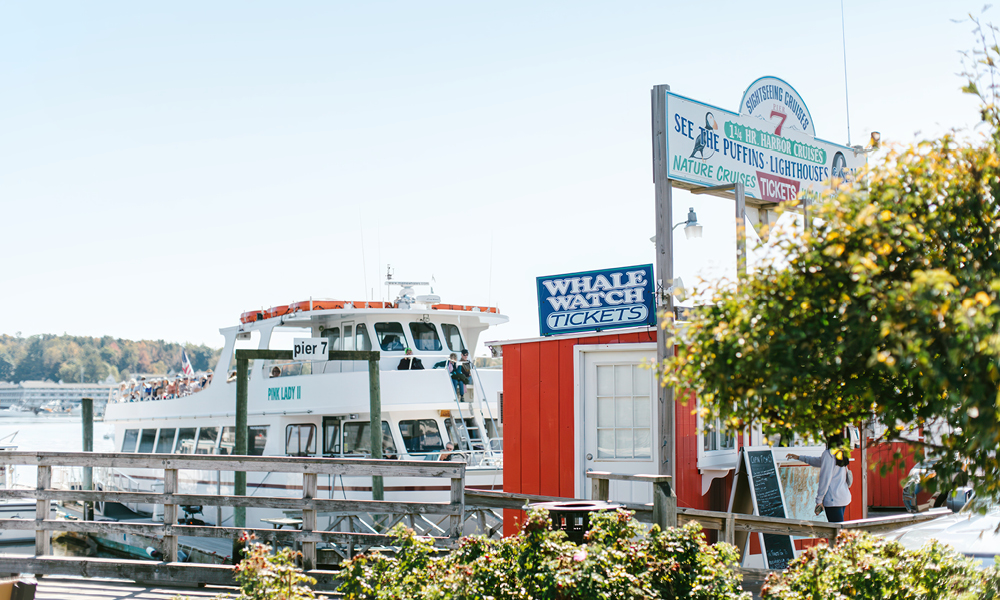
It is important to think about your website as your “digital dock,” meaning that you want the same amount of marketing power as you have at the physical site of your business. Step one to achieving this is a good first impression, i.e. your website’s homepage. A homepage that provides a good first impression to a customer is one that provides high resolution images and videos, as well as keywords that are representative of a business and that highlight its most popular offerings. For example, at Cap’n Fish’s Cruises we offer whale watching, puffin watching, and a variety of sightseeing tours, so, naturally, we include high resolution images or videos of whales, puffins, and lighthouses, along with these keywords in bold on our website’s homepage.
Additionally, providing a trip calendar right on your homepage can allow customers to easily find what trip they are looking for and book it, thus creating a good first impression of your business. The better impression your homepage leaves for a customer, the more likely they are to book a tour directly on your website, leading to an increase in direct bookings and, ultimately, revenue.
Keeping Up With Technology
A functional website that is successful in increasing a business’ direct bookings also is mobile-friendly. What is the one piece of technology that almost everyone is carrying with them at all times? Cellphones! This is especially true of your average tourist looking to buy tickets for a boat tour. They are not likely to be carrying their laptops or desktops around with them, so short of buying tickets in person, they turn to using their cellphone. An important aspect of a mobile-friendly website is readability. This is done using large text and easy to read fonts, as well as content that is straightforward and not cluttered.
An important aspect of a mobile-friendly website is fast loading times. A typical tourist is, most likely, lacking in time and patience, so the longer it takes to load your homepage, booking page, FAQs, or any other aspect of your website, the more likely the customer will leave without buying anything.
Consider how easy it is to navigate through your website’s booking path. Using tools like dropdown menus, book now buttons, a trip calendar, etc., you can lessen the number of clicks it takes a customer to purchase tickets which is also handy in dealing with an impatient tourist. Ideally, you want your customers to spend as little time as possible on your website while still purchasing whatever your business is offering.
Building Trust And Creating A Repeat Customer
It is important that your website is transparent in what you are offering to help build trust with your potential customers. One way to do this is to include on your website’s homepage some of your favorite five-star reviews that you’ve gotten in the past. This not only shows what you offer as a business, but also proves you succeeded in providing it. Include reviews with accurate and up-to-date information, reviews from repeat customers, or reviews that say, “best boat tour,” “highly recommend,” or “worth the money,” to name a few.
A key way to build trust with a potential customer is to be transparent on your pricing. For example, people do not like hidden fees. They like to see exactly how much they are paying, and what they are paying for. If you do have extra fees, lay them out for the customer to look at. At Cap’n Fish’s, as many other companies do, we have an online booking fee. This is very clearly stated to the customer upon purchasing.
Finally, you should build a website that is clear about who your company is as a whole. Include any safety certifications or mention safety equipment, using descriptors like “U.S. Coast Guard certified.” Also talk about your company’s history, and why a potential customer should choose you. Ultimately, a customer that trusts your company is more likely to book directly with you, either online or in person, so it is critical to ensure transparency throughout your website, policies, and branding.
Once you’ve secured a customer, it’s important to maintain that trust after they experience and leave your business. This can be done using confirmation, reminder, and follow-up emails to your guests. Confirmation emails can provide helpful information (i.e. date/time/type of trip, what time to arrive, parking, terms and conditions, etc.). Reminder emails can help customers who booked very far in advance to remember their trip details. Follow-up emails can encourage passengers to provide a review and to share their photos or videos on a business’ social media accounts. All of these can keep you at the top of your customer’s mind post-trip, which ultimately leads to positive publicity for your operation, higher chances of repeating customers, and an overall increase in direct bookings.
Making Your Business Visible To The Public
When examining your company’s website, consider its visibility and findability online. Recent statistics show that 87 percent of consumers use Google to evaluate local businesses2, so it’s important to keep an up-to-date and highly informative Google Business Profile. Helpful items to include on your profile include your company’s address, phone number, hours, description, reviews, social media, photos, and, most importantly, your website. The more current information you have on your profile, the more trust you build with your potential customers, and the more likely they will click on the link to your website.
It is also helpful to keep track of your ranking on Google. Google ranking indicates what businesses show up first upon the search of keywords. For example, as a business that offers whale watching and puffin watching tours, Cap’n Fish’s goal is to be the first company to show up on Google when people search anything to do with “Maine boat tours,” “Maine whale watching,” “Maine puffin watching,” etc. A company’s Google ranking is determined by their website’s content (i.e. keywords, media), mobile-friendliness, readability/clarity, and loading speed. Overall, the more accurate information included on your Google Business Profile and website, the higher your Google ranking and the more likely potential customers will find you quickly and visit your website.
87 percent of consumers use Google to evaluate local businesses2, so it’s important to keep an up-to-date and highly informative Google Business profile.
To Sum Up
When crafting or revamping your website the following are key: clarity—is your website using clear, concise, accurate language; simplicity—is it easy for customers to book and find information; compelling—do you use engaging and informative content to attract customers; trustworthiness—are you creating an environment that facilitates trust and transparency; SEO-friendly—does your website increase the visibility of your business and attract organic traffic; and flexibility—are you willing to change or adjust strategies if they aren’t working. Focusing on these items will help you to increase your direct bookings and allow your business to grow to its full potential.
Sources:
Operations Manager // Cap’n Fish’s Cruises
Kelsey Allen began her maritime career in 2021 as a naturalist at Cap’n Fish’s Cruises, located in Boothbay Harbor, Maine. Since then, she has worked her way up to operations manager. She has experience in guiding, customer service, social media/marketing, management, and all things boat related. She obtained her bachelor’s degree in marine biology from the University of Maine, and her master’s degree in marine science from Northeastern University.