
Fire safety has been a topic of discussion at PVA region meetings and conventions since the loss of the M/V Conception in September 2019. At each of this year’s PVA regional meetings there was a presentation on fire exercise planning and execution. Members from each region discussed how they engaged their local fire departments and worked out issues through tabletop and asset deployment exercises. Questions were answered and response planning was refined. Most of these exercises involved the vessel once it is at the dock. How the vessel makes it to the dock and how passengers can be safely evacuated is up to the trained crew of the vessel.
Lessons Learned from Recent Fire Investigations
Proper crew and first responder training as well as effective coordination between the vessel operator and local first responders have been key elements in recent fire casualties. When managed properly, damage and injuries are minimal. When managed poorly, vessels are lost and injuries and fatalities occur. Following a spate of fires in 2022 and 2023, including the passenger vessels M/V Spirit of Norfolk, M/V Spirit of Boston, M/V Sandy Ground, and concluding with the roll-on/roll-off cargo vessel M/V Grande Costa D’Avorio, where two Newark New Jersey firefighters perished, the U.S. Coast Guard issued Safety Alert 09-23 “By Land and Sea – Firefighting Preparation Is Key!” The safety alert strongly encouraged port stakeholders and local fire departments to engage in training and emergency response preparation activities and for local fire departments that have jurisdiction in port areas to develop training and response plans for shipboard fires.
Prevention
The “PVA Basic Firefighting Manual” states “…the easiest fire to extinguish is the one that never starts.” Company emphasis should be placed on fire prevention and “good housekeeping” on board the vessel. The crew needs to be empowered and encouraged to report issues of concern. Are combustible materials still being stowed next to hot surfaces? Are small exhaust or oil leaks impacting lagging in machinery spaces? If gel based chafing fuel heating cannisters are used, are proper disposal procedures being followed? Is there a process to verify proper machinery operation following maintenance either by the crew or the vendor hired to do the work? How are lithium-ion batteries stowed and charged?
In a recent Coast Guard report presented to senior PVA leadership in May 2025, fire safety deficiencies ranked fourth in number of deficiencies issued by Coast Guard marine inspectors during annual vessel inspections. The top areas where deficiencies were noted include:
- Firefighting equipment and appliances
- Fixed fire extinguishing installation
- Fire detection and alarms
- Fire pumps and its pipes
- Maintenance of fire protection systems
If a fire does start, the crew must be able to extinguish it during the early stages before it overwhelms their capabilities and equipment. The alternative is to abandon the vessel, which has its own associated risks to passenger and crew.
Crew Training
Fires aboard vessels present unique dangers that are not normally found with shoreside exposures. One of the most important aspects to consider when planning for fire safety aboard an inspected passenger vessel is that the crew of the vessel is the “fire department,” at least initially. The passengers and crew do not normally have the option to run away from the fire to avoid danger, especially when the vessel is underway.
Crew training requirements are very well established in the regulations. Part 199 (Subchapter W for passenger vessels 100 gross tons and above), Part 122 (Subchapter K) and 185 (Subchapter T) of Title 46 Code of Federal Regulations contain requirements for crew training content, how often drills are required to be conducted, documentation of training, emergency instructions, and station bills. Taken together these requirements form the foundation of a crew training and competency management program within a company. However, foundations are designed to be built upon, and it is the responsibility of the vessel owner, operator, and master to assess risk, know vessel equipment and crew capabilities, and train accordingly.
The regulations require that a drill be conducted as if an actual emergency exists. That means that firefighting equipment on board the vessel needs to be broken out and used. The more this is done, the more confident crews become in using the equipment. At the recent National Port Partners Emergency Response Summit in San Diego, Calif., one fire chief was quoted as saying “You are what you repeatedly do.”
Firefighting Equipment
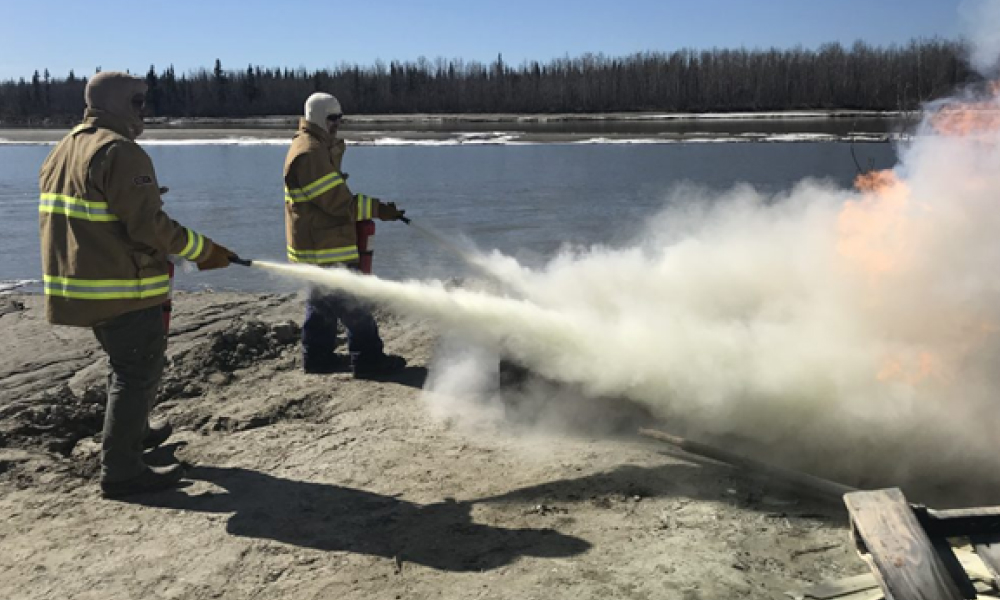
All vessels are required to carry a certain number of portable fire extinguishers. There is an expectation that crew members on board the vessel can use a portable fire extinguisher to effectively put out smaller fires. Have crew members been given instruction and demonstrated competence in using a portable fire extinguisher? One way to accomplish this is to work with your local fire department or fire servicing company to practice discharging portable fire extinguishers. Use of burn pans and barrels improves the realism of the experience.
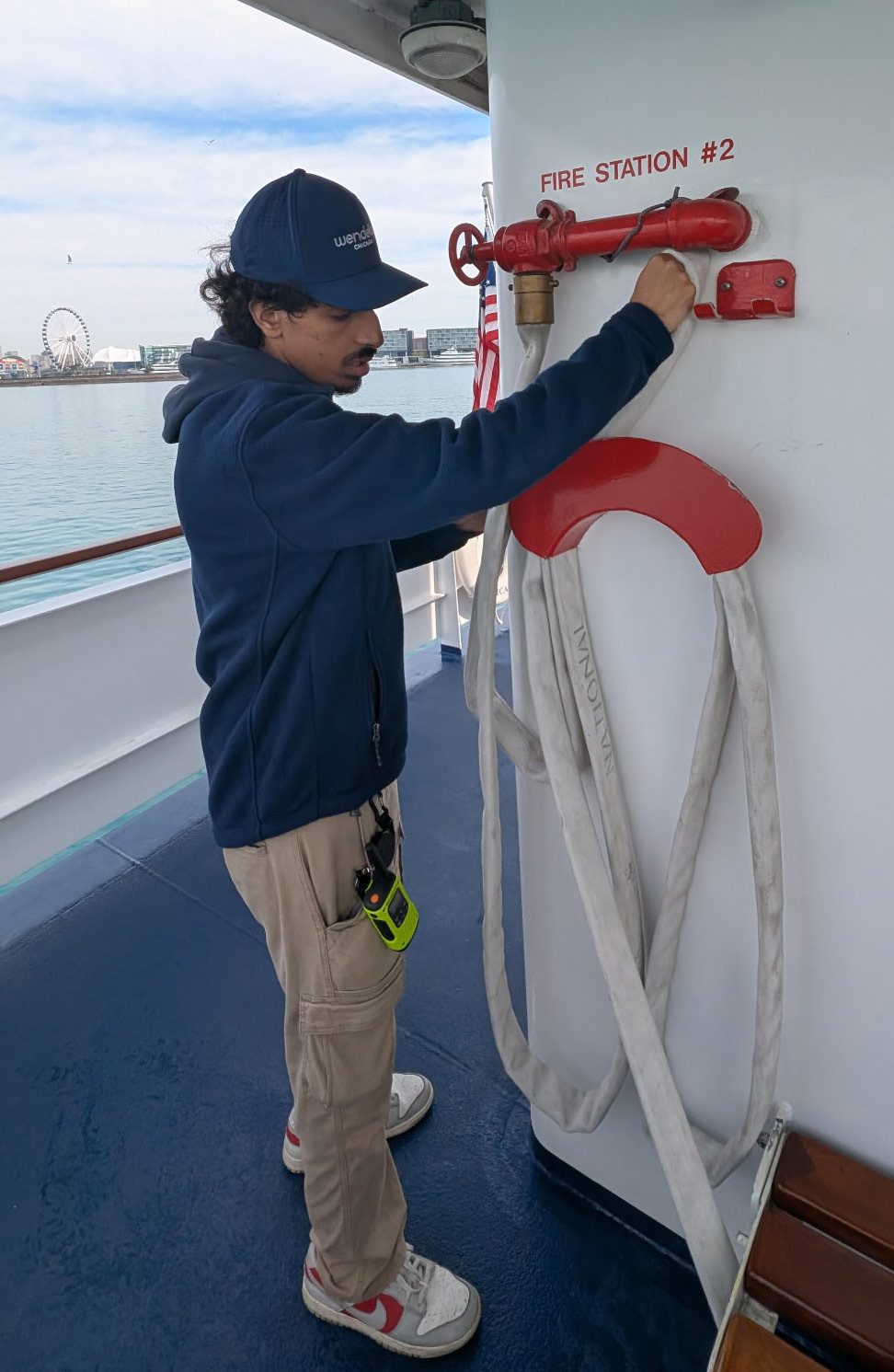
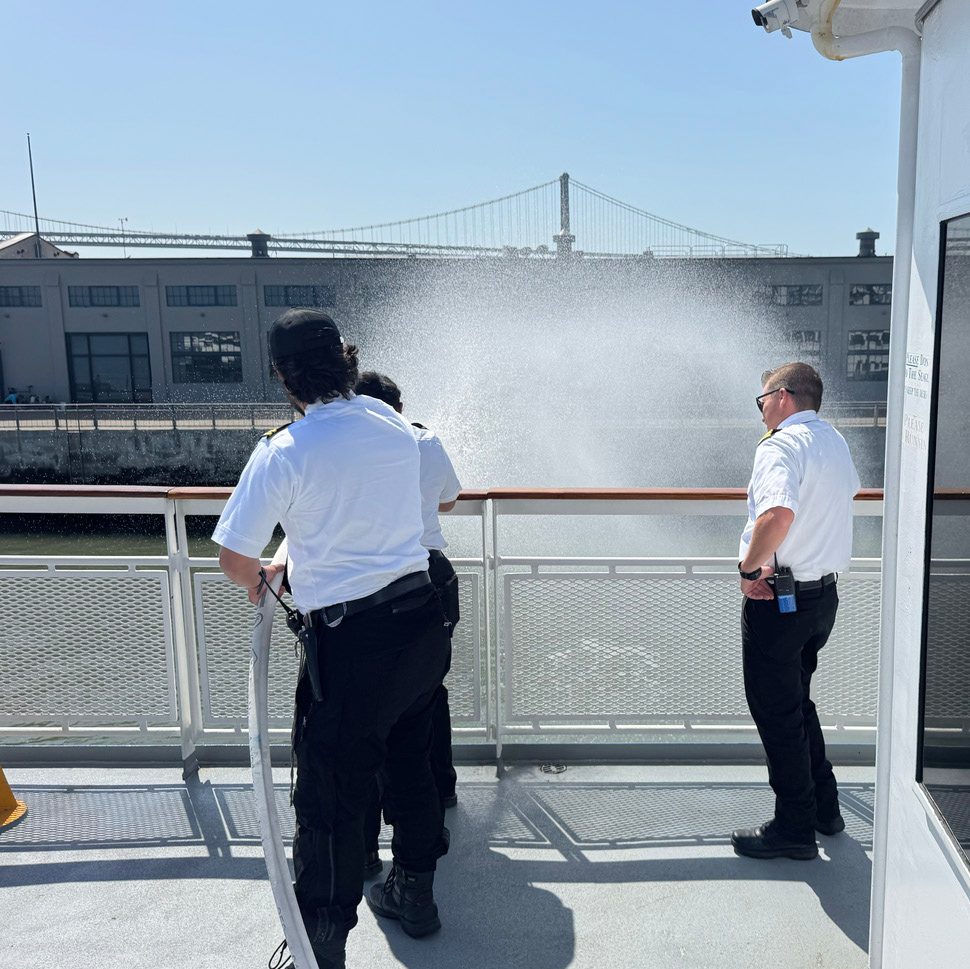
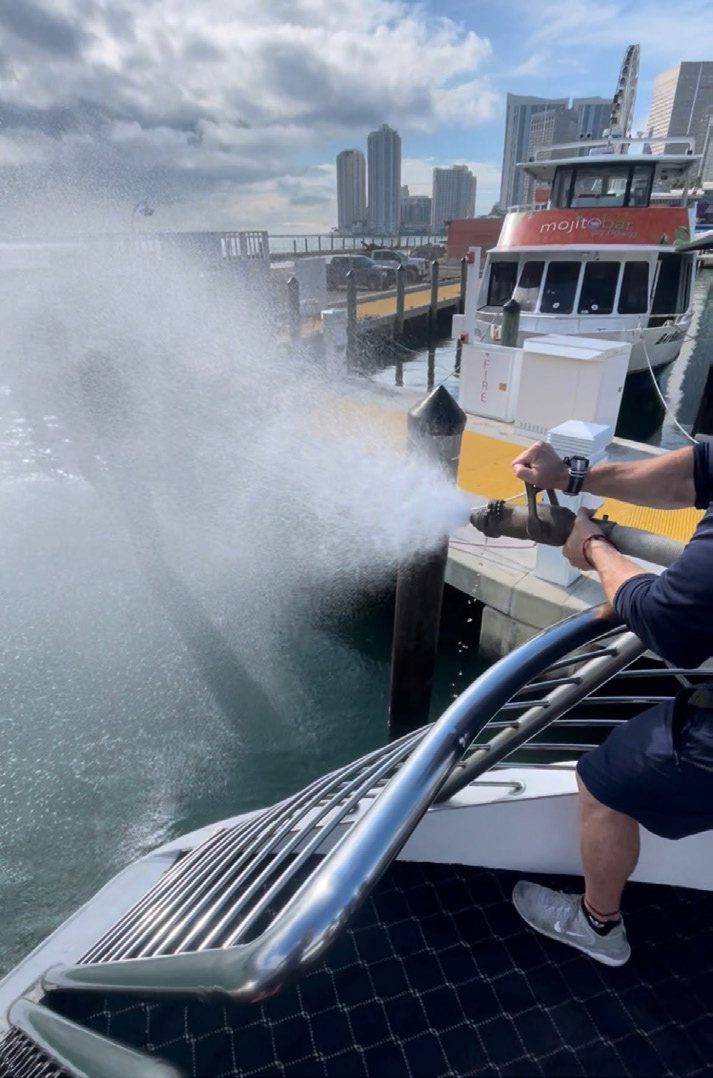
Most vessels are required to have fire pumps and hoses. The hoses can range from garden hose size providing an “effective stream” to 1.5-inch commercial fire hose in 50-foot lengths. Crew members must be able to lay out and charge the fire hose. They must also be able to vary the hose stream from solid stream to a spay pattern. For vehicle ferries it is important that crew members are trained in how to contain vehicle fires including electric vehicles fires.
Commercial fire hoses have a kick so the more practice crew members have using the fire hose under pressure, the more comfortable and effective they will be in an actual emergency. Proper handling and stowage of fire hoses is also critical to the proper functioning and long-term service of the fire hose.
Most passenger vessels and all small passenger vessels certificated after March 1996 are required to have fire detection and a fixed fire suppression system installed in certain spaces including machinery spaces. For non-automatic fixed systems crew members need to know how to deploy the system and know the hazards of the fire suppression medium (e.g. carbon dioxide, halon, clean agents, etc.).
Most large domestic passenger vessels require firemen’s outfits and self-contained breathing apparatus (SCBA). Coast Guard approved training is also required for individuals who will be using this equipment. Operators who have determined a need for firemen’s outfits and SCBAs on board their vessels but are not required by regulation to carry such equipment, should seek out Coast Guard approved training.
Basic Firefighting Manual
Revised in 2025, the “PVA Basic Firefighting Manual” and video covers the latest information on fire types, classifications, spread, prevention, equipment, emergency procedures, drills and training.
As a reminder, the manual and video are available through the online learning management portal maintained by PVA associate member Ripple Operations (formerly Marine Learning Systems). The online portal can be reached through the Member Resources tab on the PVA website under Safety and Security Tools or by clicking on the following link pva.marinels.com. Each vessel operating member company has been assigned and sent a user ID and password. To request login information please contact me at echristensen@passengervessel.com. Fire safety remains a critical element of domestic passenger vessel operations. Through effective crew training and hazard awareness, assessment, and mitigation PVA members can minimize the risk of fire on board their vessels and if needed respond appropriately to protect passengers from the dangers associated with fire until they can be evacuated.

Eric Christensen is the PVA Director of Regulatory Affairs & Risk Management