
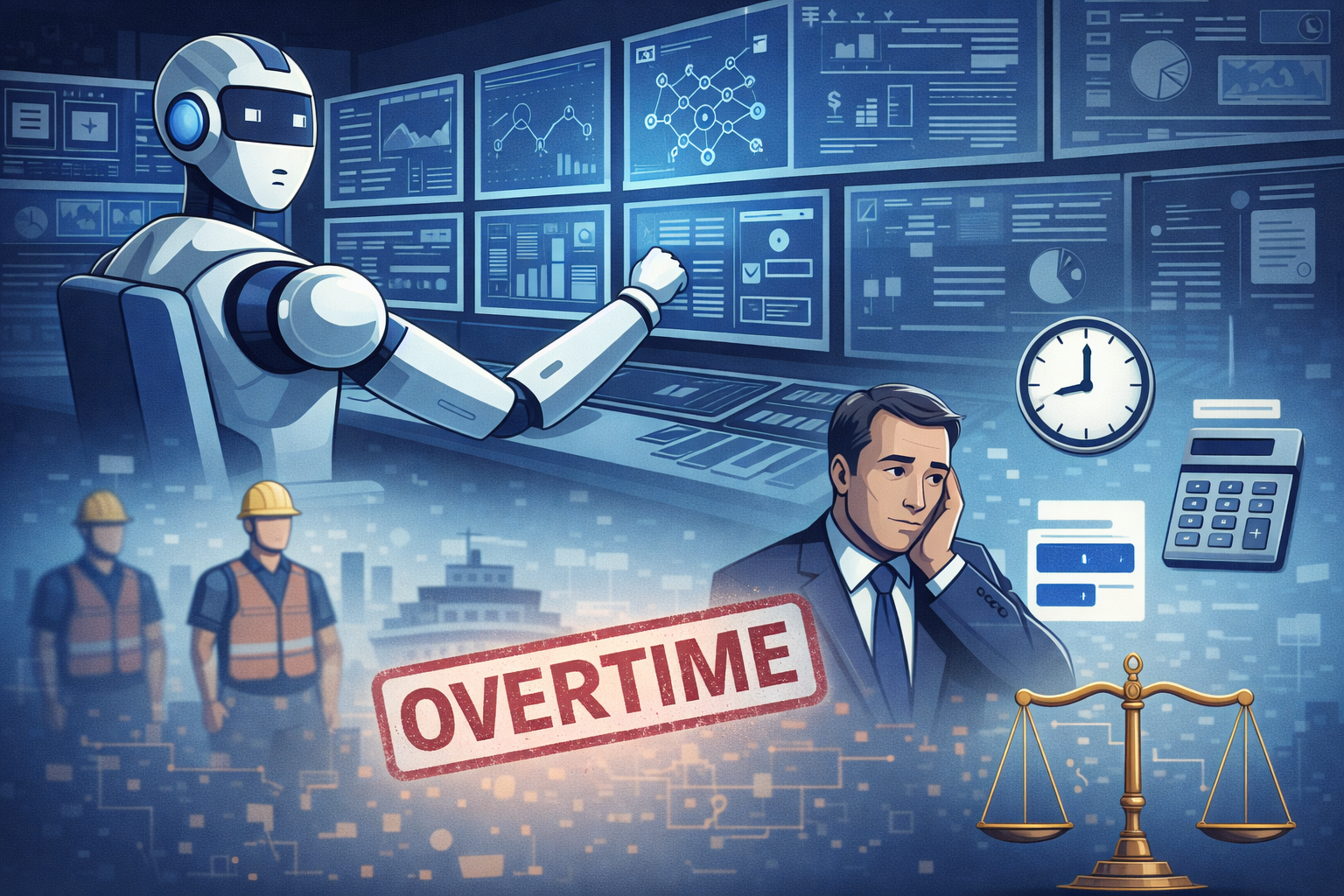
Artificial intelligence (AI) is rapidly automating the very tasks that many overtime-exempt vessel industry employees traditionally performed. More than ever, algorithms screen resumes, rank job candidates, flag regulatory compliance risks, review documents, or analyze vast vendor or passenger data sets. The human role for administrative managers can shift from decision-maker to button-pusher. Once that happens, an employee may no longer satisfy the requirements to be overtime exempt.
To be overtime-exempt, managers must exercise discretion and independent judgment to qualify for the administrative overtime exemption. A supervisor who was exempt under the executive exemption because he or she managed two or more full-time workers may no longer benefit from that overtime exemption if the workers’ roles have become automated. Yesterday’s exempt manager, with the advent of automation, can erode into today’s overtime-required worker, leaving employers exposed to back-pay liability, liquidated damages, and fee-shifting litigation.
Let’s consider a few industry hypotheticals. Consider a galley manager that used to determine a menu based on the number of guests anticipated, the prices of foods, picking a vendor, and calculating how many servers to book for the event. In the new world, all those functions and decisions can possibly be made by AI input. Consider the event planner, that types in the event variables, and AI spits the food, menu, event schedule, and contacts waitstaff by email or text with reporting times and assignments. Consider a vessel operation in which AI, based on historic trends and weather data, can determine which fleet vessels to place in service on a particular run, without the need for human judgment and discretion.
We might not be there yet, but we’re not far off. Some vessel industry jobs, traditionally performed by skilled salaried employees may now find themselves to be button pushers, and thus overtime required.
Every new algorithm changes the legal calculus. Treat each new rollout of an AI tool in your vessel business as a potential worker reclassification event, and you may be able to capture AI’s efficiencies without creating a wage-and-hour exposure.
It’s food for thought, and in some cases, vessel owners may need to take stock as to whether certain salaried positions still qualify to be overtime exempt. The PVA hotline is available for members seeking guidance.

Since 1990, Steven Bers, Esq., has advised passenger vessel owners on legal matters relating to marine law and marine employment. He also serves as PVA’s General Counsel, and can be contacted at 410-347-8724 or sbers@whitefordlaw.com.