
Running a business is a journey through periods of success, as well as times of challenge. Nearly every company at some point will face the age-old dilemma of having open employment positions yet struggle to find candidates. Passenger vessel operators large and small know this well as crew shortages have been a concern in the industry, especially since the pandemic. For the team at Washington State Ferries (WSF), they found themselves on the brink of a crisis but with strategic partnerships, fresh approaches, and broad outreach, they turned the tables and built a robust workforce development system.
Running a business is a journey through periods of success, as well as times of challenge. Nearly every company at some point will face the age-old dilemma of having open employment positions yet struggle to find candidates. Passenger vessel operators large and small know this well as crew shortages have been a concern in the industry, especially since the pandemic. For the team at Washington State Ferries (WSF), they found themselves on the brink of a crisis but with strategic partnerships, fresh approaches, and broad outreach, they turned the tables and built a robust workforce development system.
In 2019, Washington State Ferries submitted its 2040 Long Range Plan to the Washington State Legislature. The document looked at the next two decades with a focus on improving service, customer experience, and the resiliency of the system, and included a goal of starting the transition to a zero-emission fleet. Statistics shared in the plan pointed to the startling forecast that in the next five years, a significant number of licensed deckhands and engine room officers would likely retire. It sounded an alarm bell. Building its workforce became the number one issue for the operation.
The team began to develop several initiatives to grow its labor force as well as implement systems to keep employ-ment stable. One of the first issues they addressed was the cost to individuals to achieve the credentials needed to reach higher level positions such as captain.
One of the first issues they addressed was the cost to individuals to achieve the credentials needed to reach higher level positions such as captain. The financial burden was too much for some crew members
The financial burden was too much for some crew members. “If you’re a single parent, if you’re from a socioeconomically disadvan-taged community, this is a real barrier for people to get to these positions that we need them to get to—even if you’ve got the skill and background,” said Bryn Hunter, part of the WSF communications team. It became a priority to address the costs to make it a viable option for more crew to get their license.
In 2021, now Washington State Department of Transportation (WSDOT) Secretary and head of WSF Steve Nevey, joined the team, bringing with him ideas based in part on his personal experiences pursuing his own license. He had gone through an apprenticeship program in the U.K. to get his credentials and worked with staff at WSF to build a similar initiative there. Partnering with fellow PVA member Maritime Institute of Technology and Graduate Stud-ies (MITAGS), the Maritime Apprenticeship Program (MAP) was created. Through this program, crew can get their credentials and eventually their pilotage license, paving the way for individuals to work their way up to licensed deck officer jobs.
It started with a pilot program as a proof of concept. In that first round, WSF supported crew that were enrolled to ease the burden on them. Upon completion, the students were able to leverage their new licenses with their employ-ment at the operation. The team at WSF took the results of the pilot program to the state legislature and were able to receive funding to evolve this into a scholarship program that fully covers the tuition for participants.
The initial full scholarship version of the program launched in 2024, and the next session started at the beginning of this year. The program has continued to gain popularity, and the most recent application period saw over 300 people submit to be a part of the program which offers only 12 seats per session. Of the 300 applicants, Hunter noted that for various reasons not all were qualified, sometimes simply due to being under the required age. The team sees potential in the unqualified applicants, hoping their interest in the program translates into interest in the maritime industry and leads people to seek qualification for the program or possibly find other paths into the industry’s workforce.
Hunter said that the partnership with MITAGS has been great. The team at WSF has found MITAGS very helpful through the process and that they’re making it a fantastic experience for participants. “It’s a fun program,” she said. “I’ve gotten to go to a lot of the simulations and it’s cool, very interactive.”
One element of MAP is job shadowing in which students work on the ferries with mentors, such as captains and chief mates. It’s designed so that the students become highly qualified and are prepared to apply for a job with the ferry system.
The program has continued to gain popularity, and the most recent application period saw over 300 people submit to be a part of the program which offers only 12 seats per session.
There are apprenticeships at Washington State Ferries outside of the MITAGS program. For instance, at WSF’s Eagle Harbor Maintenance Facility there are nine apprentices working with staff there from welders to carpenters to sheet metal workers, a boost to the marine trade workforce. They also have people work their way up in the engine rooms starting as wipers which is a partial apprenticeship program. It puts people on track to become qualified as oilers and then move up to positions like assistant chief engineer. The WSF team is currently exploring ways to help this career track and assist more people in pursuing a career in this area of operations.
WSF and the state have several initiatives beyond the MIT-AGS program. WSDOT has the Workforce Advancement and Vocational Education (WAVE) grant program which is designed to help socially disadvantaged people including young adults leaving foster care or the juvenile rehabilitation system, as well as unhoused individuals. The 2025 WAVE grant recipient, Youth Marine Foundation, received $500,000 and offers free training to adults who face social or financial challenges to prepare people for jobs with WSF and the wider maritime industry. Programs like this help WSF reach a wider employee pool. “We are looking at how we fill this long-term workforce development crisis in the industry,” explained Hunter. “We have to bring in communities who have never been a part of maritime industries.”
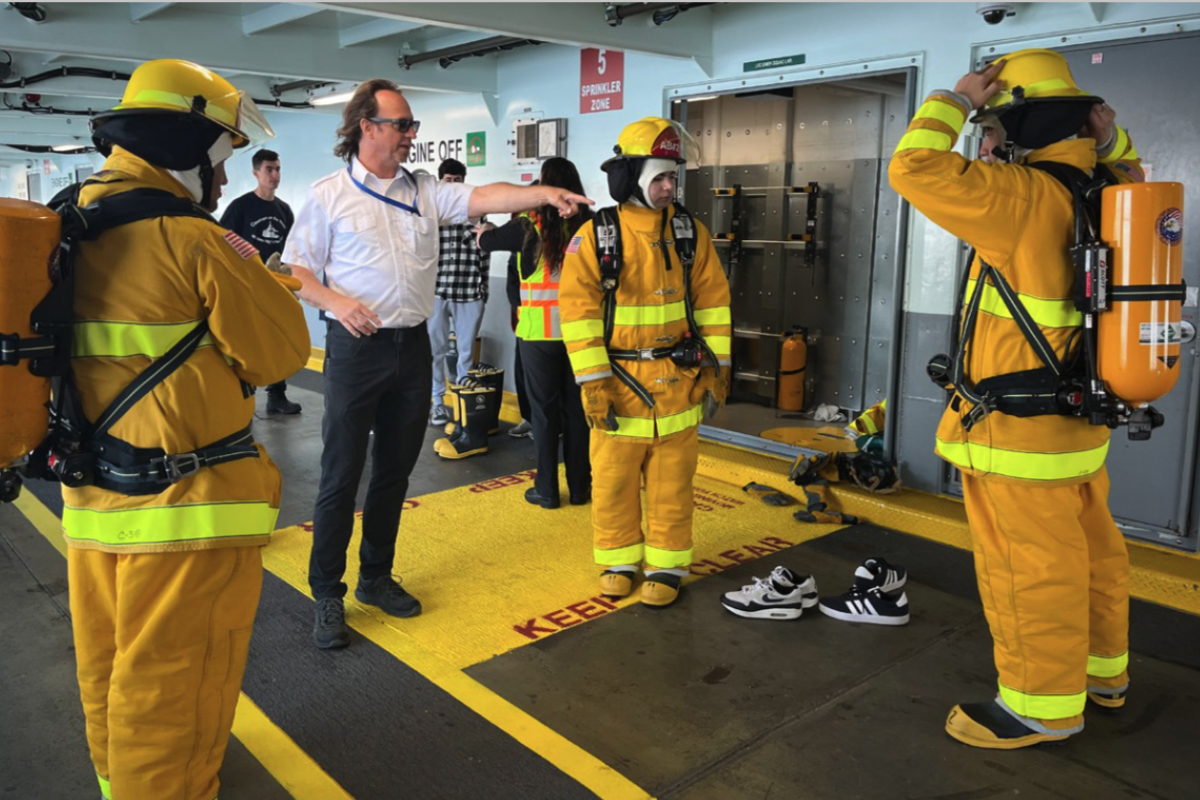
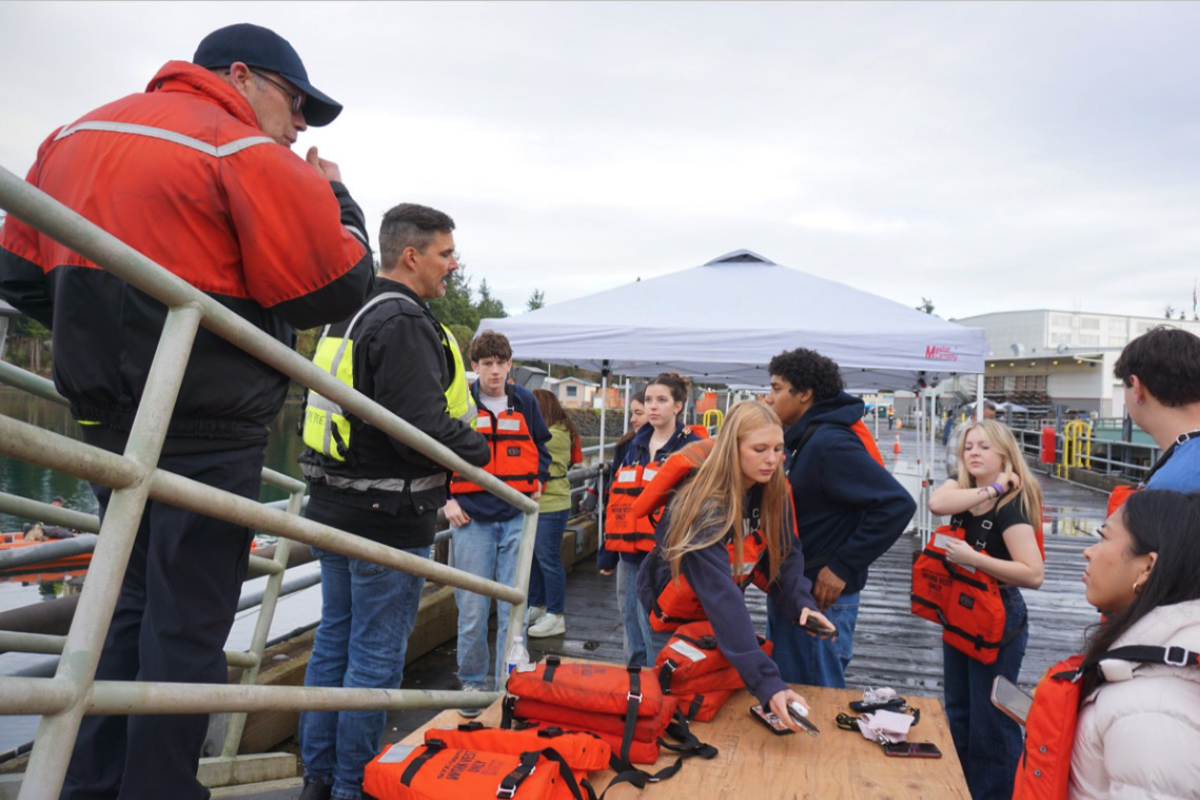
WSF has created Classroom on the Water. Through this program, ten seniors from Maritime High School, who have expressed an interest in working for or learning more about the ferry system got to experience life on the vessels firsthand.
WSF also has a workforce development outreach specialist who visits schools, boys’ and girls’ clubs, and presents at local job fairs to connect with youth and young adults. Through these efforts, the specialist can connect with new groups and introduce them to career paths in maritime and with the ferry system specifically. There are many jobs in the industry that are dynamic, interesting, don’t require time sitting behind a desk, and offer opportunities for growth. It’s largely about letting people know about the industry and the various ways they can be a part of it.
Developing an interest in the industry among youth is a key to growing the future workforce, and several pipeline programs have been built for this purpose. In partnership with Seattle Maritime Academy and Northwest Maritime, WSF has created Classroom on the Water. Through this program, ten seniors from Maritime High School in near-by Des Moines, Wash., who have expressed an interest in working for or learning more about the ferry system got to experience life on the vessels firsthand. For two weeks this September, the students participated in this mini apprenticeship where they got to learn real skills that they would use in maritime jobs. They spent two days in the wheel-house aboard the Chimacum with licensed deck officers and two days in the engine room with the chief engineers working alongside them on different tasks. The students toured the Eagle Harbor Maintenance Facility and the ferry Cathlamet, which was docked there. A classroom portion included a project one day, and then the students spent a day on the vessels connecting with passengers to learn about the service side of the ferries.
“They’re just passionate about it; it’s fun to watch. Our crew loved it, loved hosting them. It was a fun activity,” Hunter said. “Talking to students, they’re like, ‘We really got to actually do this job. So, we know what the job is like.'”
At the end, a recruiter walked the students through the next steps to get jobs with WSF after high school. They gained skills that will serve them in the future, as well as an appreciation for the people and jobs that keep WSF running. This was the second year of the program; the first year was a trial version. Both were very successful, and the program will continue moving forward.
At the Eagle Harbor Maintenance Facility, WSF hosts a career day for high school students as another way to grow an interest in maritime careers among youth. In March, their third annual career day welcomed nearly 150 students from eight area high schools. Students toured the ferry Chetzemoka and took part in demonstrations with WSF staff members to discover jobs available aboard ferries, at terminals, and in the trades shop. With attendance growing each year, Hunter speculates that there will be over 200 students at next year’s career day.
In the summer of 2024, WSF had 617 sailings canceled due to lack of crewing. From June 15 to Sept. 21, 2025, that number dropped to 191. It’s proof positive of all they’ve accomplished in growing a robust crew and staff.
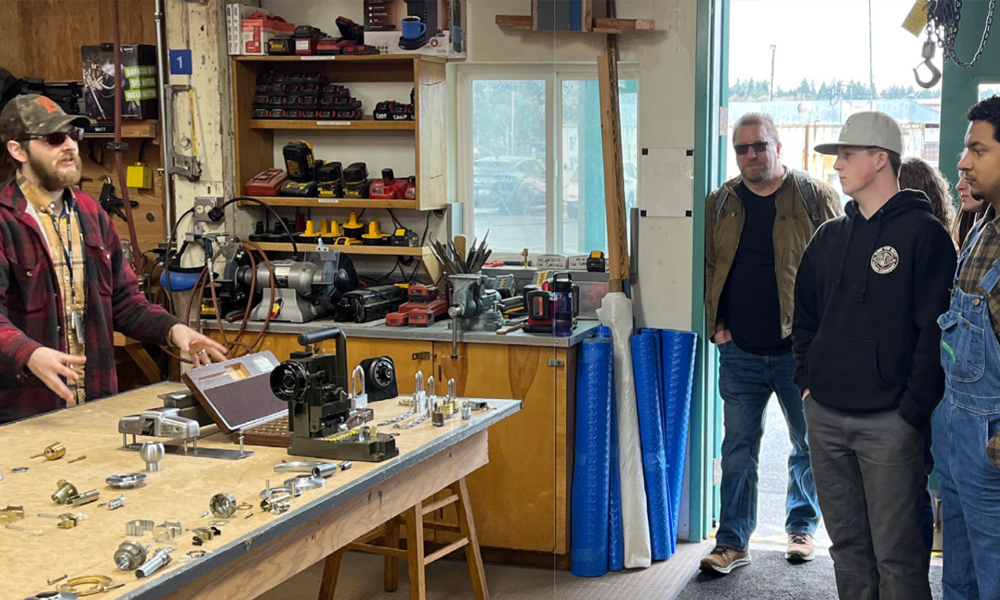
In addition to these formal programs, WSF regularly re-ceives tour requests from high schools for groups like shop classes. Simply visiting the ferries can be eye opening for some. “We had a group come out and most of them hadn’t been on a ferry, so that was cool,” Hunter said. The tours give students a glimpse at a world they may not have been aware of and jobs they didn’t know existed.
Growing from within is a tactic many employers use to fill positions. At WSF there are workforce development leads for the various departments. The leads track employee training and help guide people interested in new positions or rising within the ranks of their current department, showing them the path to follow to reach their goal. Mentorships are available for those looking for one-on-one support in a specific position. Hunter explained that from the workforce development leads to the mentors to required Q&A sessions for new hires, Washington State Ferries has implemented several methods of communicating with employees about support programs and other opportunities for individuals interested in furthering their careers with the organization. “The word is out,” she said. “If you’re curious about how to move up in Ferries, we’ll tell you.”
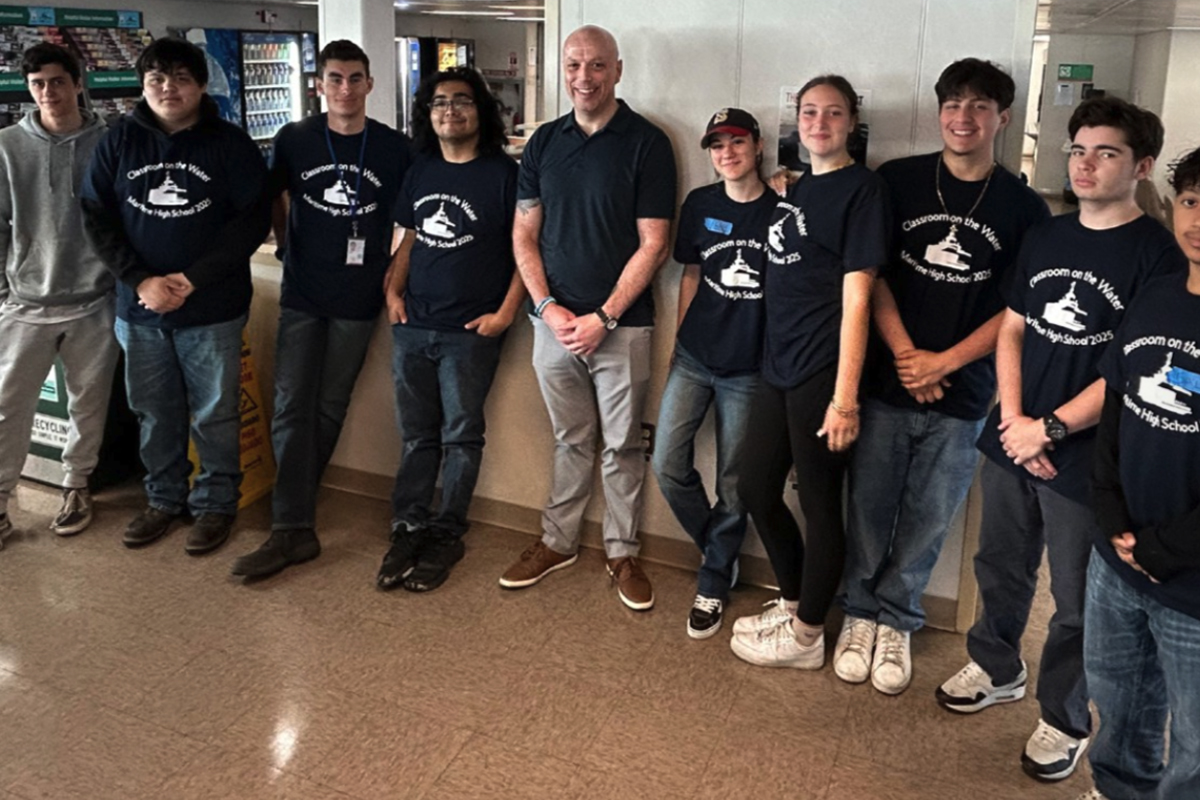
Washington State Department of Transportation Secretary and head of WSF Steve Nevey met with Classroom on the Water students during their two weeks at WSF in September.
Examining employment needs is an ongoing process and the team is considering new programs and strategies to reach more future ferry workers. But they can be proud of what they have accomplished already. The time, effort, and creativity that has been put into workforce development has paid off for WSF. The report in 2019 showed them facing a critical situation of many licensed officers and engine room staff retiring within five years. They are now at a point where crew are joining at the same rate workers are retiring, stabilizing the workforce.
Just the statistics in the Long Range Plan defined the crisis they faced, they now have the numbers to prove how far they’ve come. In the summer of 2024, WSF had 617 sailings canceled due to lack of crewing. From June 15 to Sept. 21, 2025, that number dropped to 191. It’s proof positive of all they’ve accomplished in growing a robust crew and staff. The investments in the engine room, deck crew, and terminal staff made these results possible.
The program with MITAGS has been a huge success. With new hires coming on at a steady rate, WSF has decided to operate the program every other year instead of annually. Hunter noted that Nevey’s leadership has been very important to the organization’s turnaround of employment challenges, saying that it took a mariner to figure out how to get more mariners. Considering the many groups of young people that WSF has found ways to connect with, she described them as the “untapped next generation of mariners.” “They don’t even know it,” Hunter said. “They don’t even know about these jobs. We’re trying to get the word out as much as possible. That doesn’t just benefit us, it benefits the whole industry.”
COMMENTS